


Nitrate reduction by salivary bacteria, glucose metabolism, and lifestyle
- PMID: 40224947
- PMCID: PMC11986870
- DOI: 10.1080/20002297.2025.2489612
Nitrate reduction by salivary bacteria, glucose metabolism, and lifestyle
Abstract
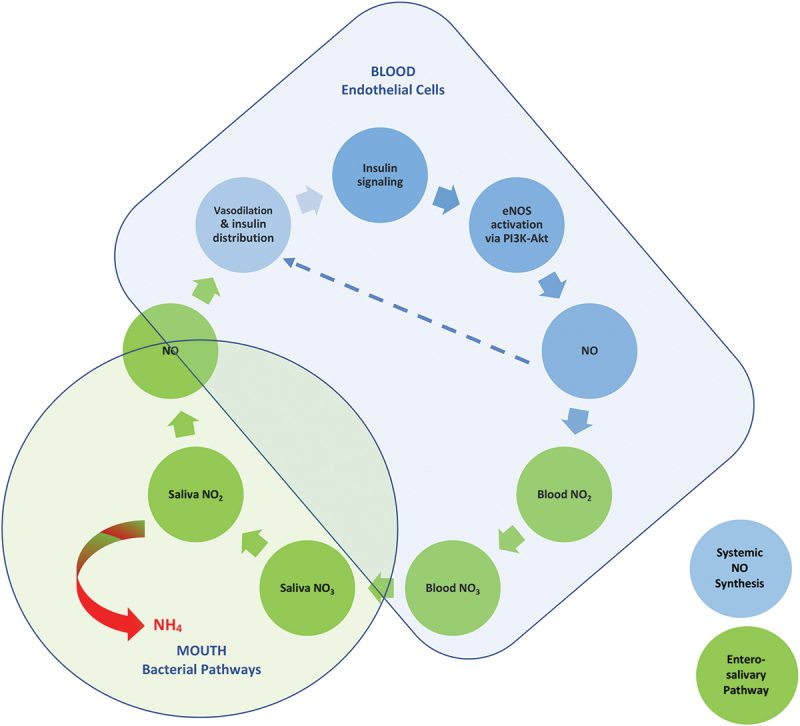
Background: Nitrate reductases (NR) expressed in oral bacteria reduce nitrate to nitrite. Depending on the environmental conditions and types of bacteria present nitrite can be further reduced to ammonium via Dissimilatory Nitrate Reduction to Ammonium (DNRA), or alternatively to nitric oxide (NO), which impacts cardiometabolic health.
Objective: To evaluate the associations between nitrate reduction by salivary bacteria, clinical markers of glucose metabolism, and lifestyle factors that can modulate the oral environment, potentially impacting DNRA and NR expression.
Methods: A cross-sectional study was conducted using a convenience sample of 144 participants from the San Juan Overweight Adult Longitudinal Study (SOALS), which includes data on glucose metabolism and lifestyle. DNRA and NR activities were measured in saliva under aerobic or CO2-enriched conditions.
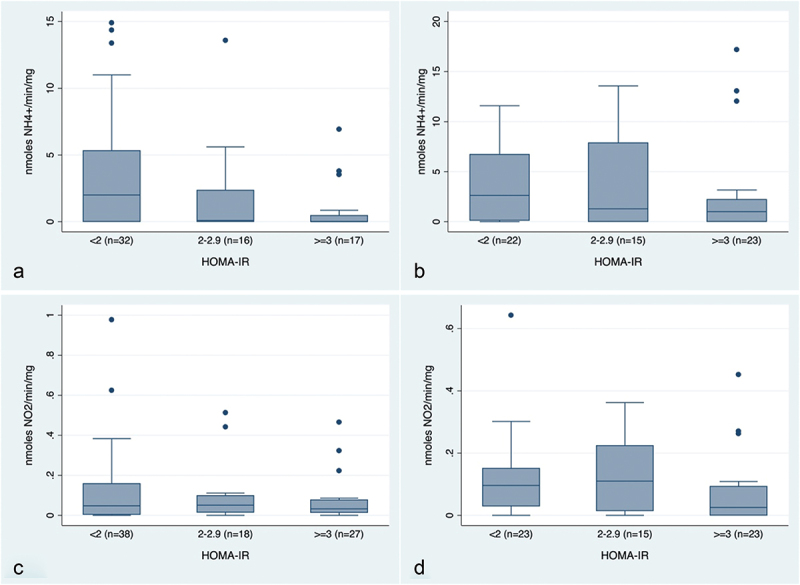
Results: DNRA activity was inversely associated with insulin resistance (HOMA-IR) [aerobic3rd vs.1st tertile: β=-0.48 (-0.81, -0.15); CO2-enriched3rd vs.1st tertile β=-0.42 (-0.68, -0.17)], fasting blood glucose [aerobic3rd vs.1st tertile β=-0.144 (-0.268, -0.019); CO2-enriched3rd vs.1st tertile: β=-0.070 (-0.130, -0.011)], and 2-h glucose [CO2-enriched3rd vs.1st tertileβ=-0.21 (-0.37, -0.04)]. Current smokers had lower DNRA activity than non-smokers under aerobic conditions [β=-1.55 (-2.96, -0.14)], but higher under CO2-enriched conditions [β = 0.93 (0.15, 1.71)]. Toothbrushing frequency (twice/day vs. once/day) was positively associated with DNRA activity under CO2-enriched conditions [β = 4.11 (1.90, 6.32)] and with aerobic NR activity [β = 1.20, (0.14, 2.27)]. Physical activity was inversely associated with aerobic NR [β=-0.01, (-0.022, -0.003)]. Under CO2-enriched conditions NR was inversely associated with the BMI (β=-0.11, p = 0.007). Aerobic NR was higher when sucrose was added to the assays (NADP vs. sucrose β=-0.74, p = 0.02) and positively associated with salivary nitrate levels (β = 0.002, p = 0.002).
Conclusions: Nitrate reduction by salivary bacteria is inversely associated with insulin resistance and can be modulated by lifestyle factors. This knowledge could lead to the development of novel, non-invasive approaches for monitoring and preventing diabetes progression.
Keywords: Nitric oxide; ammonium; brushing; diabetes; insulin resistance; lifestyle; nitrate; nitrite; salivary microbiome; smoking.
Plain language summary
This study provides new evidence regarding the role of the salivary microbiome in glucose metabolism, which could be applied to the development of novel, saliva-based, non-invasive approaches for monitoring and preventing diabetes progression.
© 2025 The Author(s). Published by Informa UK Limited, trading as Taylor & Francis Group.
Conflict of interest statement
Dr. R. Patel is a coinventor on the use of nitrite salts for the treatment of cardiovascular conditions and chronic ischemia and a co-inventor on a provisional patent for methods to diagnose and predict chronic lung and bowel disease in pre-term infants. Dr. Morou-Bermúdez is inventor on a provisional patent application for the use of ammonium production from nitrate by oral bacteria as a biomarker for monitoring insulin resistance filed by the University of Puerto Rico. Other authors do not have any conflicts of interest to report.
Figures
References
Grants and funding
LinkOut - more resources
Full Text Sources
