


Morinda citrifolia L.: A Comprehensive Review on Phytochemistry, Pharmacological Effects, and Antioxidant Potential
- PMID: 40227265
- PMCID: PMC11939675
- DOI: 10.3390/antiox14030295
Morinda citrifolia L.: A Comprehensive Review on Phytochemistry, Pharmacological Effects, and Antioxidant Potential
Abstract
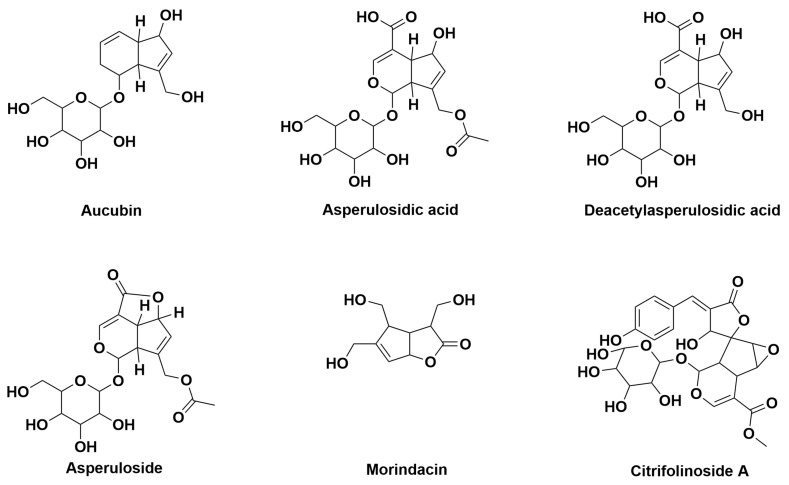
Morinda citrifolia L. (M. citrifolia), commonly referred to as noni, a Polynesian medicinal plant with over 2000 years of traditional use, has garnered global interest for its rich repertoire of antioxidant phytochemicals, including flavonoids (kaempferol, rutin), iridoids (aucubin, asperulosidic acid, deacetylasperulosidic acid, asperuloside), polysaccharides (nonioside A), and coumarins (scopoletin). This comprehensive review synthesizes recent advances (2018-2023) on noni's bioactive constituents, pharmacological properties, and molecular mechanisms, with a focus on its antioxidant potential. Systematic analyses reveal that noni-derived compounds exhibit potent free radical scavenging capacity (e.g., 2,2-Diphenyl-1-picrylhydrazyl/2,2'-azino-bis(3-ethylbenzothiazoline-6-sulfonicacid) (DPPH/ABTS) inhibition), upregulate endogenous antioxidant enzymes (Superoxide Dismutase (SOD), Catalase (CAT), Glutathione Peroxidase (GPx)), and modulate key pathways such as Nuclear factor erythroid 2-related factor 2/Kelch-like ECH-associated protein 1 (Nrf2/Keap1) and Nuclear Factor kappa-B (NF-κB). Notably, polysaccharides and iridoids demonstrate dual antioxidant and anti-inflammatory effects via gut microbiota regulation. This highlights the plant's potential for innovation in the medical and pharmaceutical fields. However, it is also recognized that further research is needed to clarify its mechanisms of action and ensure its safety for widespread application. We emphasize the need for mechanistic studies to bridge traditional knowledge with modern applications, particularly in developing antioxidant-rich nutraceuticals and sustainable livestock feed additives. This review underscores noni's role as a multi-target antioxidant agent and provides a roadmap for future research to optimize its health benefits.
Keywords: Morinda citrifolia L.; antioxidant activity; chemical composition; extraction method; oxidative stress.
Conflict of interest statement
The authors declare no conflicts of interest.
Figures




References
-
- Lohani M., Majrashi M., Govindarajulu M., Patel M., Ramesh S., Bhattacharya D., Joshi S., Fadan M., Nadar R., Darien B., et al. Immunomodulatory Actions of a Polynesian Herb Noni (Morinda citrifolia) and Its Clinical Applications. Complement. Ther. Med. 2019;47:102206. doi: 10.1016/j.ctim.2019.102206. - DOI - PubMed
-
- Sam-Ang P., Phanumartwiwath A., Liana D., Sureram S., Hongmanee P., Kittakoop P. UHPLC-QQQ-MS and RP-HPLC Detection of Bioactive Alizarin and Scopoletin Metabolites from Morinda citrifolia Root Extracts and Their Antitubercular, Antibacterial, and Antioxidant Activities. ACS Omega. 2023;8:29615–29624. doi: 10.1021/acsomega.3c03656. - DOI - PMC - PubMed
-
- Devanesan S., Elankathirselvan K., AlSalhi A., AlSalhi M.S., Asemi N.N., Aldawsari M., Jhanani G.K. UPLC–ESI–MS/MS Profiling of Active Polyphenolics in Morinda Coreia Leaf Extract and in vitro Antioxidant and Antibacterial Activity. Chemosphere. 2023;323:138179. doi: 10.1016/j.chemosphere.2023.138179. - DOI - PubMed
Publication types
Grants and funding
LinkOut - more resources
Full Text Sources
Research Materials
Miscellaneous
