


Reconsidering indoor residual spraying coverage targets: A retrospective analysis of high-resolution programmatic malaria control data
- PMID: 40228135
- PMCID: PMC12037036
- DOI: 10.1073/pnas.2421531122
Reconsidering indoor residual spraying coverage targets: A retrospective analysis of high-resolution programmatic malaria control data
Abstract
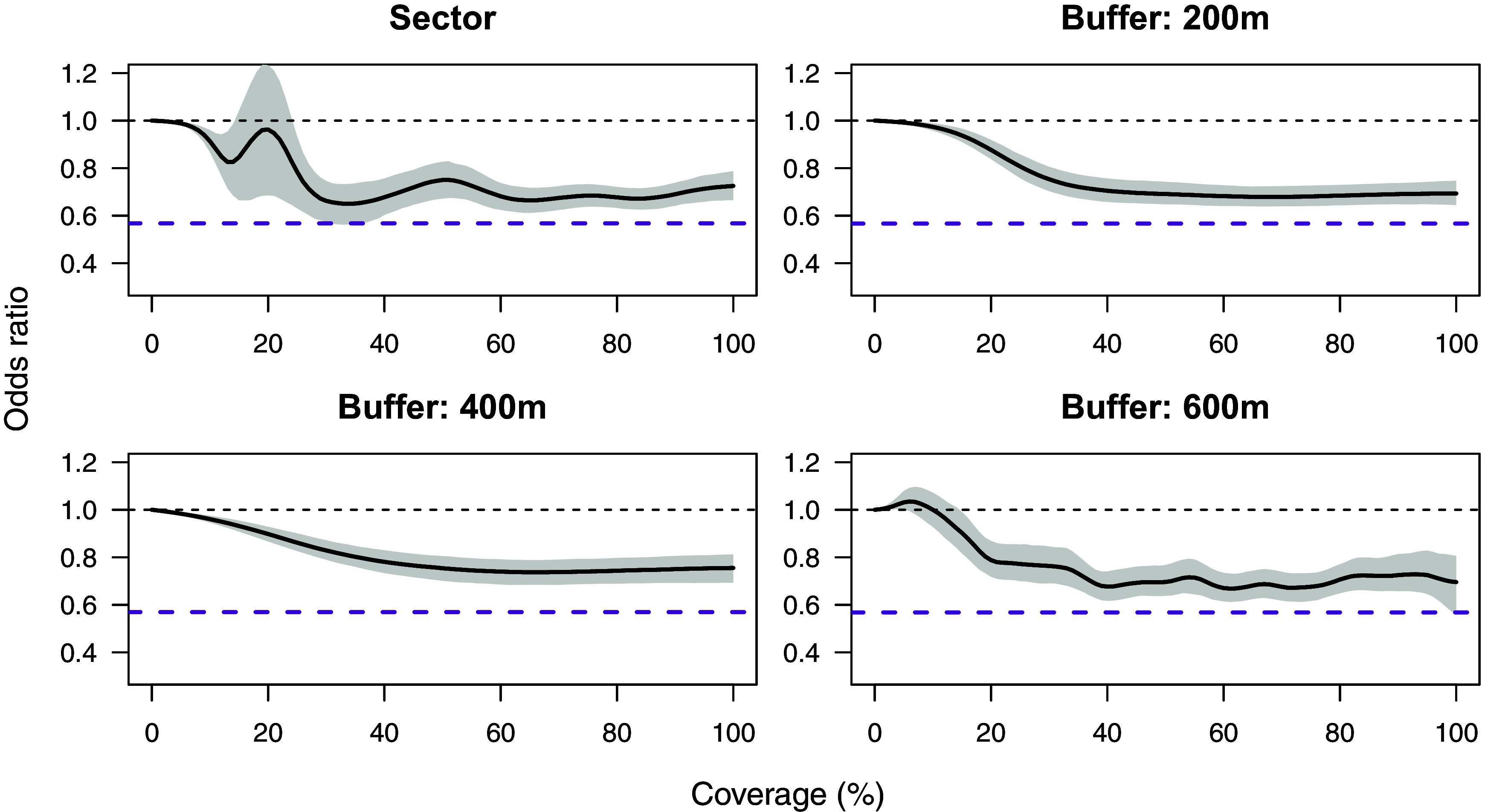
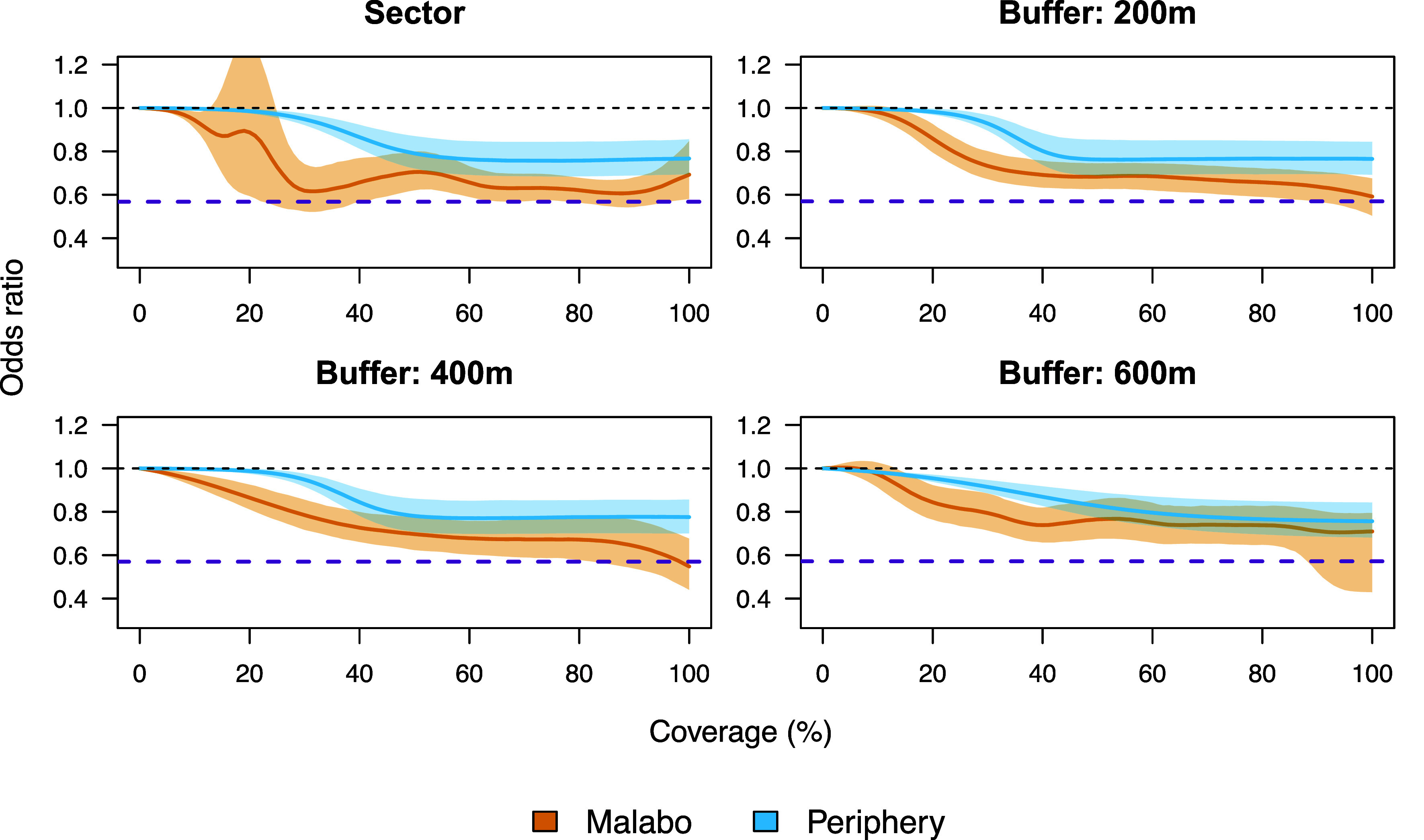
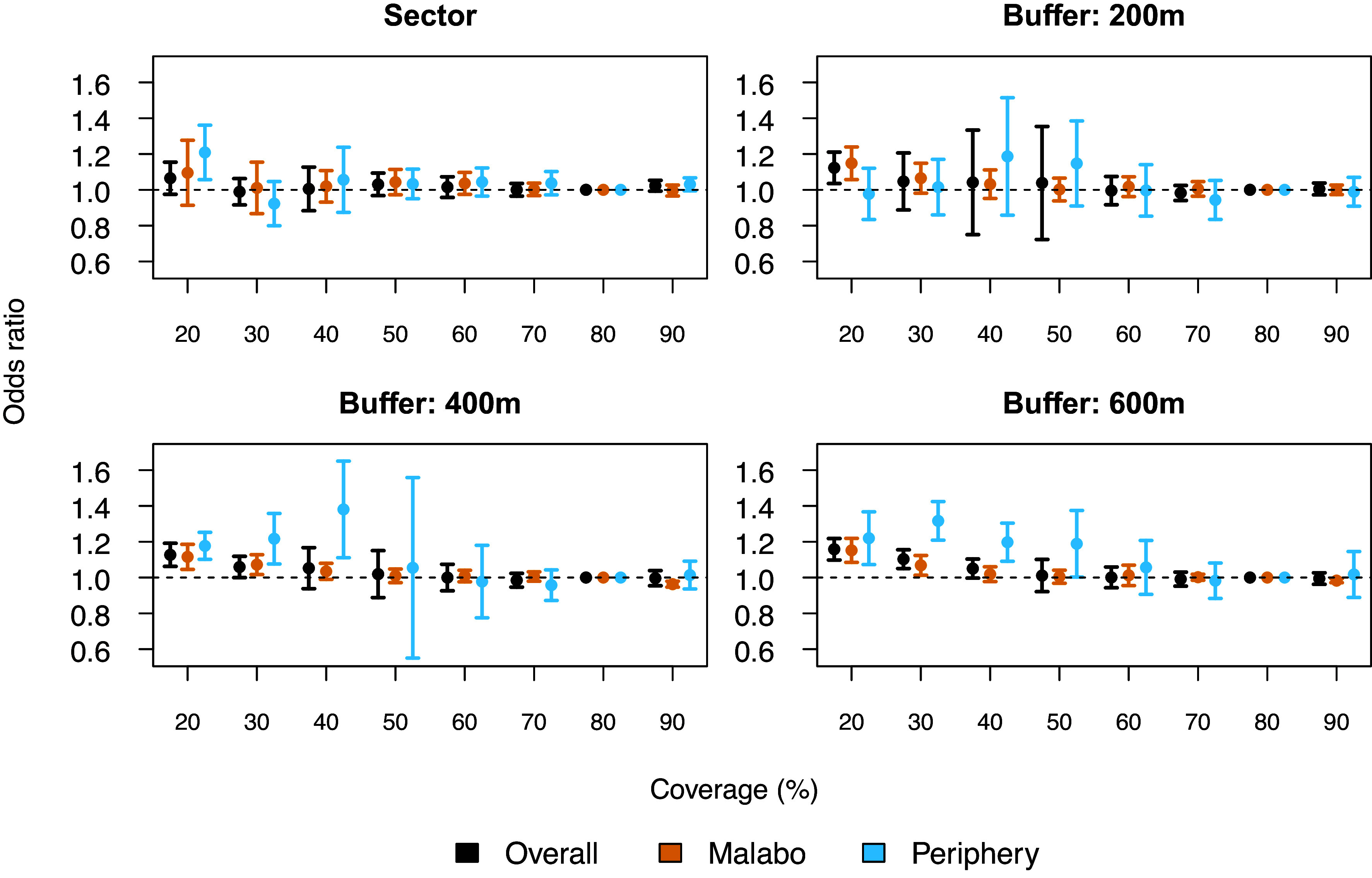
Indoor residual spraying (IRS) is one of the core vector control interventions available to malaria control programs. Normative and scientific guidance has long held that very high IRS coverage (at least 80 to 85% houses sprayed) is necessary to provide community protection, but there is little evidence backing these recommendations, in large part due to the operational and ethical concerns that conducting appropriate trials of differing IRS coverage levels would raise. The present study leverages data from four years of targeted IRS implementation on Bioko Island, Equatorial Guinea, to estimate a dose-response curve of IRS coverage. Due to the observational nature of the data, a double robust causal inference technique was utilized. The results suggest that at all spatial scales examined a threshold providing community protection was reached at much lower coverage levels than previously assumed (30 to 50%). Sensitivity analysis corroborated this result across multiple methods, but there was less agreement on whether extremely high coverage ([Formula: see text]85%) has additional benefit. A secondary analysis of the impact of changing operational coverage targets found that significantly reducing coverage targets (to 30 to 60%) could provide nearly the same protection as maintaining the existing 80% target in Bioko. While these findings are limited in strength by the observational nature of the data and may be specific to the context of Bioko Island, they raise important questions for further research on how IRS coverage impacts epidemiological outcomes and on how malaria control programs should set programmatic IRS coverage targets.
Keywords: indoor residual spraying; malaria; vector control.
Conflict of interest statement
Competing interests statement:The authors declare no competing interest.
Figures
References
-
- World Health Organization Interim Commission, “Expert committee on malaria: Report on the first session” (Tech. Rep. WHO.IC/Mal/4, World Health Organization, 1947).
-
- E. J. Pampana, “Large scale malaria control campaigns using residual insecticides” (Tech. Rep. WHO/MAL/46, World Health Organization, 1950).
-
- Griffith M. E., The world-wide malaria eradication program. Bull. Entomol. Soc. Am. 12, 130–136 (1966).
MeSH terms
Substances
Grants and funding
LinkOut - more resources
Full Text Sources
Medical
