


Investigating membership attrition dynamics in community-based health insurance: a survival analysis of socioeconomic and program-specific determinants in the Amhara Region, Northwest Ethiopia
- PMID: 40229726
- PMCID: PMC11995479
- DOI: 10.1186/s12889-025-22529-2
Investigating membership attrition dynamics in community-based health insurance: a survival analysis of socioeconomic and program-specific determinants in the Amhara Region, Northwest Ethiopia
Abstract
Background: Despite substantial growth and increased enrollment in Ethiopia's CBHI program, achieving universal coverage and retaining members remain challenging. This study, however, focuses on the persistent issue of dropout rates, which threaten the program's sustainability, while previous research has often focused on enrollment.
Method: The dependent variable is"time to membership attrition,"defined as an event "Dropout,"with independent variables including socioeconomic and program factors. Using Cochran's formula, data were collected from 772 (208 failure) respondents across five administrative zones. Analysis was performed using Kaplan-Meier estimation, Cox Regression, and the Weibull AFT Model.
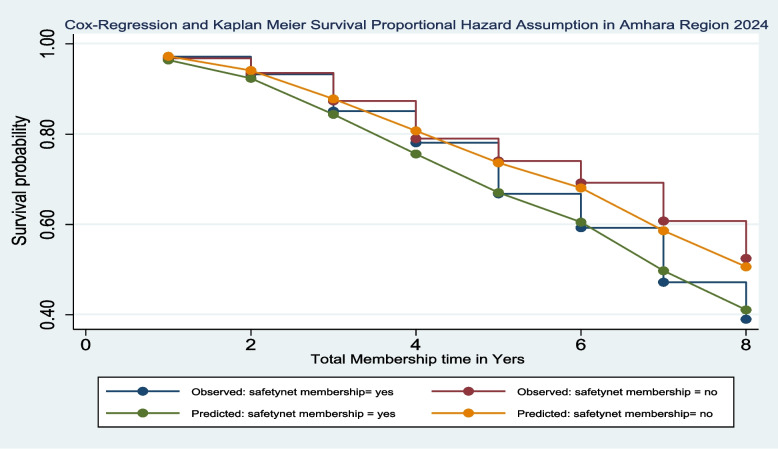
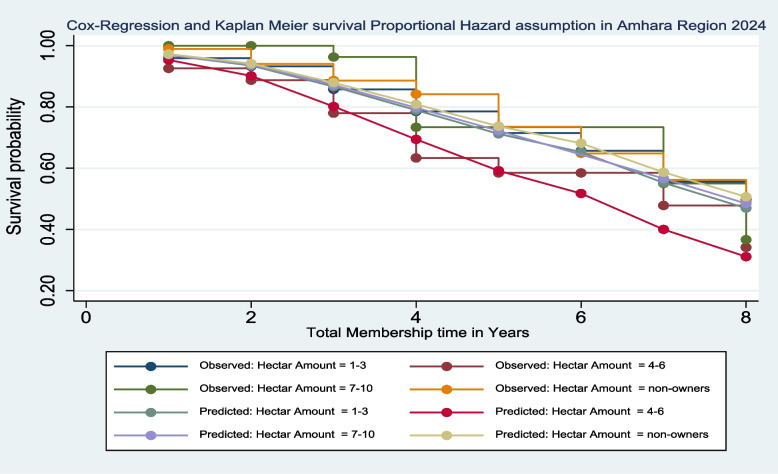
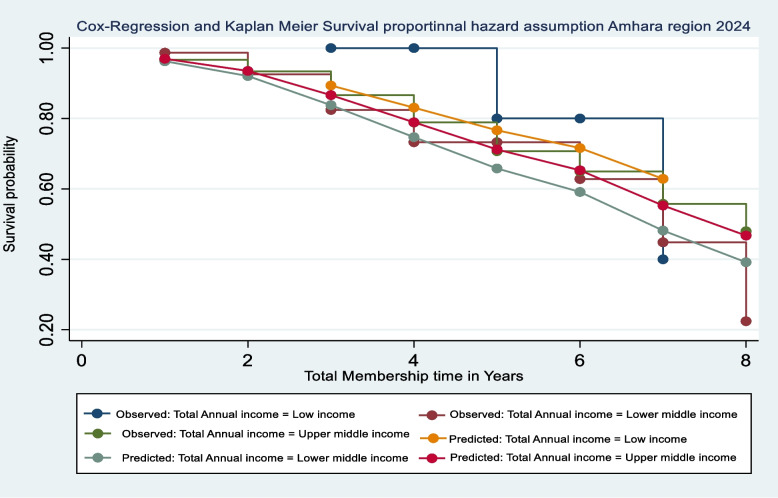
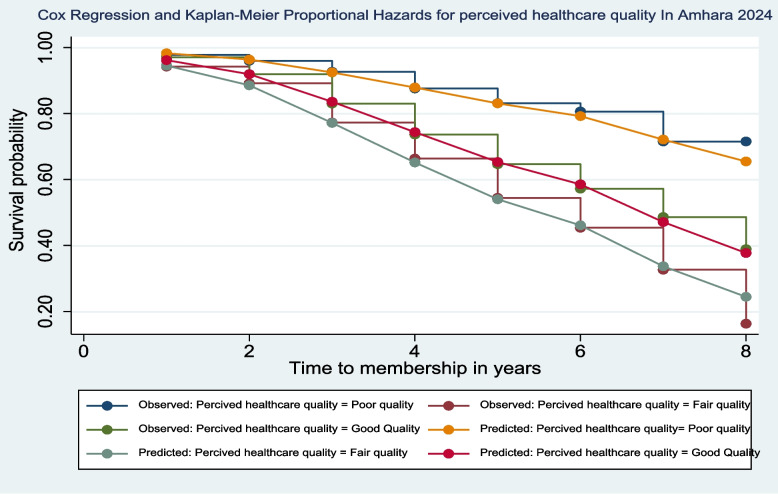
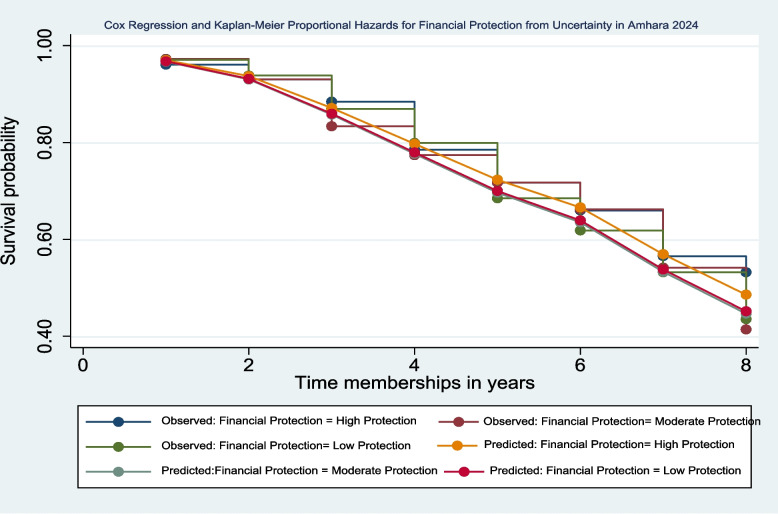
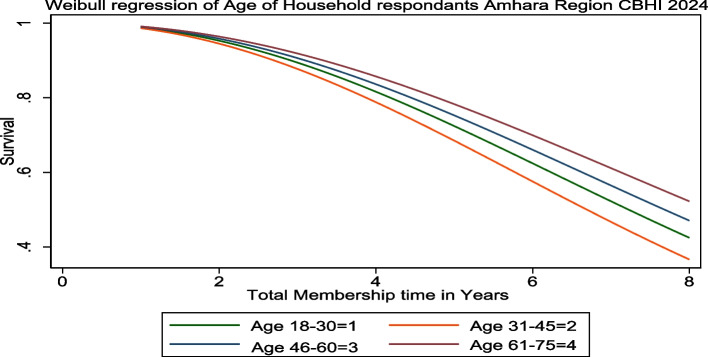
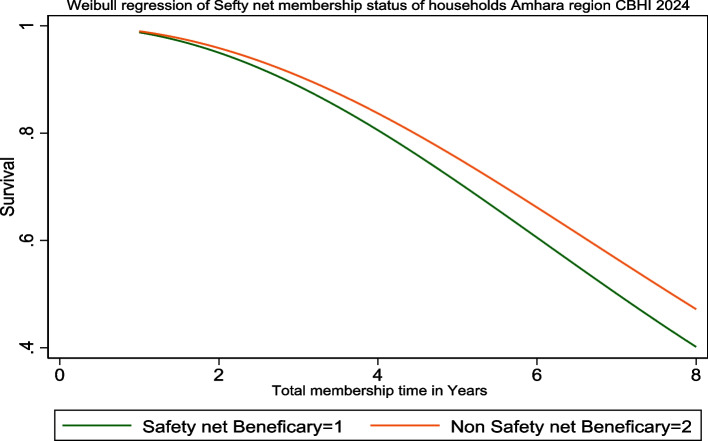
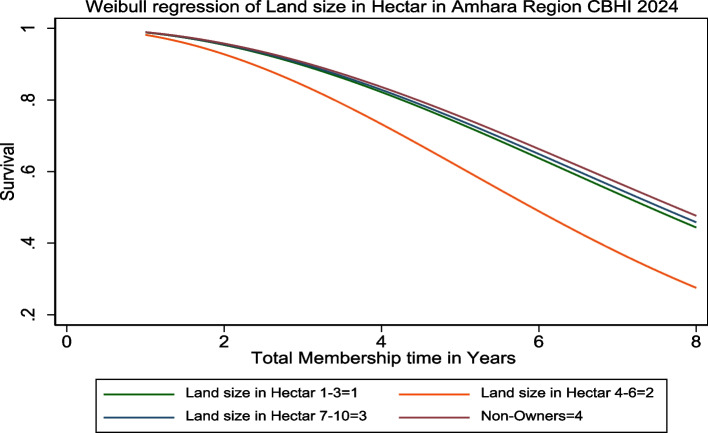
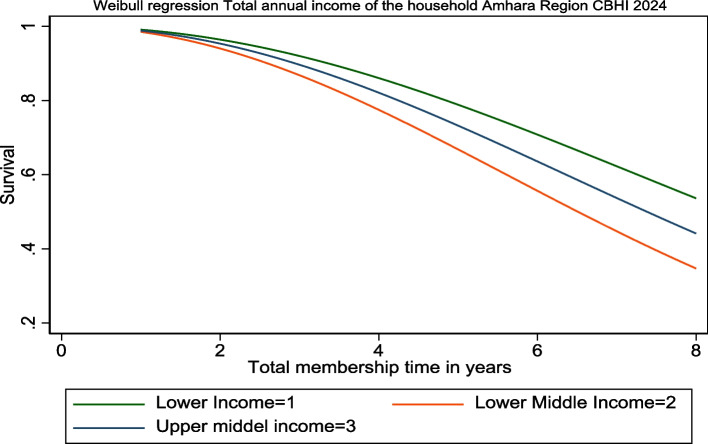
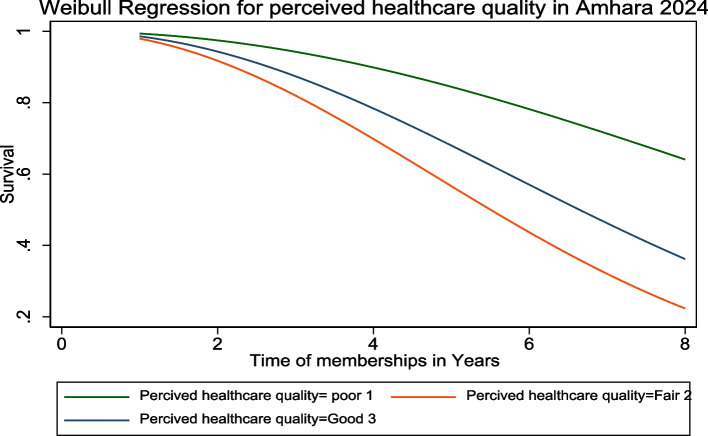
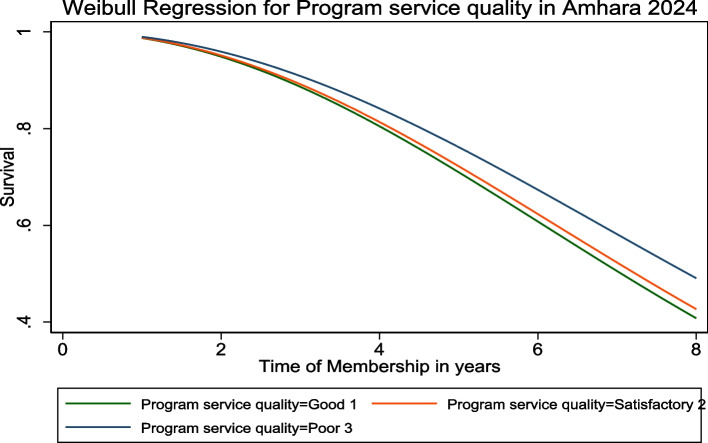
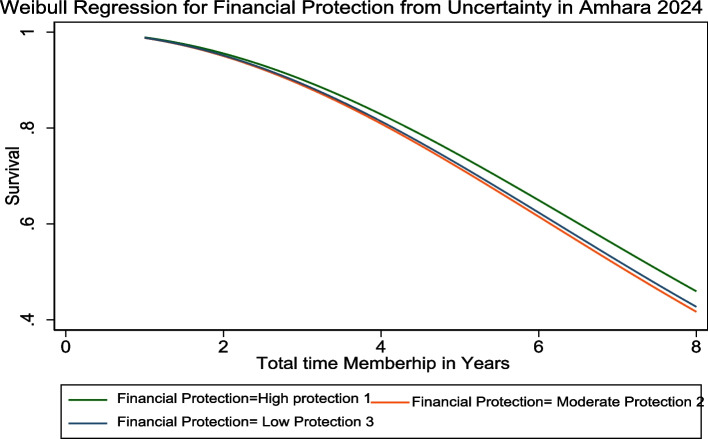
Result: Dropout rates peaked at an average membership duration of 4.09 years, with increasing hazard rates (Weibull shape parameter = 2.077, p < 0.001). The Kaplan-Meier analysis indicates safety net beneficiaries had a lower dropout rate (67.8%) than non-beneficiaries (76.6%) and longer survival (Chi-square = 4.083, p = 0.043). Respondents with 4-6 hectares had the shortest survival (5.88 years) and a higher dropout risk (B = 0.417, p = 0.042), while non-landowners had a higher attrition risk (HR = 1.266, p = 0.814), Farm owners had a lower dropout rate (70.7%) (Chi-square = 1.569, p = 0.021). Lower-middle-income members had a higher attrition risk (HR = 1.999, p = 0.042) with a mean survival of 6.28 years, compared to 6.47 years for upper-middle-income. Perceived healthcare quality influenced dropout risk, increasing it by 5.9% for fair quality than poor (HR = 3.368, p < 0.000), and significantly for good quality as well (HR = 2.284, p < 0.000). Moderate financial protection (not catastrophic spending) increased dropout risk by 7.3% compared to high protection (HR = 1.125, p = 0.040).
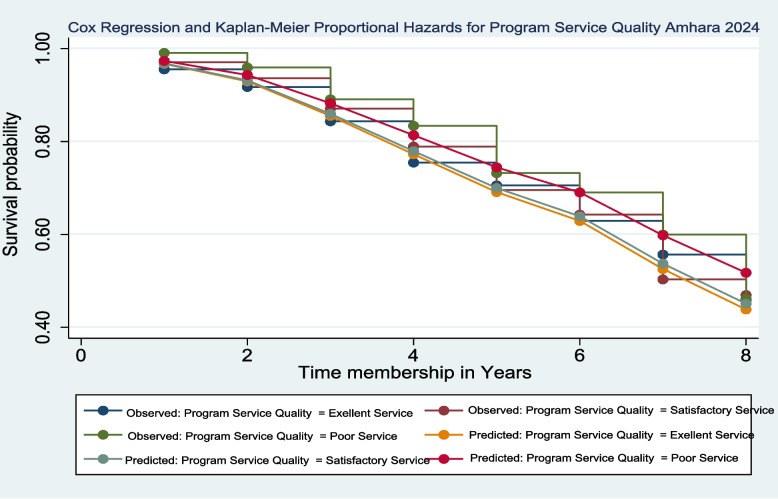
Conclusion: Dropout rates peak in the early years of membership and increase over time. Enrolling in safety nets and having smaller land sizes enhanced retention rates, while extensive landholdings and being classified as Lower-Middle Income led to higher dropout rates; however, ownership of modern amenities had minimal impact on retention. Perceived healthcare quality and financial protection significantly influence CBHI retention, while program service quality has little effect, underscoring the need for policies that prioritize improving service quality, accessibility, and affordability.
Keywords: Cox regression; Kaplan–Meier method; Survival analysis; Weibull AFT model.
© 2025. The Author(s).
Conflict of interest statement
Declarations. Ethics approval and consent to participate: "The study adhered to the Declaration of Helsinki's ethical principles and received approval from the Amhara Public Health Institute Ethical Committee (Ref No: H/R/T/T/D/07/66, March 7, 2024). Verbal informed consent was obtained from all participants, ensuring they understood the study's purpose, procedures, and right to withdraw without consequences. Confidentiality and anonymity were strictly maintained, and the study's findings were shared transparently with participants." Consent for publication: Not applicable. Competing interests: The authors declare no competing interests.
Figures
References
-
- Debalkie Atnafu D, Assefa AY. Multidimensional determinants of willingness to pay for community-based health insurance in Ethiopia and its implication towards universal health coverage: A narrative synthesis. Preventive Medicine Reports. 2023;36: 102474. 10.1016/j.pmedr.2023.102474. - DOI - PMC - PubMed
-
- Kakama AA, Atuheire A, Kahyana D. Leveraging on traditional practices to address contemporary healthcare inequities: a Kisiizi Community-based Health Insurance Scheme case. Research Square. 2022. 10.21203/rs.3.rs-1971005/v1.
MeSH terms
Grants and funding
LinkOut - more resources
Full Text Sources
