


Partial normalization of microbiota dysbiosis in condyloma acuminatum patients following treatment
- PMID: 40230439
- PMCID: PMC11994705
- DOI: 10.3389/fcimb.2025.1558469
Partial normalization of microbiota dysbiosis in condyloma acuminatum patients following treatment
Abstract
Introduction: Condyloma acuminatum (CA) is the most common sexually transmitted disease and the presence of microbiota dysbiosis has been observed to promote the progress of the disease. However, the explicit characteristics of microbiota dysbiosis in CA patients have not been well elucidated yet.
Methods: We recruited 40 CA patients who received QYXJ (an in-hospital prescription that has been used to treat CA for many years) treatment and 40 healthy controls (HC) in the current study. Before and after two weeks QYXJ administration, the skin microbiome of each patient was assessed using 16S rRNA gene sequencing.
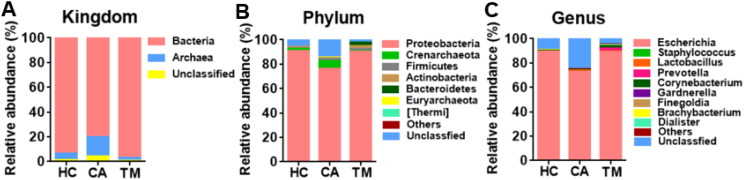
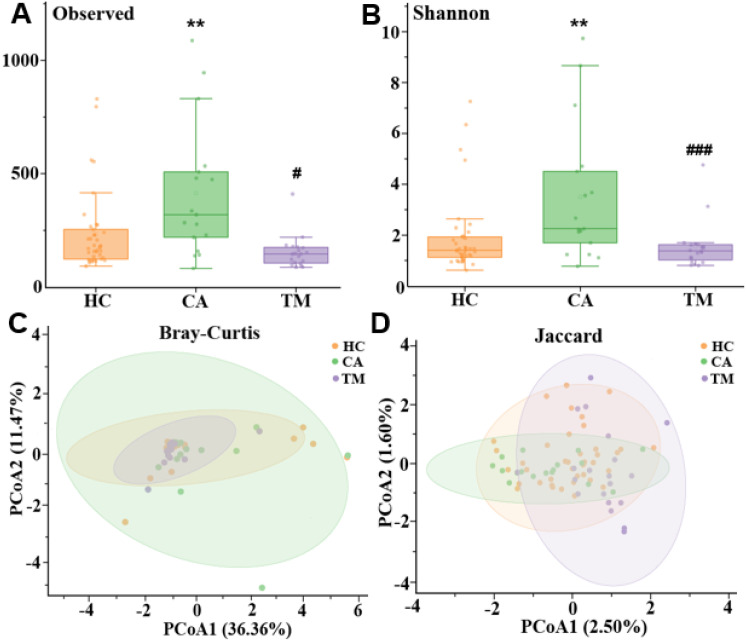
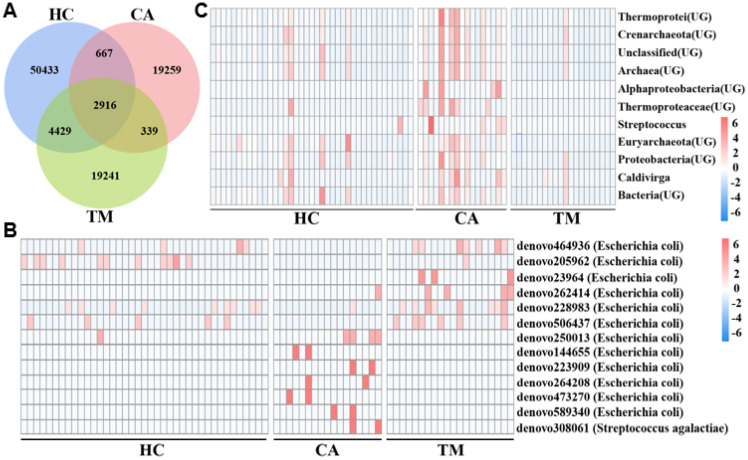
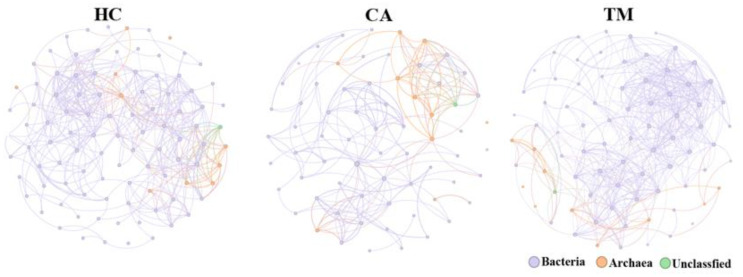
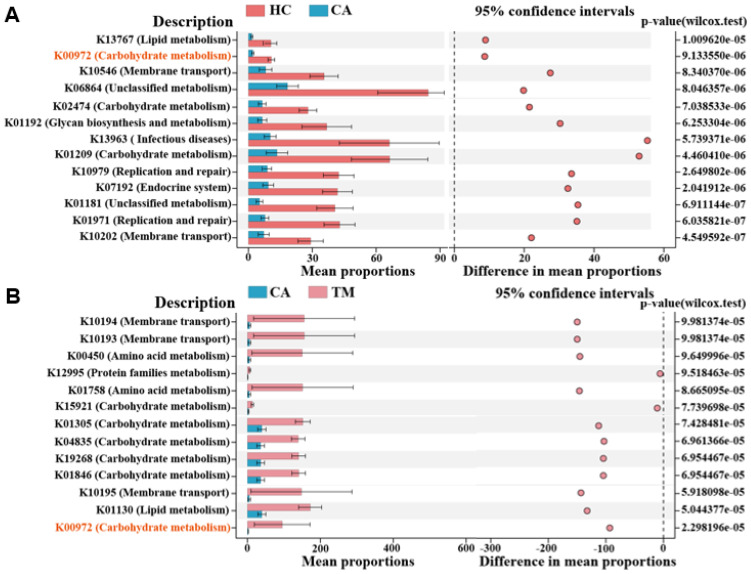
Results: Here, we found increased relative abundances of Staphylococcus and Lactobacillus, whereas a decreased Escherichia in CA patients relative to healthy controls (HC). Moreover, we also observed significant alpha and beta diversity differences between the CA and HC groups, and QYXJ treatment effectivity attenuated these alterations of genus level and microbial diversity in patients with CA. Importantly, further microbial interaction and function analyses revealed the significantly enriched relative abundance of Caldivirga and Streptococcus in microbial community, decreased complexity of microbial interactions and downregulated metabolic pathways in CA patients, including membrane transport, lipid metabolism and carbohydrate metabolism. Remarkably, QYXJ administration partially restored these microbiota dysbiosis, which subsequently shifts microbiomes of patients with CA towards healthy-like microbiota.
Conclusion: This study further confirmed the changes of skin microbiome in CA pathogenesis and firstly revealed the protective effects of QYXJ in microbiota dysbiosis resolution, suggesting its potential role as a novel method for CA treatment.
Keywords: condyloma acuminatum (CA); dysbiosis resolution; microbial interaction and function; microbiota dysbiosis; skin microbiome.
Copyright © 2025 Chen, Li, Fu, Hu, Chen, Huang, Xu, Zeng and Li.
Conflict of interest statement
The authors declare that the research was conducted in the absence of any commercial or financial relationships that could be construed as a potential conflict of interest.
Figures
References
-
- Chen Y., Qiu X., Wang W., Li D., Wu A., Hong Z., et al. (2020). Human papillomavirus infection and cervical intraepithelial neoplasia progression are associated with increased vaginal microbiome diversity in a Chinese cohort. BMC Infect. Dis. 20, 629. doi: 10.1186/s12879-020-05324-9 - DOI - PMC - PubMed
MeSH terms
Substances
LinkOut - more resources
Full Text Sources
Medical
