


ESCRT may function as a tumor biomarker, transitioning from pan-cancer analysis to validation within breast cancer
- PMID: 40230849
- PMCID: PMC11994712
- DOI: 10.3389/fimmu.2025.1531940
ESCRT may function as a tumor biomarker, transitioning from pan-cancer analysis to validation within breast cancer
Abstract
Background: Studies have shown that ESCRT genes affect cell aging, immune environment, and tumors. BRCA was used to explore its effects on tumor prognosis and therapy.
Methods: The data sets of Cancer Genome Atlas (TCGA), Genome-Tissue Expression Plan (GTEX), Human Protein Mapping (HPA), Gene Expression Omnibus (GEO), Clinical Proteomic Tumor Analysis Consortium (CPTAC), R software package, and bioinformatics methods were used to mine the potential carcinogenic effects of ESCRT, including the expression level, prognostic value, and immune value of ESCRT in various types of tumor tissues, and the potential function of ESCRT family genes was further verified in breast cancer.
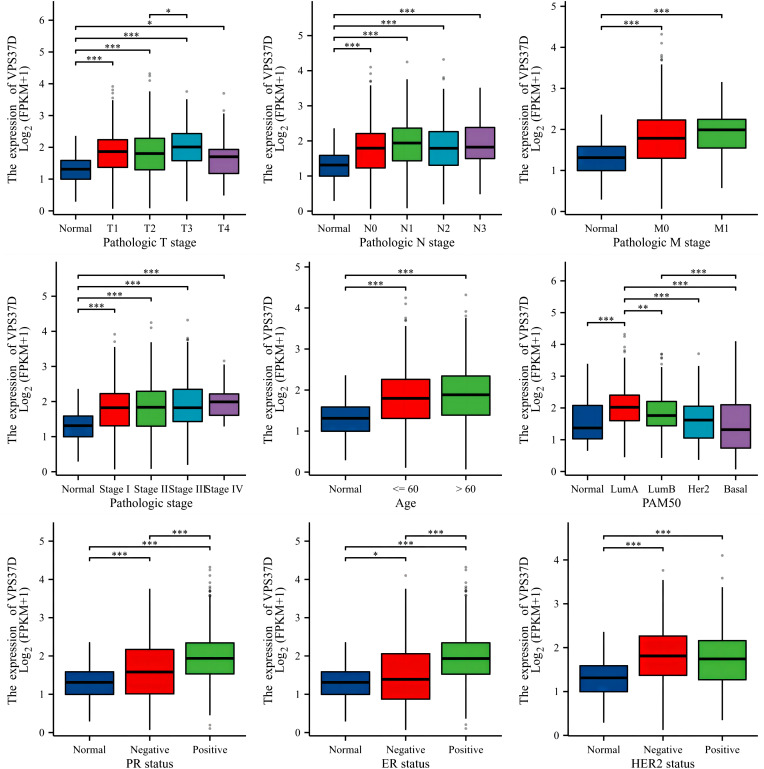
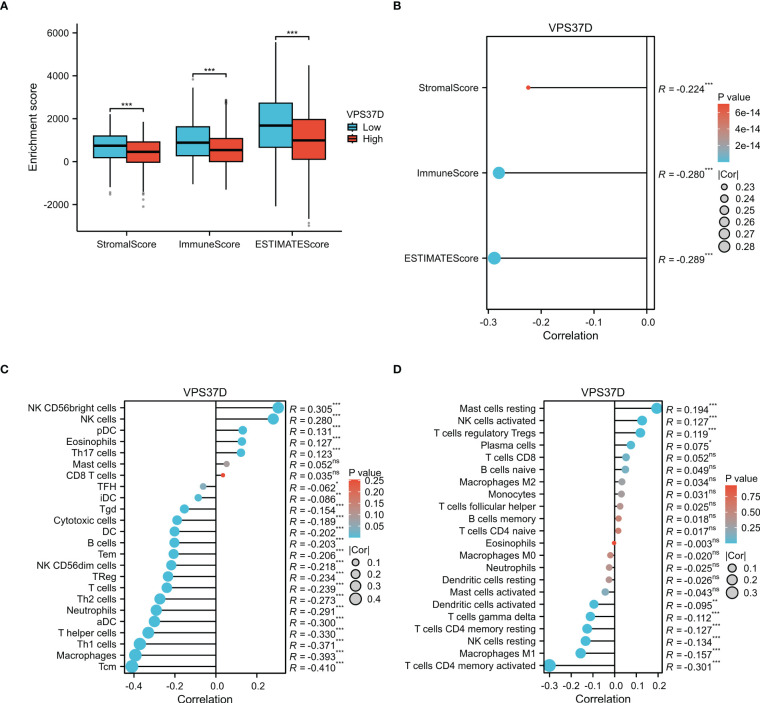
Results: ESCRT showed significant differential expression in various cancers, such as bladder urothelial carcinoma and liver, cervical, renal, esophageal, head, and neck cancers (P <0.05). Abnormal ESCRT expression is associated with poor prognosis in various cancers, such as adrenocortical carcinoma, bladder urothelial carcinoma, breast cancer, and cervical cancer (P <0.05). The expression level of ESCRT was significantly associated with immune cell infiltration and the modulation of the stromal/immune score (all P <0.05). Enrichment analysis showed that ESCRT is associated with immune-related functions and transport signaling pathways in various tumor cells. Moreover, ESCRT serves as an early diagnostic marker for several tumors and is significantly associated with prognosis. This confirms that ESCRT is associated with most immune-infiltrating cells in pan-carcinomas. Taken together, these studies highlight the importance of the ESCRT family gene VPS37D in breast cancer initiation, progression, and immune response.
Conclusion: This study highlights ESCRT's potential in tumor detection via pan-cancer analysis, showing expression variations between tumor and normal tissues, its role in cancer progression through the immune microenvironment, and its specificity and sensitivity in detection. The VPS37D gene, with significant variation in breast cancer, predicts patient prognosis and is related to the tumor microenvironment, suggesting that ESCRT is a novel biomarker for early diagnosis and prognosis assessment.
Keywords: ESCRT; VPS37D; biomarker; immune cell infiltration; pan-cancer.
Copyright © 2025 Chen, Tan, Zhang, Yuan and Song.
Conflict of interest statement
The authors declare that the research was conducted in the absence of any commercial or financial relationships that could be construed as a potential conflict of interest.
Figures


References
MeSH terms
Substances
LinkOut - more resources
Full Text Sources
Medical
Miscellaneous
