


Research on the Quality Variation Patterns During the Fermentation Process of Coffee-Grounds Craft Beer
- PMID: 40232021
- PMCID: PMC11941700
- DOI: 10.3390/foods14061014
Research on the Quality Variation Patterns During the Fermentation Process of Coffee-Grounds Craft Beer
Abstract
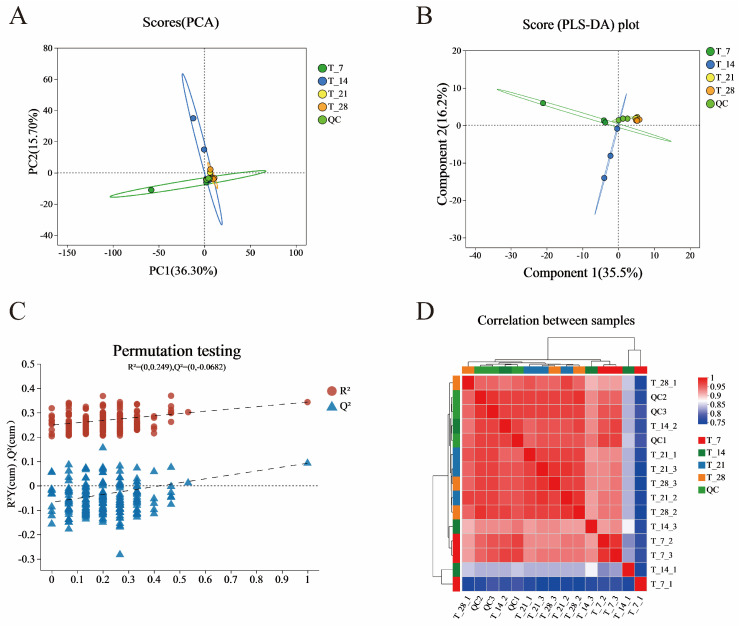
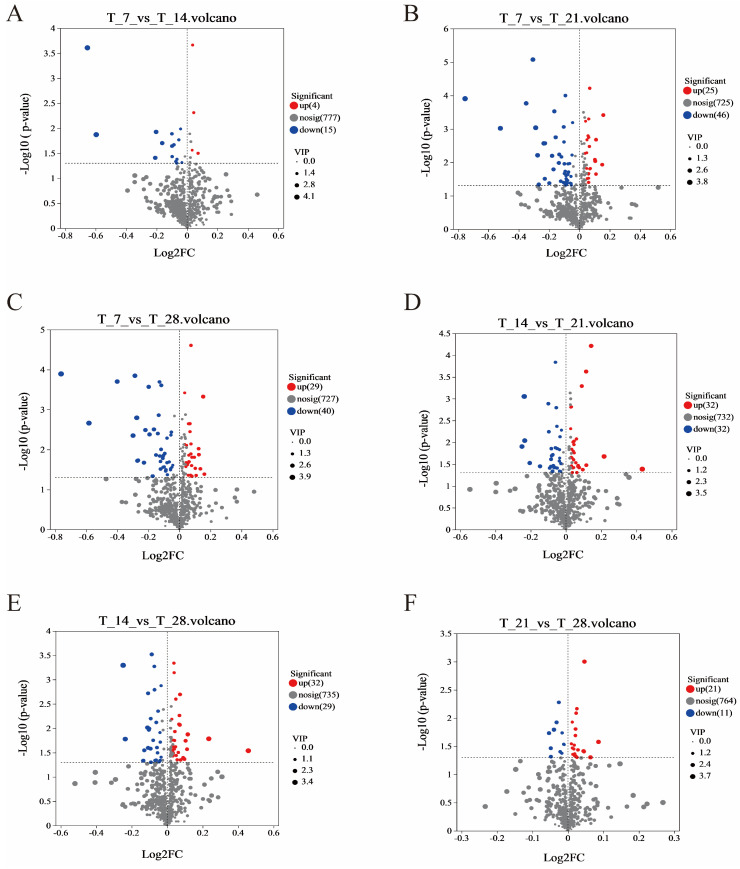
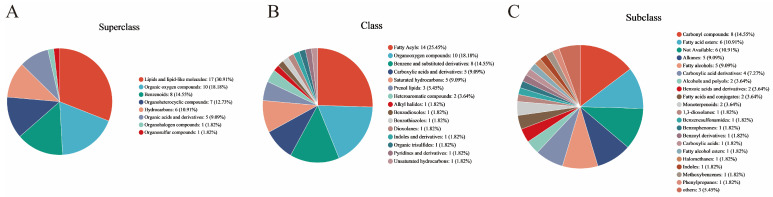
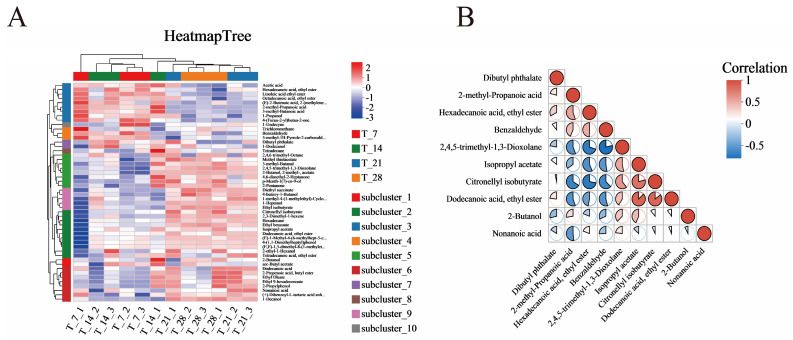
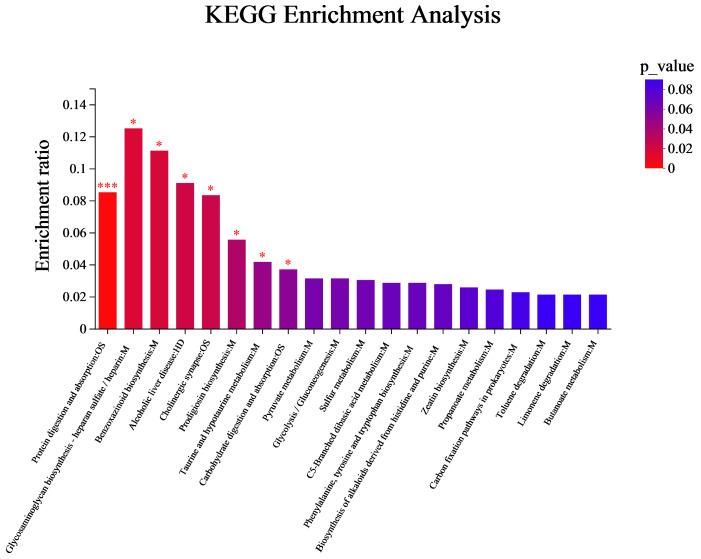
To investigate the metabolic differences and mechanisms during the fermentation process of coffee-grounds craft beer, HS-SPME-GC/MS untargeted metabolomics technology was used to study the metabolic differences during the fermentation process of coffee-grounds craft beer. Multivariate statistical analysis and pathway analysis were combined to screen for significantly different metabolites with variable weight values of VIP ≥ 1 and p < 0.05. The results indicate that at time points T7, T14, T21, and T28, a total of 183 differential metabolites were detected during the four fermentation days, with 86 metabolites showing significant differences. Its content composition is mainly composed of lipids and lipid-like molecules, organic oxygen compounds, and benzoids, accounting for 63.64% of the total differential metabolites. KEGG enrichment analysis of differentially expressed metabolites showed a total of 35 metabolic pathways. The top 20 metabolic pathways were screened based on the corrected p-value, and the significantly differentially expressed metabolites were mainly enriched in pathways such as protein digestion and absorption, glycosaminoglycan biosynthesis heparan sulfate/heparin, and benzoxazinoid biosynthesis. The different metabolic mechanisms during the fermentation process of coffee-grounds craft beer reveal the quality changes during the fermentation process, providing theoretical basis for improving the quality of coffee-grounds craft beer and having important theoretical and practical significance for improving the quality evaluation system of coffee-grounds craft beer.
Keywords: HS-SPME-GC/MS; coffee-grounds craft beer (CGB); flavor substance; physicochemical index; sensory analysis.
Conflict of interest statement
The authors declare no conflicts of interest.
Figures
References
-
- Girotto F., Pivato A., Cossu R., Nkeng G.E., Lavagnolo M.C. The Broad Spectrum of Possibilities for Spent Coffee Grounds Valorisation. J. Mater. Cycles Waste Manag. 2018;20:695–701. doi: 10.1007/s10163-017-0621-5. - DOI
-
- Ballesteros L.F., Teixeira J.A., Mussatto S.I. Chemical, Functional, and Structural Properties of Spent Coffee Grounds and Coffee Silverskin. Food Bioprocess Technol. 2014;7:3493–3503. doi: 10.1007/s11947-014-1349-z. - DOI
-
- D’Almeida A.P., de Albuquerque T.L. Coconut Husk Valorization: Innovations in Bioproducts and Environmental Sustainability. Biomass Convers. Biorefinery. 2024:1–21. doi: 10.1007/s13399-024-06080-5. - DOI
-
- Kim J., Park Y., Shin J., Kim S., Kim H.L., Bae S. Sustainable Protein Extraction from Spent Coffee Grounds Using Response Surface Methodology. Biomass Convers. Biorefinery. 2025:1–11. doi: 10.1007/s13399-025-06546-0. - DOI
LinkOut - more resources
Full Text Sources
Research Materials
Miscellaneous
