


Monoclonal gammopathy of renal significance (MGRS): retrospective monocentric analysis of clinical outcomes and treatment strategies
- PMID: 40232548
- PMCID: PMC12000252
- DOI: 10.1007/s10238-025-01646-7
Monoclonal gammopathy of renal significance (MGRS): retrospective monocentric analysis of clinical outcomes and treatment strategies
Abstract
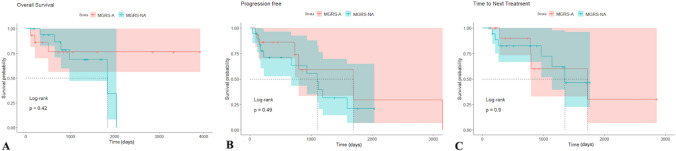
Monoclonal Gammopathy of Renal Significance (MGRS) is a group of rare disorders in which monoclonal proteins cause kidney damage. Due to its rarity, ongoing research is vital to refine diagnostics, enhance treatment, and improve outcomes. This retrospective study analyzed 34 patients with renal biopsy-proven MGRS-defining lesions. Patients were divided into two subgroups: kidney-limited AL amyloidosis (MGRS-A, 44%, n = 15) and other MGRS (MGRS-NA, 56%, n = 19). Key outcomes included progression-free survival and overall survival. Baseline characteristics such as histopathology, plasma cell percentage, kidney function, and proteinuria were documented alongside initial treatments, and hematologic and renal response. Distinct differences were observed between the two groups: MGRS-NA was primarily associated with glomerular lesions, while MGRS-A exhibited broader kidney involvement. Treatment varied: bortezomib for plasma cell-driven cases and rituximab for B-cell-related conditions. Anemia was the most common side effect (71%), associated with treatment intensity. Despite similar overall survival outcomes, MGRS-A followed a more aggressive course, with a shorter time from diagnosis to death (206 vs. 728 days). Renal and hematologic responses were comparable between the groups, although baseline factors such as hemoglobin and CRP levels were predictive of mortality. These findings underscore the need for more precise characterization and standardized criteria to optimize the management of MGRS.
Keywords: Amyloidosis; Anemia; Bone marrow plasma cells; Kidney; Monoclonal gammopathy of renal significance; Proteinuria.
© 2025. The Author(s).
Conflict of interest statement
Declarations. Conflicts of interest: No conflicts of interest to disclose. Ethical approval statement: The study was conducted under all national and international ethical and legal recommendations, following approval by the local Ethics Review Committee, in accordance with the declaration of Helsinki. (Comitato Etico Territoriale, CER- Liguria: 515/2020). Informed consent was obtained from all participants prior to their inclusion in the study.
Figures

References
-
- Derman B, Castillo JJ, Sarosiek S, Beksac M. When a monoclonal gammopathy is not multiple myeloma. Am Soc Clin Oncol Educ Book Am Soc Clin Oncol Annu Meet. 2022;2:1–10. - PubMed
-
- Leung N, Bridoux F, Nasr SH. Monoclonal gammopathy of renal significance. N Engl J Med. 2021;384(20):1931–41. - PubMed
-
- Kyle RA, Durie BGM, Rajkumar SV, Landgren O, Blade J, Merlini G, et al. Monoclonal gammopathy of undetermined significance (MGUS) and smoldering (asymptomatic) multiple myeloma: IMWG consensus perspectives risk factors for progression and guidelines for monitoring and management. Leukemia. 2010;24(6):1121–7. - PMC - PubMed
-
- Amaador K, Peeters H, Minnema MC, Nguyen TQ, Dendooven A, Vos JMI, et al. Monoclonal gammopathy of renal significance (MGRS) histopathologic classification, diagnostic workup, and therapeutic options. Neth J Med. 2019;77(7):243–54. - PubMed
MeSH terms
Substances
LinkOut - more resources
Full Text Sources
Medical
Research Materials
Miscellaneous
