


Prevalence and factors associated with Helicobacter Pylori infection among patients with dyspeptic symptoms in Tanzania: Experience from temeke regional referral hospital in Dar Es Salaam
- PMID: 40233075
- PMCID: PMC11999147
- DOI: 10.1371/journal.pone.0320191
Prevalence and factors associated with Helicobacter Pylori infection among patients with dyspeptic symptoms in Tanzania: Experience from temeke regional referral hospital in Dar Es Salaam
Abstract
Introduction: Helicobacter pylori is a type of bacteria that infects the stomach lining and can cause various gastrointestinal disorders, such as dyspepsia, gastritis and peptic ulcers. Dyspepsia is a common symptom among patients seeking medical care, and Helicobacter pylori infection is one of the most common causes of dyspepsia.
Objective: This study aimed to determine the prevalence and factors associated with Helicobacter pylori infection among patients attending Temeke Regional Referral Hospital (RRH) in Dar es Salaam, Tanzania.
Methods: A hospital-based cross-sectional study involving dyspeptic patients was conducted between May and June 2023. A Standardized data collection tool was used to collect socio-demographic characteristics and other information such as level of income and source of water. Helicobacter pylori antigen was detected using a stool Helicobacter pylori antigen rapid test according to the manufacturer's instructions. Data analysis was done using STATA 15 computer software.
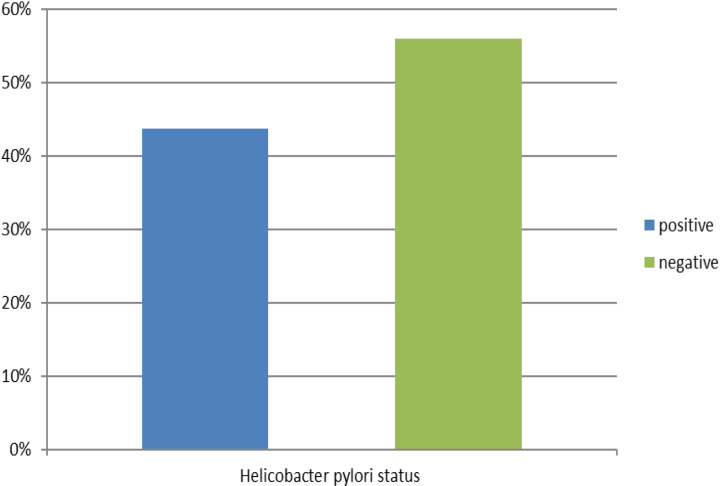
Results: The study revealed that the prevalence of Helicobacter pylori infection among dyspeptic patients was 43.77%. Also, male sex, occasional hand washing habits and participants who were not sure whether they used treated water for drinking were the factors that were strongly associated with positive Helicobacter pylori infection.
Conclusion: Preventive measures and eradication of Helicobacter pylori infection should be considered worthy by public health authorities. More studies have to be emphasized to check the relationship between sex and Helicobacter pylori infection.
Copyright: © 2025 Kibira, Tungu. This is an open access article distributed under the terms of the Creative Commons Attribution License, which permits unrestricted use, distribution, and reproduction in any medium, provided the original author and source are credited.
Conflict of interest statement
The authors have declared that no competing interests exist.
Figures
References
-
- Schulz TR, McBryde ES, Leder K, Biggs B-A. Using stool antigen to screen for Helicobacter pylori in immigrants and refugees from high prevalence countries is relatively cost effective in reducing the burden of gastric cancer and peptic ulceration. PLoS One. 2014;9(9):e108610. doi: 10.1371/journal.pone.0108610 - DOI - PMC - PubMed
-
- Thomson ABR. Helicobacter pylori and gastroduodenal pathology. Can J Gastroenterol. 1993;7(4):353–8.
-
- Jaka H, Mushi MF, Mirambo MM, Wilson L, Seni J, Mtebe M, et al. Sero-prevalence and associated factors of Helicobacter pylori infection among adult patients with dyspepsia attending the gastroenterology unit in a tertiary hospital in Mwanza, Tanzania. Afr Health Sci. 2016;16(3):684–9. doi: 10.4314/ahs.v16i3.7 - DOI - PMC - PubMed
MeSH terms
LinkOut - more resources
Full Text Sources
Medical
