


Decoding the causal association between immune cells and three chronic respiratory diseases: Insights from a bi-directional Mendelian randomization study
- PMID: 40234829
- PMCID: PMC11998255
- DOI: 10.1186/s12890-025-03641-w
Decoding the causal association between immune cells and three chronic respiratory diseases: Insights from a bi-directional Mendelian randomization study
Abstract
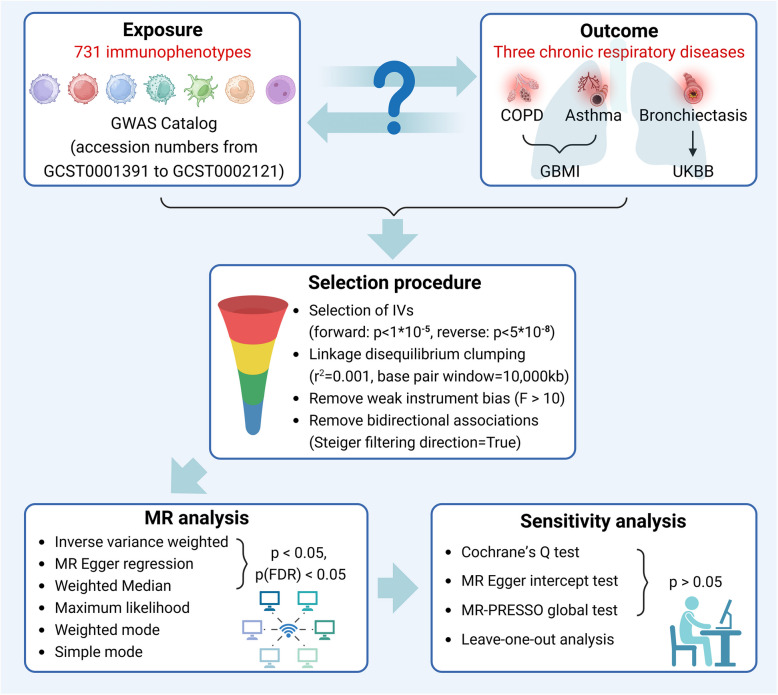
Background: Numerous studies have indicated the correlations of immune traits and chronic respiratory diseases (CRDs). Whereas, causality is still implicative. Hence, our study was designed to investigate the causal relations utilizing bidirectional Mendelian randomization (MR) and to identify the immune traits of potential significance.
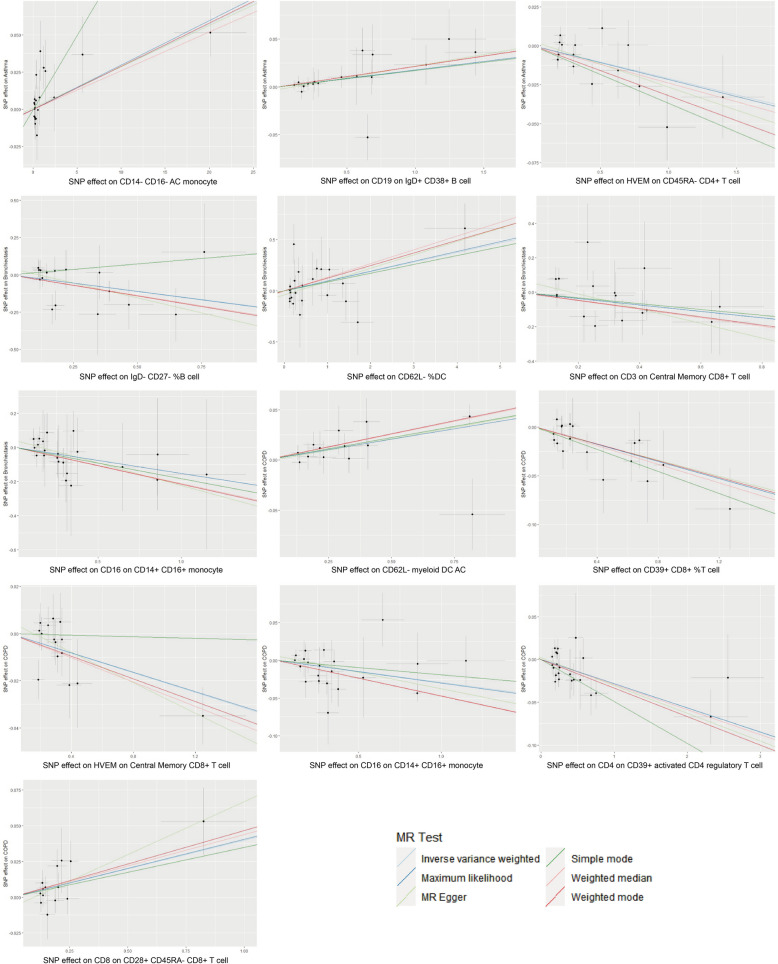
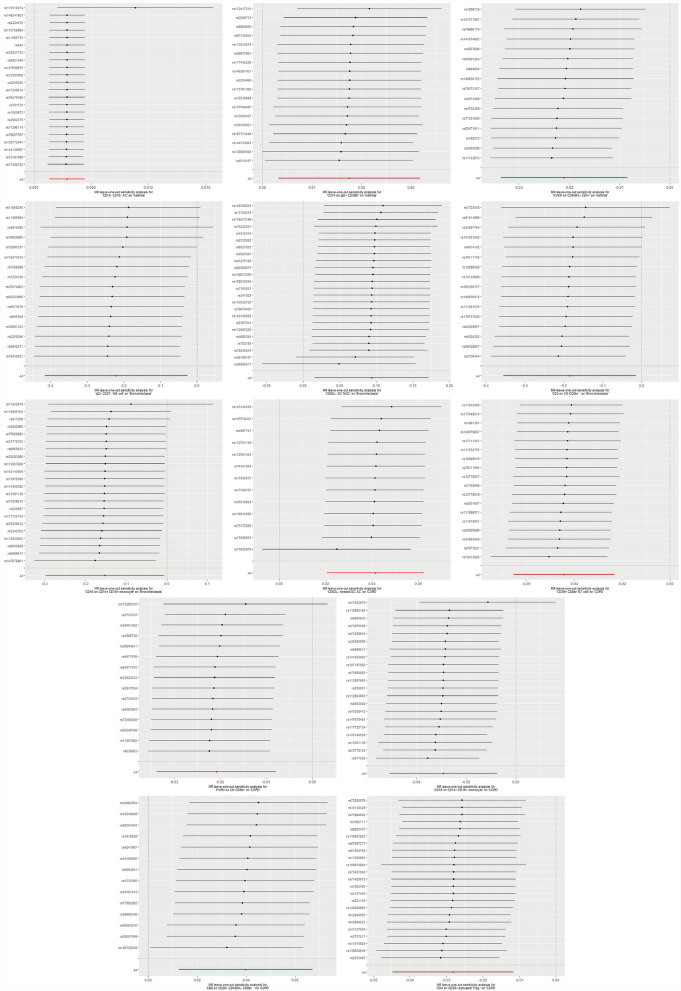
Methods: Using GWAS datasets, we performed Mendelian randomization (MR) analyses to examine 731 immune traits associated with three CRDs: asthma, bronchiectasis and chronic obstructive pulmonary disease (COPD). Six widely applied MR approaches, along with Bayesian weighted Mendelian randomization analysis, were utilized to assess causality. Through extensive sensitivity assessments, heterogeneity and pleiotropy have been examined. For integrity, leave-one-out analysis was implemented as the final step.
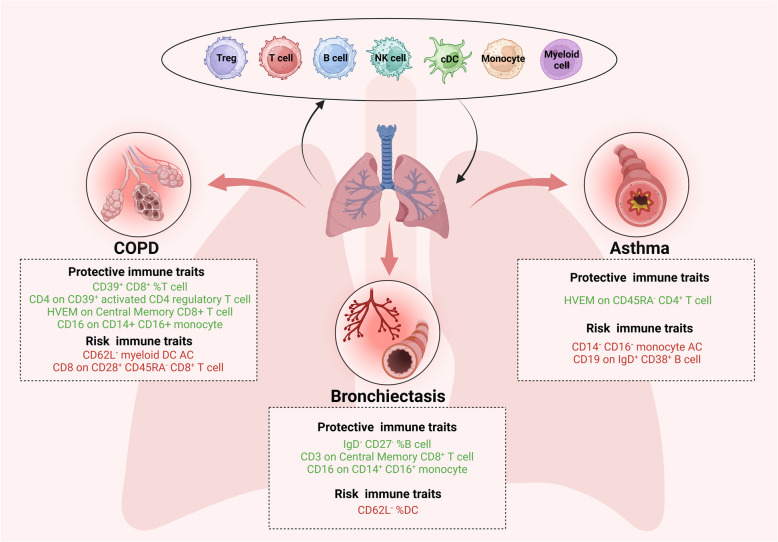
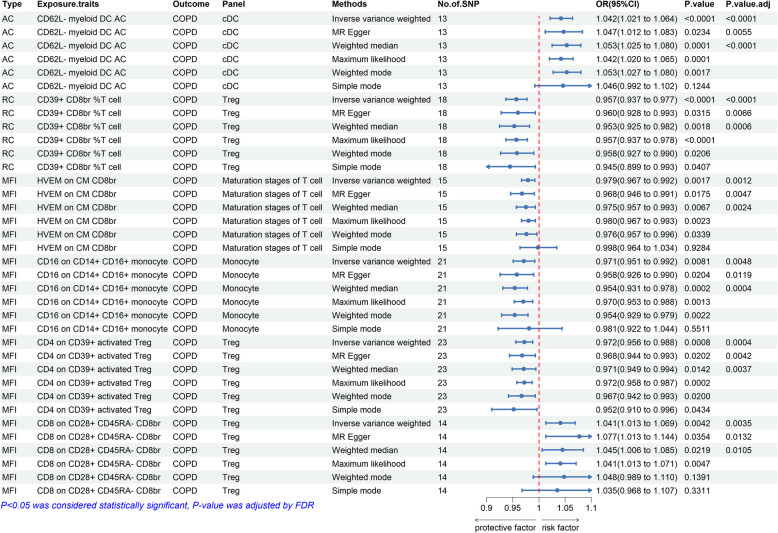
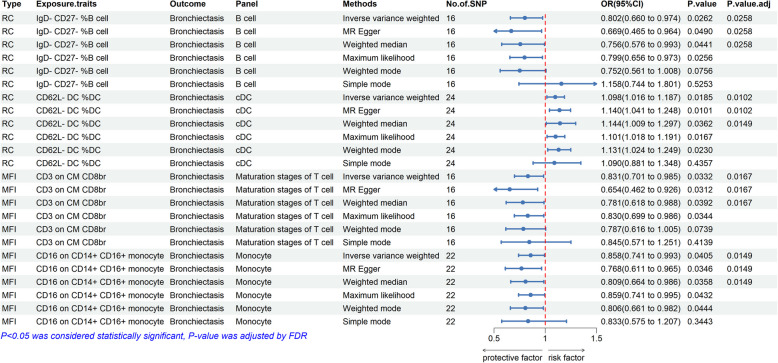
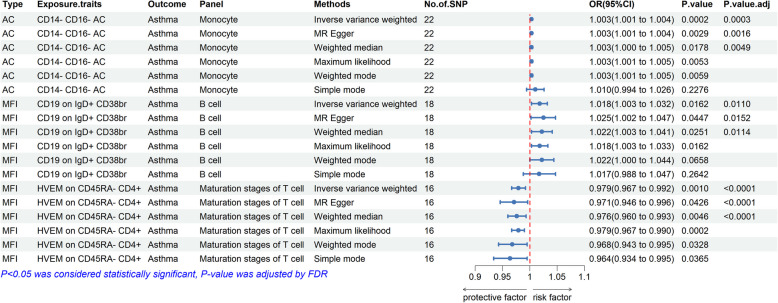
Results: Our study reveals 13 immune traits that may have a genetic basis for predicting the occurrence of CRDs, which include two risk traits (CD62L- myeloid dendritic cell (DC) absolute count (AC), CD8 on CD28+ CD45RA- CD8+ T cell) and four protective traits (CD39+ CD8+ %T cell, CD4 on CD39+ activated CD4 regulatory T (Treg) cell, herpes virus entry mediator (HVEM) on Central Memory (CM) CD8+ T cell, CD16 on CD14+ CD16+ monocyte) in COPD, three protective traits (IgD- CD27- %B cell, CD3 on CM CD8+ T cell, CD16 on CD14+ CD16+ monocyte) and one risk trait (CD62L- %DC) in bronchiectasis. Additionally, two risk traits (CD14- CD16- AC monocyte, CD19 on IgD+ CD38+ B cell) and one protective trait (HVEM on CD45RA- CD4+ T cell) were identified in asthma. Sensitivity analyses showed no indications of pleiotropy or signs of heterogeneity. The inverse MR assessment results gave no evidence of reverse causations, ultimately validating the soundness of the findings.
Conclusions: Our investigation identifies latent correlations of immune traits and three major CRDs, offering novel perspectives on the preventive and therapeutical strategies for CRDs.
Keywords: Asthma; Bronchiectasis; Chronic obstructive pulmonary disease; Genome-wide association study (GWAS); Immunophenotype; Mendelian randomization.
© 2025. The Author(s).
Conflict of interest statement
Declarations. Ethics approval and consent to participate: The authors declare no conflict of interest. Consent for publication: This study was conducted using published studies and publicly available summary statistics. All original studies were approved by the appropriate ethical review commissions and all participants provided informed consent. Besides, no individual-level data was used in this study, no new ethical commission approval was required. Competing interests: The authors declare no competing interests.
Figures
References
MeSH terms
Grants and funding
LinkOut - more resources
Full Text Sources
Medical
Research Materials
