


Single-cell transcriptomic dynamics of scallop heart reveals the heterogeneous response to heat stress
- PMID: 40234911
- PMCID: PMC12001498
- DOI: 10.1186/s12915-025-02210-1
Single-cell transcriptomic dynamics of scallop heart reveals the heterogeneous response to heat stress
Abstract
Background: Animals with open circulatory systems are highly vulnerable to environmental temperature fluctuations, making them particularly threatened by global warming. However, research on the cellular heterogeneity of heart responses to elevated temperatures in animals with open circulatory systems remains limited.
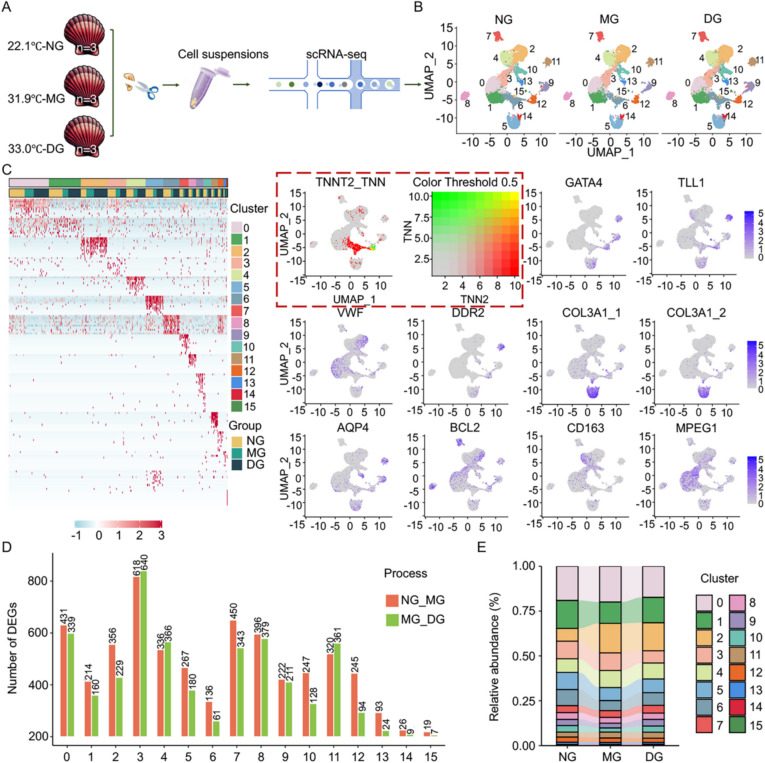
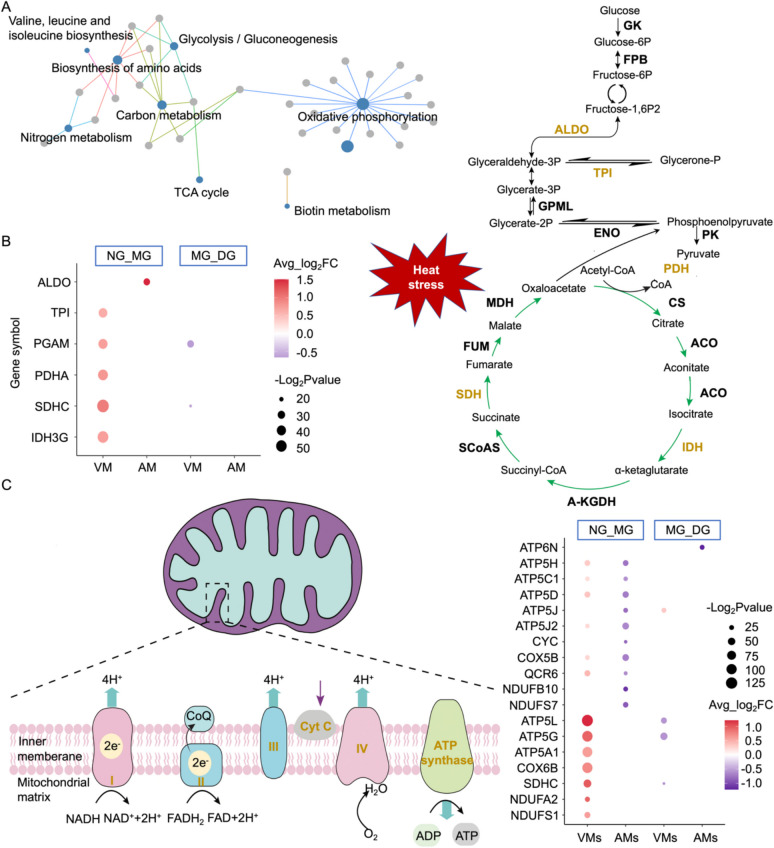
Results: Here, we conducted a comprehensive investigation of the morphology, metabolism and scRNA-seq of the heart in a molluscan model, Argopecten irradians, under heat stress. Our results unraveled that the severity of cardiac structure damage increased progressively with rising temperature, accompanied by widespread mitochondrial dysfunction and neurohumoral response. We identified two subpopulations within cardiomyocytes (CMs), including ventricular myocytes (VMs) and atrial myocytes (AMs), which exhibited specialized functional roles in response to thermal stress. Specifically, AMs enhanced cell-cell communications with the immune-like cells and fibroblasts to contribute to maintaining cardiac homeostasis under heat stress. Whereas, VMs displayed enhanced energy supply and differentiation potential to withstand thermal challenges. Furthermore, RNA interference targeting the most heat-responsive gene, PLRP2-like, resulted in a significant reduction in heat tolerance and triglyceride accumulation in scallops.
Conclusions: Our study investigated the heterogeneous response of the scallop heart to high temperatures, revealing distinct response patterns between VMs and AMs. We further identified a key gene, AiPLRP2-like, which exhibits unique cellular localization patterns compared to its mammalian counterpart and may play a pivotal role in regulating cardiac thermotolerance in organisms with open circulatory systems. These findings provide novel insights into the theoretical framework and evolutionary adaptations of marine invertebrate hearts in response to environmental temperature fluctuations.
Keywords: Heart; Heat stress; Mollusks; Open circulatory systems; PLRP2; ScRNA-seq.
© 2025. The Author(s).
Conflict of interest statement
Declarations. Ethics approval and consent to participate: Not applicable. Consent for publication: Not applicable. Competing interests: The authors declare no competing interests.
Figures




References
-
- Reiber CL, McGaw IJ. A review of the “open” and “closed” circulatory systems: new terminology for complex invertebrate circulatory systems in light of current findings. Int J Zool. 2009;1:301284.
-
- Scanes E, Byrne M. Warming and hypoxia threaten a valuable scallop fishery: a warning for commercial bivalve ventures in climate change hotspots. Glob Change Biol. 2023;29(8):2043–5. - PubMed
-
- Soon TK, Zheng H. Climate change and bivalve mass mortality in temperate regions. Rev Environ Contam Toxicol. 2020;251:109–29. - PubMed
-
- Simoes-Costa MS, Vasconcelos M, Sampaio AC, Cravo RM, Linhares VL, Hochgreb T, et al. The evolutionary origin of cardiac chambers. Dev Biol. 2005;277(1):1–15. - PubMed
MeSH terms
Grants and funding
LinkOut - more resources
Full Text Sources
