


The Effect of Sacubitril/Valsartan on Supraventricular and Ventricular Arrhythmias in Patients With Heart Failure
- PMID: 40235086
- PMCID: PMC12000223
- DOI: 10.1111/anec.70081
The Effect of Sacubitril/Valsartan on Supraventricular and Ventricular Arrhythmias in Patients With Heart Failure
Abstract
Background: Patients with heart failure with reduced ejection fraction (HFrEF) frequently experience electrical disturbances, such as ventricular or atrial fibrillation (AF). Sacubitril/Valsartan (SV) therapy has been linked to lower rates of mortality, ventricular tachycardia (VT), and ventricular fibrillation (VF), with decreased reliance on implantable cardioverter-defibrillator (ICD) therapy. However, studies on the antiarrhythmic effects of SV in patients with ICD or cardiac resynchronization therapy defibrillator (CRT-D) devices are limited. This study aimed to evaluate the impact of SV therapy on antiarrhythmic pacing, defibrillation shock occurrences, and the burden of ventricular arrhythmias in patients with HFrEF who have ICD or CRT-D devices.
Method: This study was conducted at a HF outpatient clinic involving patients with HFrEF treated with SV. Primary outcomes included the incidence of VT, VF, non-sustained VT (NsVT), supraventricular tachycardia (SVT), and related interventions such as antiarrhythmic pacing (ATP) and defibrillation shocks.
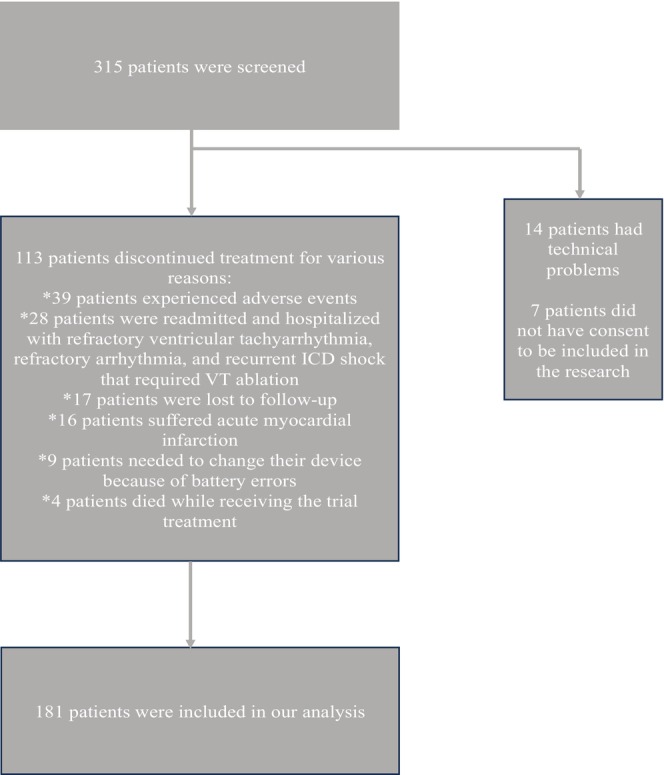
Result: A total of 181 HFrEF patients completed at least 12 months of follow-up, with a mean age of 63.39 ± 12 years; 36.5% were male, and 60.8% had an ICD. Device interrogation revealed a significant reduction in VF incidents (7 vs. 15, p = 0.025) and a decrease in the combined outcome of VT and VF (17 vs. 24, p = 0.047). The need for ICD interventions such as ATP and shocks also significantly decreased following the initiation of SV therapy (10 vs. 24, p = 0.012).
Conclusion: SV therapy significantly reduces the incidence of cardiac arrhythmias, particularly VT and VF, while decreasing the need for clinical interventions related to implanted devices.
Keywords: CRT‐D; ICD; Sacubitril/Valsartan; arrhythmias; heart failure.
© 2025 The Author(s). Annals of Noninvasive Electrocardiology published by Wiley Periodicals LLC.
Conflict of interest statement
The authors declare no conflicts of interest.
Figures
References
-
- Allam, L. E. , Abdelmotteleb A. A., Eldamanhoury H. M., and Hassan H. S.. 2024. “Unlocking the Potential of Sacubitril/Valsartan Therapy in Improving ECG and Echocardiographic Parameters in Heart Failure Patients With Reduced Ejection Fraction (HErEF).” Egyptian Heart Journal 76, no. 1: 41. - PMC - PubMed
-
- Armentaro, G. , D'Arrigo G., Magurno M., et al. 2021. “Impact of Sacubitril/Valsartan on Clinical and Echocardiographic Parameters in Heart Failure Patients With Reduced Ejection Fraction: Data From a Real Life 2‐Year Follow‐Up Study.” Frontiers in Pharmacology 12: 733475. 10.3389/fphar.2021.733475. - DOI - PMC - PubMed
-
- Belarte‐Tornero, L. C. , Mojón D., Solé‐González E., Ruiz‐Bustillo S., Valdivielso‐More S., and Farré N.. 2021. “Sacubitril‐Valsartan Modifies the Indication of Cardiac Implantable Devices in Patients With Heart Failure and Reduced Ejection Fraction.” Revista Española de Cardiología 74, no. 12: 1117–1119. - PubMed
-
- MembersATF , Brignole M., Auricchio A., et al. 2013. “2013 ESC Guidelines on Cardiac Pacing and Cardiac Resynchronization Therapy: The Task Force on Cardiac Pacing and Resynchronization Therapy of the European Society of Cardiology (ESC). Developed in Collaboration With the European Heart Rhythm Association (EHRA).” European Heart Journal 34, no. 29: 2281–2329. - PubMed
MeSH terms
Substances
LinkOut - more resources
Full Text Sources
Medical
Research Materials
Miscellaneous
