


Manipulative Treatment of Myofascial Pain Syndrome: A Network Meta-Analysis Based on Randomized Controlled Trials
- PMID: 40236721
- PMCID: PMC11998942
- DOI: 10.2147/JPR.S517869
Manipulative Treatment of Myofascial Pain Syndrome: A Network Meta-Analysis Based on Randomized Controlled Trials
Abstract
Objective: Myofascial pain syndrome (MPS) is a common condition. Manual therapy is preferred over other invasive treatments due to its noninvasiveness and safety, but evidence for its effectiveness is lacking. We here conducted a comprehensive search of randomized controlled trial studies related to manipulative therapy for MPS and conducted a network meta-analysis to provide a basis for clinical applications and experimental studies.
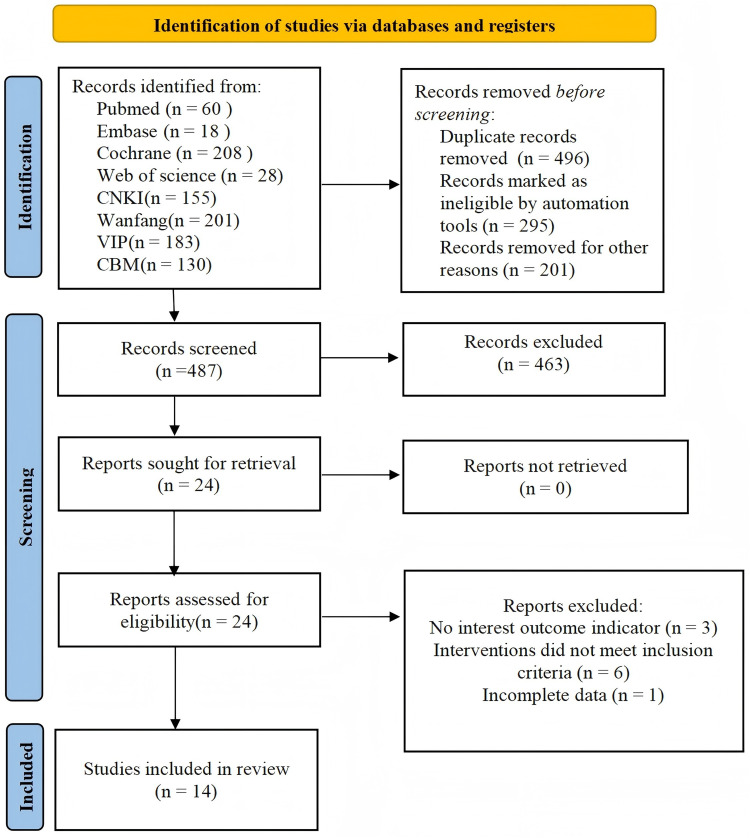
Methods: Reports on randomized controlled trials of noninvasive therapy for MPS deposited in the China National Knowledge Infrastructure database, Chinese Science Citation Database(CSCD), Chinese Citation Database(CCD), Chinese Biomedical Database, PubMed, Embase, Cochrane Library, and Web of Science from their respective inception dates until November 10, 2024, were retrieved. A network meta-analysis was performed using Rv4.2.0 software.
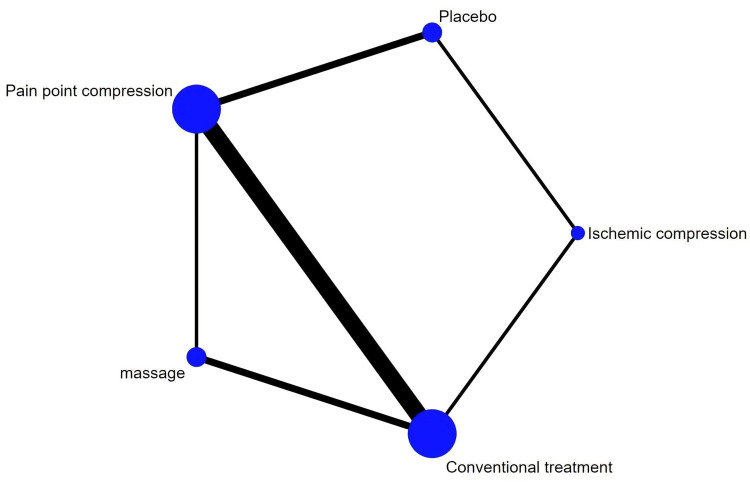
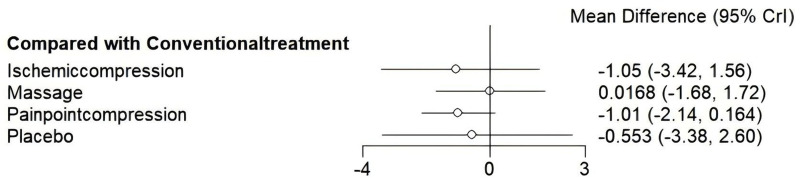
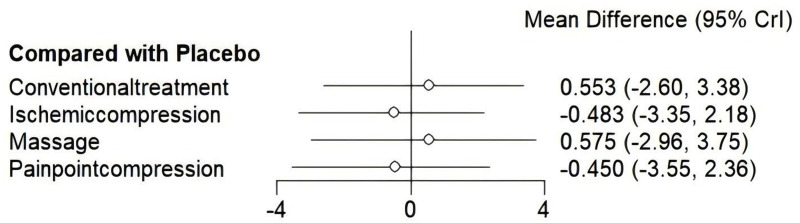
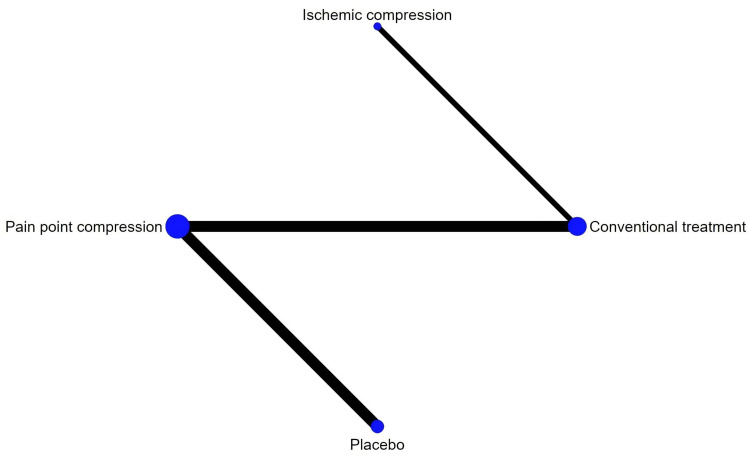
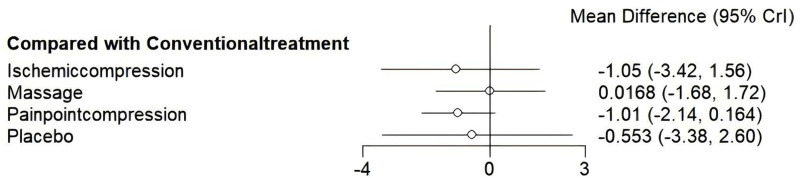
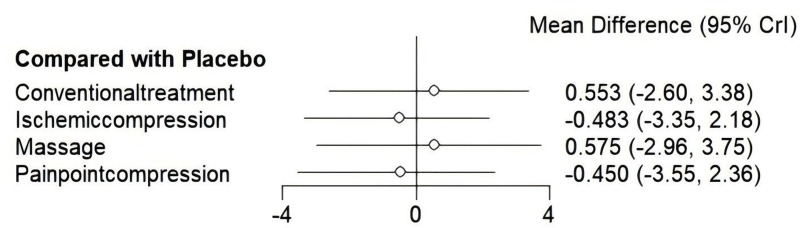
Results: Fourteen studies involving 588 patients overall were included. The interventions included pain point compression, massage, and ischemic compression. Visual analogue scale scores were reported in 12 studies and the pressure pain threshold was reported in five studies. The outcomes demonstrated that manipulation had a notable effect, although not statistically significant, as compared with conventional treatment and placebo. Overall, the effect of pain-point compression was favorable. The results were stable, with no significant publication bias.
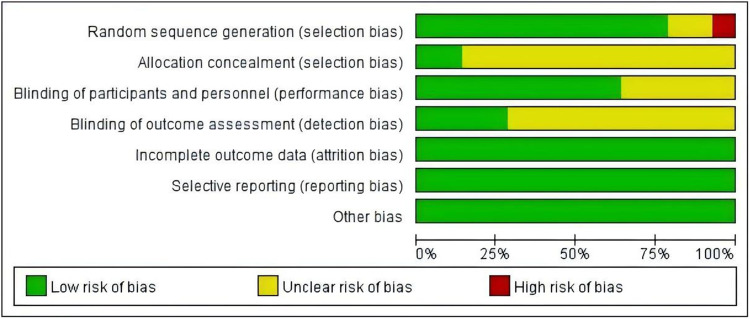
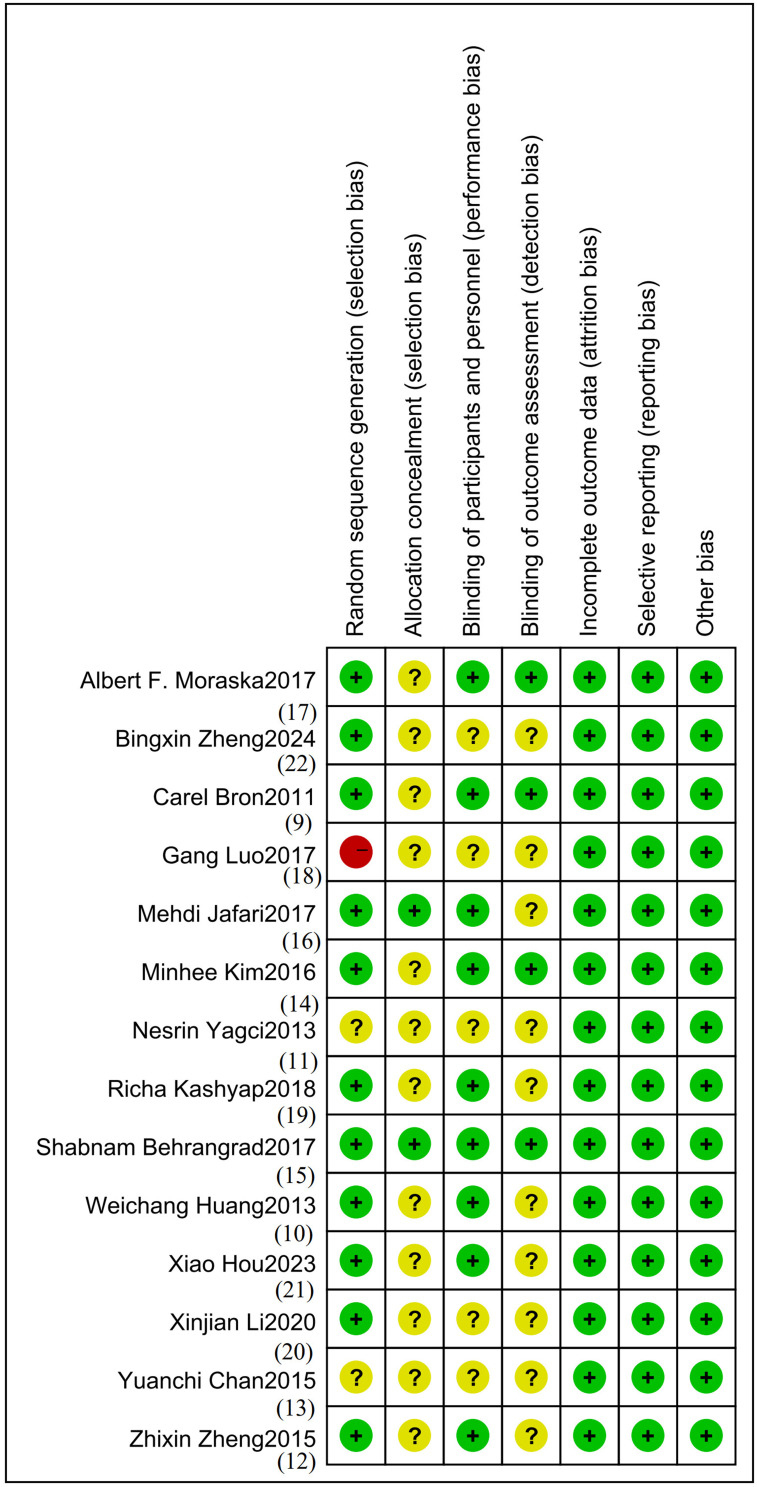
Conclusion: Manipulation was an effective treatment for MPS, but the effects were not statistically significant, based on the findings of this study. Owing to issues such as uneven methodological quality and the small sample size of the included studies, further high-quality multicenter, large-sample, randomized double-blind controlled trials are required to verify the reliability of this conclusion.
Keywords: comparative effectiveness research; musculoskeletal manipulations; myofascial pain syndromes; network meta-analysis; systematic review.
© 2025 Chen et al.
Conflict of interest statement
The authors declare no conflicts of interest regarding the publication of this paper. The authors declare that the research was conducted in the absence of any commercial or financial relationships that could be construed as a potential conflict of interest.
Figures
References
-
- Yingye LIANG, Hongliang TANG, Xiongjiang W, et al. Myofascial pain syndrome of traditional Chinese medicine external treatment intervention study of. J Liaoning Trad Chin Med. 2018;(10):2229–2231. doi:10.13192/j.iSSN.1000-1719.2018.10.067 - DOI
Publication types
LinkOut - more resources
Full Text Sources
