


Clinical utility of glycated albumin and 1,5-anhydroglucitol in the screening and prediction of diabetes: A multi-center study
- PMID: 40236844
- PMCID: PMC11947923
- DOI: 10.4239/wjd.v16.i4.102867
Clinical utility of glycated albumin and 1,5-anhydroglucitol in the screening and prediction of diabetes: A multi-center study
Abstract
Background: Despite being the gold standard, the use of glycated hemoglobin (HbA1c) and fasting plasma glucose (FPG) for diagnosing dysglycemia is imperfect. In particular, a low level of agreement between HbA1c and FPG in detecting prediabetes and diabetes has led to difficulties in clinical interpretation. Glycated albumin (GA) and 1,5-anhydroglucitol (1,5-AG) may potentially serve as biomarkers for the detection and prediction of diabetes, as well as glycemic monitoring.
Aim: To explore the diagnostic performance of GA and 1,5-AG for screening dysglycemia; assess whether they can be used for glycemic monitoring in Chinese morbidly-obese patients; and examine their predictive ability for incident diabetes in a Chinese community-based cohort.
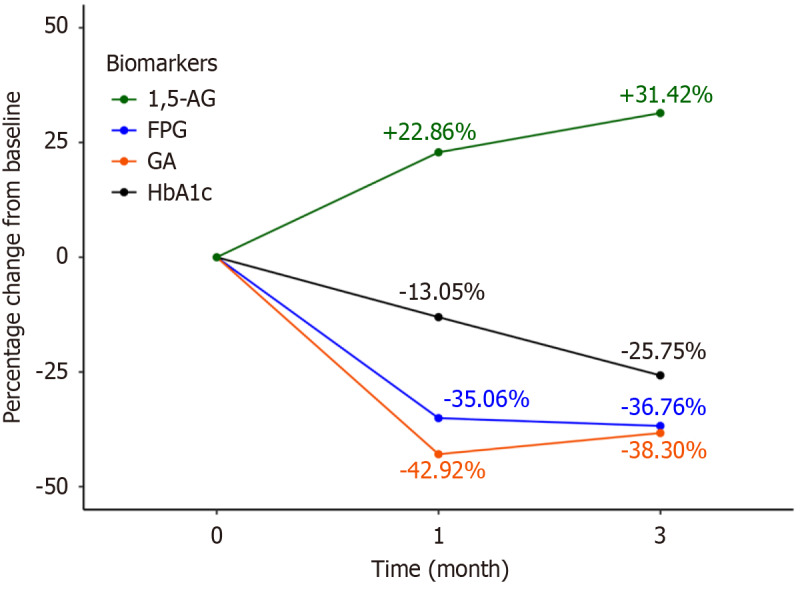
Methods: GA and 1,5-AG concentrations were measured in 462 morbidly-obese patients from the Obese Chinese Cohort (OCC). A sub-group of diabetes subjects (n = 24) was prospectively followed-up after bariatric surgery. Differences between baseline and post-surgery biomarker values were converted to percentage change from baseline to assess the response to glycemic control. Predictive ability of the biomarkers was assessed in 132 incident diabetes cases and 132 matched non-diabetes controls in the community-based Cardiovascular Risk Factor Prevalence Study (CRISPS). A prediction model was developed and compared with clinical models based on conventional risk factors.
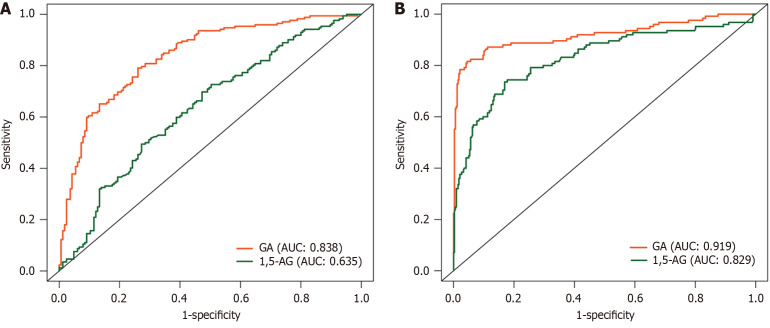
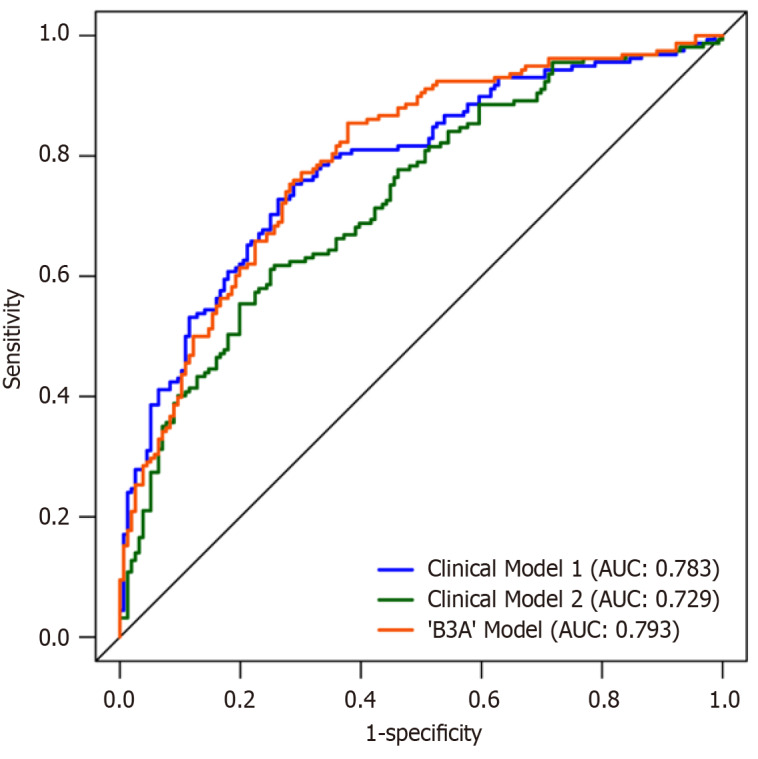
Results: GA exhibited an excellent diagnostic value with an area under the receiver operating characteristic curve (AUC) of 0.919 (95%CI: 0.884-0.955) for identifying diabetes and a high agreement in the classification of diabetes with both FPG and HbA1c in the OCC. GA demonstrated the fastest response to glycemic control. In CRISPS, the 'B3A' prediction model, which consisted of body mass index (BMI) and 3 biomarkers (HbA1c, GA and 1,5-AG), achieved a comparable predictive value [AUC (95%CI): 0.793 (0.744-0.843)] to that of a clinical model comprising BMI, HbA1c, FPG and 2-hour glucose (2hG) [AUC (95%CI): 0.783 (0.733-0.834); DeLong P value = 0.736]. The 'B3A' was significantly superior to a clinical model including BMI, HbA1c, FPG and triglycerides [AUC (95%CI): 0.729 (0.673-0.784); DeLong P value = 0.027].
Conclusion: GA and 1,5-AG have the potential to act as robust biomarkers for the screening and risk prediction of diabetes. FPG and 2hG may be replaced by GA and 1,5-AG in future diabetes predictions.
Keywords: 1,5-anhydroglucitol; Biomarkers; Diabetes; Glycated albumin; Prediction.
©The Author(s) 2025. Published by Baishideng Publishing Group Inc. All rights reserved.
Conflict of interest statement
Conflict-of-interest statement: Lam KSL is a member of the advisory board of Eli Lilly. Lee CH received lecture and advisory board honorarium from Eli Lilly, AstraZeneca, Bayer, Novo Nordisk, Gilead, Boehringer Ingelheim, and Sanofi Aventis. All other authors of this study declare no conflicts of interest that pertain to this work. No potential conflict of interest relevant to this article was reported.
Figures
References
-
- Gérard MJ, Klatsky AL, Siegelaub AB, Friedman GD, Feldman R. Serum glucose levels and alcohol-consumption habits in a large population. Diabetes. 1977;26:780–785. - PubMed
-
- Heinemann L. Quality of glucose measurement with blood glucose meters at the point-of-care: relevance of interfering factors. Diabetes Technol Ther. 2010;12:847–857. - PubMed
LinkOut - more resources
Full Text Sources
