


Obesity and blunted FGF23 response associate with kidney impairment in patients with hypoparathyroidism
- PMID: 40237977
- PMCID: PMC12227492
- DOI: 10.1007/s12020-025-04221-y
Obesity and blunted FGF23 response associate with kidney impairment in patients with hypoparathyroidism
Abstract
Purpose: Chronic kidney disease (CKD) is a common complication of patients affected by chronic hypoparathyroidism managed with conventional therapies. However, no data are currently available regarding the endocrine and metabolic determinants of renal function in these patients.
Methods: This was a multicenter observational study performed in three health-care centres. Patients with hypoparathyroidism were consecutively enrolled during follow-up visits in 2022-2023. These exclusion criteria were adopted: patients managed with dialysis, proteinuria (>200 mg/24 h), use of antihypertensive drugs including thiazides, ACE-inhibitors, angiotensin-II-receptor antagonists, alpha-beta blocking-agents, aldosterone-antagonists, and insulin-treated diabetes.
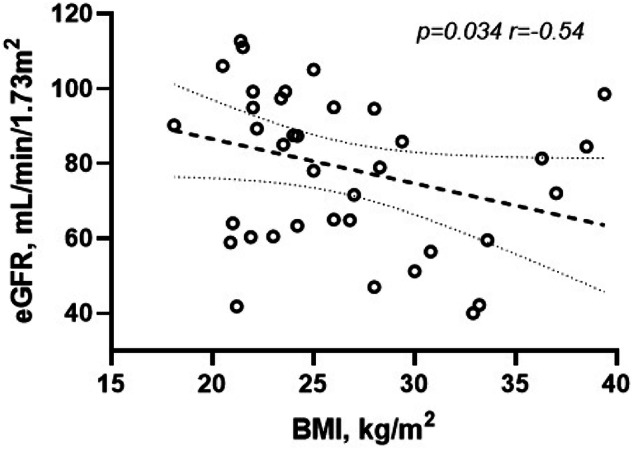
Results: A total of 46 patients were enrolled. Median age was 53 years, 34 (74%) were female and the median disease duration was 11 years. In all patients, the calcium-phosphate product was within the normal range. The 23.7% of patients was obese (BMI ≥ 30) and CKD (defined with an eGFR < 60 mL/min1.73m2) was found in the 21.7% of patients. Patients with CKD were older, affected by a longer-disease, more frequently obese and with higher BMI. In multivariate analyses, obesity resulted as the only significant independent risk factor associated with CKD. In addition, a significant negative correlation was found between BMI and eGFR, and ROC analyses showed a significant global-performances of BMI to predict CKD. Patients with CKD were characterized also by higher FGF23 levels. A significant negative correlation was found between FGF23 and eGFR, however, evaluating separately those with and without CKD, this correlation remained significant only in the second group.
Conclusions: For the first-time, obesity was demonstrated to be independently associated with CKD in patients with hypoparathyroidism, and a blunted eGFR-related response of FGF23 was shown in patients with CKD potentially worsening the renal function in the context of hypoparathyroidism.
Keywords: Chronic kidney disease; FGF23; Hypoparathyroidism; Obesity; Vitamin D.
© 2025. The Author(s).
Conflict of interest statement
Compliance with ethical standards. Conflict of interest: Disclosures: Andrea Giustina is consultant for Abiogen and received research grant to Institution from Takeda. All other authors have no conflict of interest to declare. The Work submitted for publication is original and has not been published in any language or format and has not been submitted elsewhere for print or electronic publication consideration.
Figures


References
-
- AA Khan, G Guyatt, DS Ali et al., Management of hypoparathyroidism. J. Bone Min. Res. 37, 2663–2677 (2022). 10.1002/jbmr.4716. - PubMed
-
- C Cipriani, J Pepe, F Biamonte et al., The Epidemiology of hypoparathyroidism in Italy: an 8-year register-based study. Calcif. Tissue Int. 100, 278–285 (2017). 10.1007/s00223-016-0222-7. - PubMed
-
- G Marcucci, L Cianferotti, S Parri et al., HypoparaNet: a database of chronic hypoparathyroidism based on expert medical-surgical centers in Italy. Calcif. Tissue Int. 103, 151–163 (2018). 10.1007/s00223-018-0411-7. - PubMed
Publication types
MeSH terms
Substances
LinkOut - more resources
Full Text Sources
Medical
Research Materials
Miscellaneous
