


Study on the standardization method of radiotelephony communication in low-altitude airspace based on BART
- PMID: 40242556
- PMCID: PMC12000013
- DOI: 10.3389/fnbot.2025.1482327
Study on the standardization method of radiotelephony communication in low-altitude airspace based on BART
Abstract
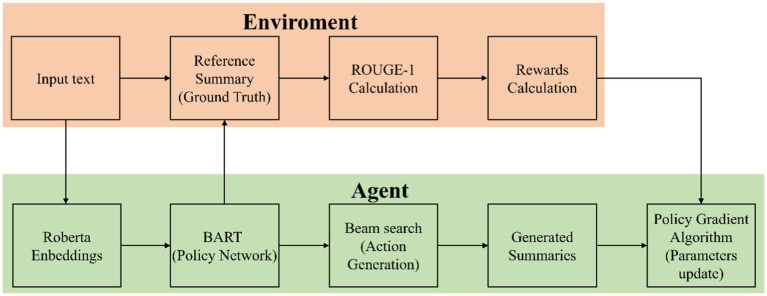
The development of air traffic control (ATC) automation has been constrained by the scarcity and low quality of communication data, particularly in low-altitude complex airspace, where non-standardized instructions frequently hinder training efficiency and operational safety. This paper proposes the BART-Reinforcement Learning (BRL) model, a deep reinforcement learning model based on the BART pre-trained language model, optimized through transfer learning and reinforcement learning techniques. The model was evaluated on multiple ATC datasets, including training flight data, civil aviation operational data, and standardized datasets generated from Radiotelephony Communications for Air Traffic Services. Evaluation metrics included ROUGE and semantic intent-based indicators, with comparative analysis against several baseline models. Experimental results demonstrate that BRL achieves a 10.5% improvement in overall accuracy on the training dataset with the highest degree of non-standardization, significantly outperforming the baseline models. Furthermore, comprehensive evaluations validate the model's effectiveness in standardizing various types of instructions. The findings suggest that reinforcement learning-based approaches have the potential to significantly enhance ATC automation, reducing communication inconsistencies, and improving training efficiency and operational safety. Future research may further optimize standardization by incorporating additional contextual factors into the model.
Keywords: BART model; air traffic control; deep reinforcement learning; low-altitude airspace; radiotelephony communication.
Copyright © 2025 Pan, Han and Jiang.
Conflict of interest statement
The authors declare that the research was conducted in the absence of any commercial or financial relationships that could be construed as a potential conflict of interest.
Figures
References
-
- Bahdanau D., Cho K., Bengio Y. (2014). Neural machine translation by jointly learning to align and translate. arXiv. 1409–473. https://arxiv.org/abs/1409.0473
-
- Bapna A., Chen M. X., Firat O., Cao Y., Yonghui C. (2018). Training deeper neural machine translation models with transparent attention. arXiv. 1808.07561. https://arxiv.org/abs/1808.07561
-
- Cho K., Van Merriënboer B., Gulcehre C., Bahdanau D., Bougares F., Schwenk H., et al. . (2014). Learning phrase representations using RNN encoder-decoder for statistical machine translation. arXiv. 1406, https://arxiv.org/abs/1406.1078
-
- Civil Aviation Administration of China . (2015). Rules for Administration of Licenses for Civil Aviation Air Traffic Controllers. Available online at: https://www.lawinfochina.com/display.aspx?CGid=&EncodingName=big5&id=153...
-
- Civil Aviation Administration of China . 2023 statistical bulletin on civil aviation transport airports in China. (2024); [cited 2025 Feb 24]. Available online at: https://www.caac.gov.cn/XXGK/XXGK/TJSJ/202403/P020240320504230898437.pdf
LinkOut - more resources
Full Text Sources
Research Materials
