Mysteries of adenovirus packaging
- PMID: 40243339
- PMCID: PMC12090768
- DOI: 10.1128/jvi.00180-25
Mysteries of adenovirus packaging
Abstract
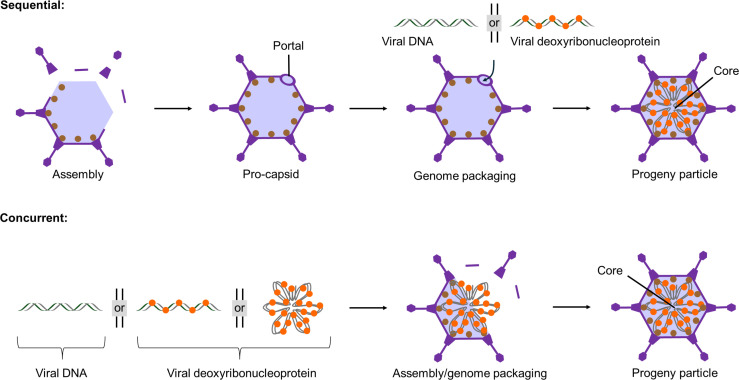
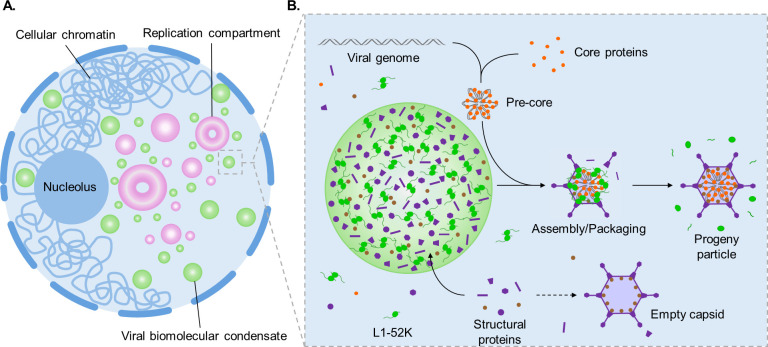
It is conventionally held that most DNA viruses package their genomes by one of two fundamental mechanisms: described by the sequential or concurrent models of assembly and packaging. Sequential packaging involves the translocation of a viral genome into a pre-formed capsid, often referred to as the pro-capsid. In contrast, concurrent packaging does not require the assembly of a pro-capsid. Instead, the genome is condensed, and the capsid shell is formed around the genome. The accumulation of empty particles in adenovirus infected cells has led to the assumption that adenovirus packaging may be best described by the sequential model. However, existing models fail to adequately explain all experimental observations, leaving many mysteries of adenovirus genome packaging unresolved. In this review, we describe key findings in adenovirus assembly and packaging, and we discuss them in the context of the competing models of sequential versus concurrent packaging. We discuss recent findings that have redefined our understanding of adenovirus packaging, including the role of viral biomolecular condensates and visualization of viral assembly and packaging in situ. These advances have renewed interest in the concurrent model of packaging. We anticipate that lessons learned from adenovirus packaging will be highly valuable for the advancement of viral vectors and gene-delivery technologies. In reviewing this topic, we hope to stimulate discussion and facilitate future investigation that will ultimately resolve gaps in knowledge and expand our understanding of DNA virus genome packaging.
Keywords: adenoviruses; capsid assembly; delivery vectors; genome packaging.
Conflict of interest statement
The authors declare no conflict of interest.
Figures
References
Publication types
MeSH terms
Substances
Grants and funding
LinkOut - more resources
Full Text Sources