Distribution patterns of fungal community diversity in the dominant tree species Dacrydium pectinatum and Vatica mangachapoi in tropical rainforests
- PMID: 40243370
- PMCID: PMC12131778
- DOI: 10.1128/spectrum.03092-24
Distribution patterns of fungal community diversity in the dominant tree species Dacrydium pectinatum and Vatica mangachapoi in tropical rainforests
Abstract
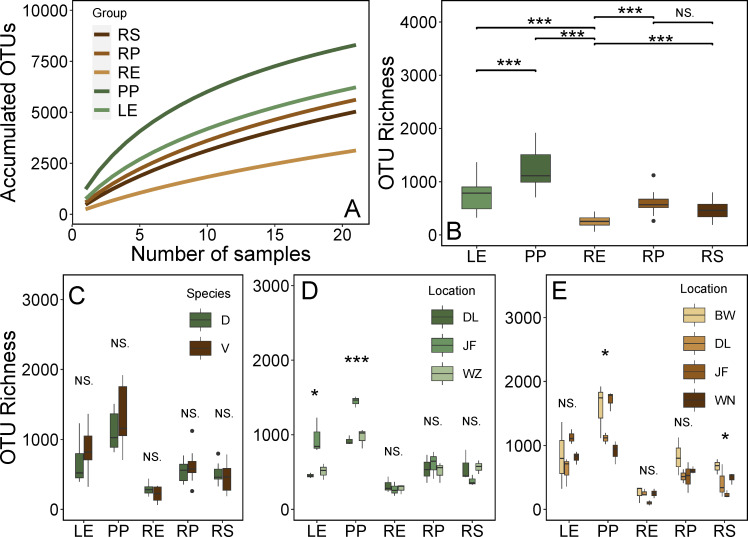
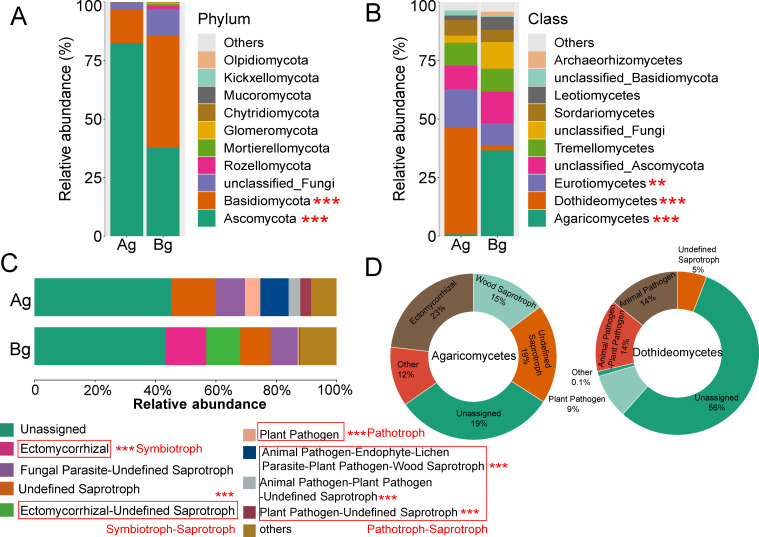
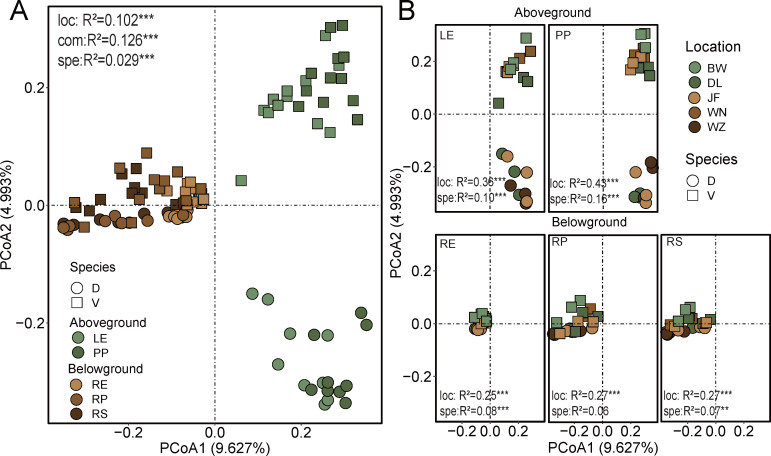
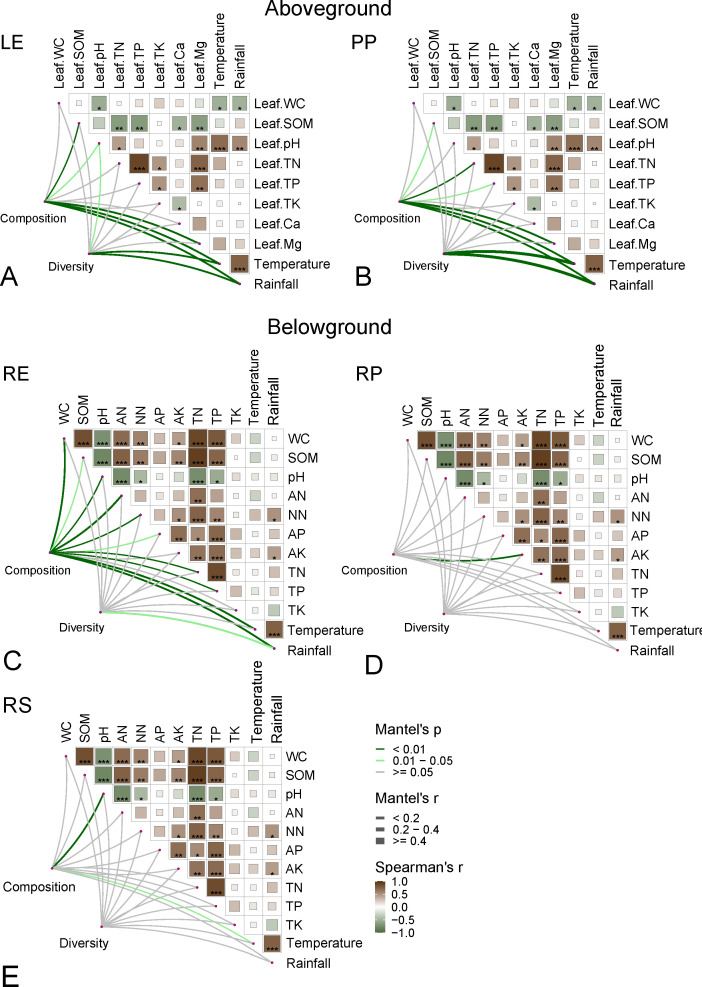
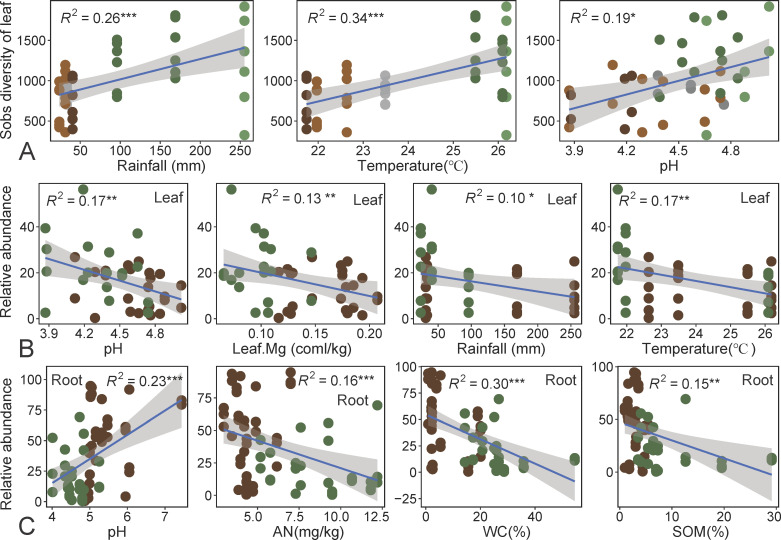
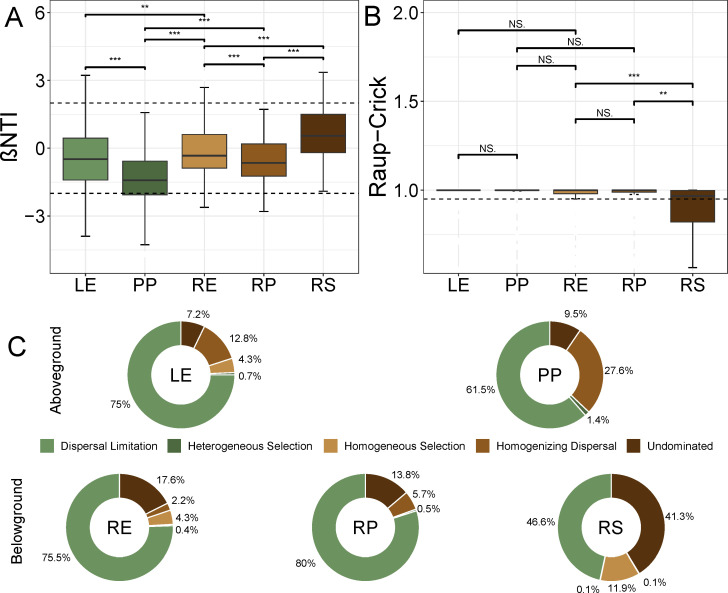
Plant microbial communities are shaped by plant compartments, but the patterns of fungal communities in aboveground and belowground compartments, and which environmental factors can affect them, remain unknown. Here, to address this research gap, high-throughput sequencing technology was performed to investigate the diversity of fungal communities in leaves' and roots' compartments of Dacrydium pectinatum and Vatica mangachapoi from Hainan Island of China. Fungal communities in leaves and roots exhibited significant differences. Eurotiomycetes (16.57%) and Dothideomycetes (45.57%) were predominantly found in leaves, while Agaricomycetes (36.53%) dominated in roots. Compared to the roots, the leaf compartments had higher α-diversity. According to the Mantel test, soil pH mainly influenced roots, while the main driving factors for leaves were rainfall and temperature. The proportion of dispersal-limited processes in rhizoplane (76.67%) and root endosphere (73.81%) were greater than that in leaf epiphytic (62.38%) and leaf endophytic (68.1%), driven by ectomycorrhizal fungi with known dispersal limitations. In summary, the compositions of the leaf and root fungal communities of both endangered tree species differed, partly driven by environmental factors unique to each compartment. Our results provide valuable theoretical and practical insights for preserving tropical tree species.
Importance: Understanding the assembly of microbial communities across different compartments is a prerequisite for harnessing them to enhance plant growth. Our findings reveal significant differences in fungal community structures between the root and leaf compartments. Compared to the roots, the leaf compartments exhibited higher α-diversity. While soil pH mainly influenced fungal communities in the roots, the primary drivers for the leaves were rainfall and temperature. The dispersal-limited processes of fungal communities in the roots were greater than those in the leaves, primarily influenced by mycorrhizal fungi. These findings demonstrate compartment-specific plant-microbe interactions and environmental responses, offering actionable insights for conserving tropical tree species through habitat optimization (e.g., soil pH management) and dispersal corridor preservation. This compartment-aware perspective enhances our ability to leverage microbial functions to improve the resilience of endangered trees in the face of climate change.
Keywords: Dacrydium pectinatum; Vatica mangachapoi; community assembly; diversity; environmental factors; fungal community.
Conflict of interest statement
The authors declare no conflict of interest.
Figures
References
MeSH terms
Substances
LinkOut - more resources
Full Text Sources
Medical
Miscellaneous