


A Multifaceted Giant Protein Microtubule-Actin Cross-Linking Factor 1
- PMID: 40244019
- PMCID: PMC11989829
- DOI: 10.3390/ijms26073204
A Multifaceted Giant Protein Microtubule-Actin Cross-Linking Factor 1
Abstract
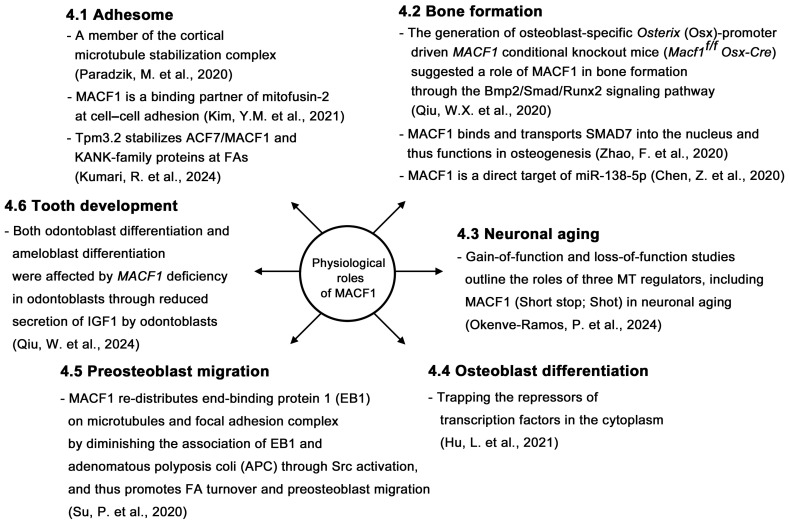
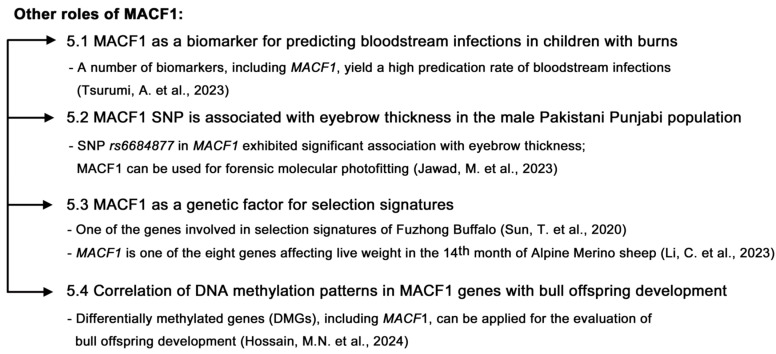
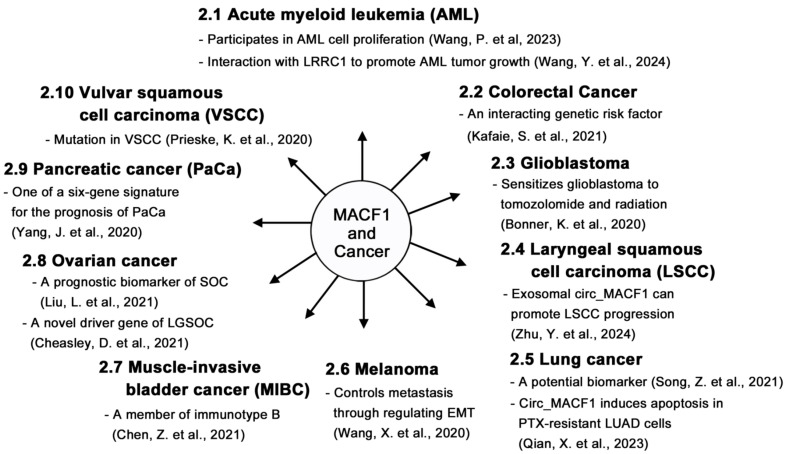
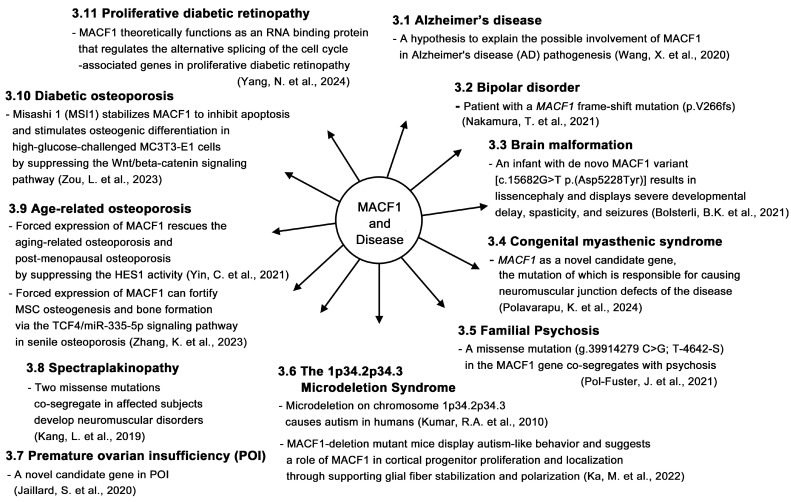
Microtubule-actin cross-linking factor 1 (MACF1), also known as actin cross-linking family protein 7 (ACF7), is a giant cytolinker protein with multiple conserved domains that can orchestrate cytoskeletal networks of actin and microtubules. MACF1 is involved in various biological processes, including cell polarity, cell-cell connection, cell proliferation, migration, vesicle transport, signal transduction, and neuronal development. In this review, we updated the physiological and pathological roles of MACF1, highlighting the components and signaling pathways involved. Novel evidence showed that MACF1 is involved in diverse human diseases, including multiple neuronal diseases, congenital myasthenic syndrome, premature ovarian insufficiency, spectraplakinopathy, osteoporosis, proliferative diabetic retinopathy, and various types of cancer. We also reviewed the physiological roles of MACF1, including its involvement in adhesome formation, bone formation, neuronal aging, and tooth development. In addition, MACF1 plays other roles, functioning as a biomarker for the prediction of infections in patients with burns and as a marker for genome selection breeding. These studies reinforce the idea that MACF1 is a bona fide versatile, multifaceted giant protein. Identifying additional MACF1 functions would finally help with the treatment of diseases caused by MACF1 defects.
Keywords: ACF7; MACF1; cancer; mental disease; microtubule-actin cross-linking factor 1; neuronal disease; osteoporosis; spectraplakin.
Conflict of interest statement
The authors declare that they have no competing interests.
Figures
References
-
- Sonnenberg A., Liem R.K. Plakins in development and disease. Exp. Cell Res. 2007;313:2189–2203. - PubMed
Publication types
MeSH terms
Substances
Grants and funding
LinkOut - more resources
Full Text Sources
