


The Role of Triterpenoids in Gastric Ulcer: Mechanisms and Therapeutic Potentials
- PMID: 40244034
- PMCID: PMC11990034
- DOI: 10.3390/ijms26073237
The Role of Triterpenoids in Gastric Ulcer: Mechanisms and Therapeutic Potentials
Abstract
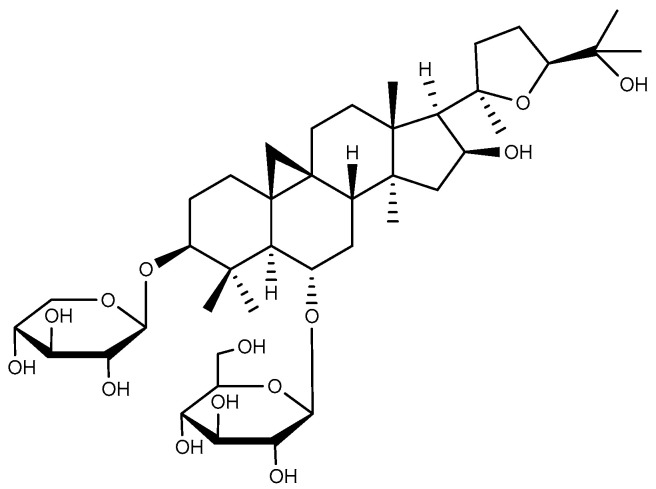
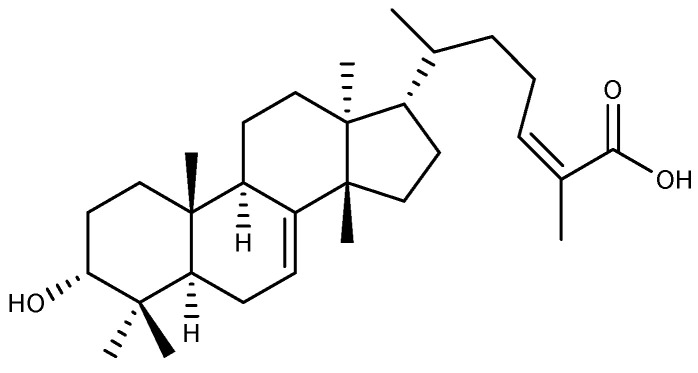
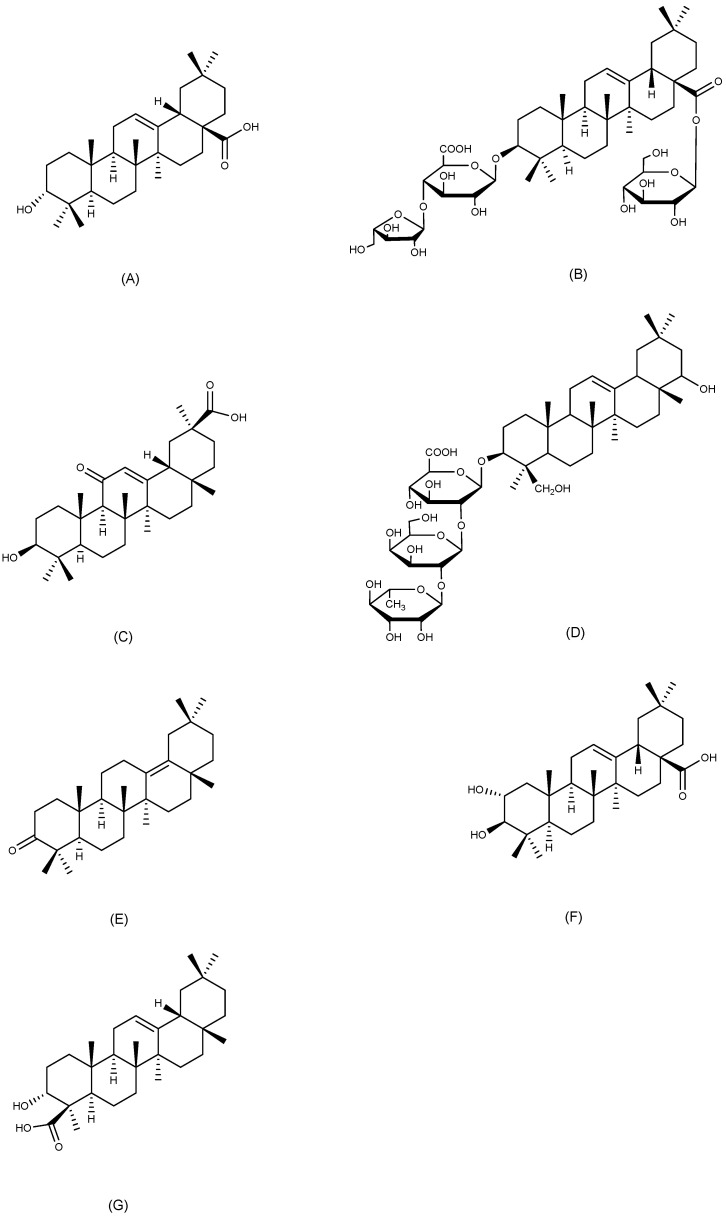
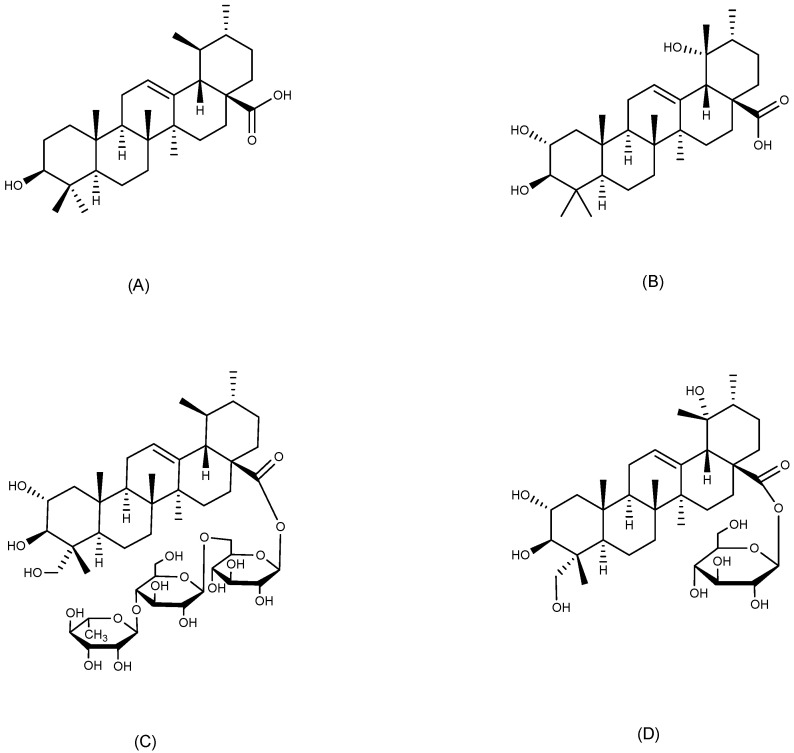
Gastric ulcer (GU) is a prevalent gastrointestinal disorder impacting millions worldwide, with complex pathogenic mechanisms that may progress to severe illnesses. Conventional therapies relying on anti-secretory agents and antibiotics are constrained by drug abuse and increased bacterial resistance, highlighting the urgent need for safer therapeutic alternatives. Natural medicinal compounds, particularly triterpenoids derived from plants and herbs, have gained significant attention in recent years due to their favorable efficacy and reduced toxicity profiles. Emerging evidence indicates that triterpenoids exhibit potent anti-ulcer properties across various experimental models, modulating key pathways involved in inflammation, oxidative stress, apoptosis, and mucosal protection. Integrating current knowledge of these bioactive compounds facilitates the development of natural triterpenoids, addresses challenges in their clinical translation, deepens mechanistic understanding of GU pathogenesis, and drives innovation of therapeutic strategies for GU. This review comprehensively evaluates the progress of research on triterpenoids in GU treatment since 2000, discussing their biological sources, structural characteristics, pharmacological activities, and mechanisms of action, the animal models employed in the studies, current limitations, and the challenges associated with their clinical application.
Keywords: gastric ulcer; gastroprotective; pharmacological mechanism; triterpenoids.
Conflict of interest statement
The authors declare no conflicts of interest.
Figures
References
-
- Hassan H.M., Alatawi N.M., Bagalagel A., Diri R., Noor A., Almasri D., Bakhsh H.T., Kutbi H.I., Ashy N., Al-Gayyar M.M.H. Genistein ameliorated experimentally induced gastric ulcer in rats via inhibiting gastric tissues fibrosis by modulating Wnt/β-catenin/TGF-β/PKB pathway. Redox Rep. 2023;28:2218679. doi: 10.1080/13510002.2023.2218679. - DOI - PMC - PubMed
-
- Zhou D., Yang Q., Tian T., Chang Y., Li Y., Duan L.R., Li H., Wang S.W. Gastroprotective effect of gallic acid against ethanol-induced gastric ulcer in rats: Involvement of the Nrf2/HO-1 signaling and anti-apoptosis role. Biomed. Pharmacother. 2020;126:110075. doi: 10.1016/j.biopha.2020.110075. - DOI - PubMed
-
- Guo Y., Wu Y., Huang T., Huang D., Zeng Q., Wang Z., Hu Y., Liang P., Chen H., Zheng Z., et al. Licorice flavonoid ameliorates ethanol-induced gastric ulcer in rats by suppressing apoptosis via PI3K/AKT signaling pathway. J. Ethnopharmacol. 2024;325:117739. doi: 10.1016/j.jep.2024.117739. - DOI - PubMed
Publication types
MeSH terms
Substances
Grants and funding
LinkOut - more resources
Full Text Sources
