


The impact of the COVID-19 pandemic on the diagnosis, treatment, and prognosis of ovarian cancer in the United States: a retrospective cohort study based on the SEER database
- PMID: 40244485
- PMCID: PMC12006593
- DOI: 10.1007/s12672-025-02205-y
The impact of the COVID-19 pandemic on the diagnosis, treatment, and prognosis of ovarian cancer in the United States: a retrospective cohort study based on the SEER database
Abstract
Background: The COVID-19 pandemic has significantly impacted cancer diagnosis, treatment, and prognosis; however, its effects on ovarian cancer remain unclear.
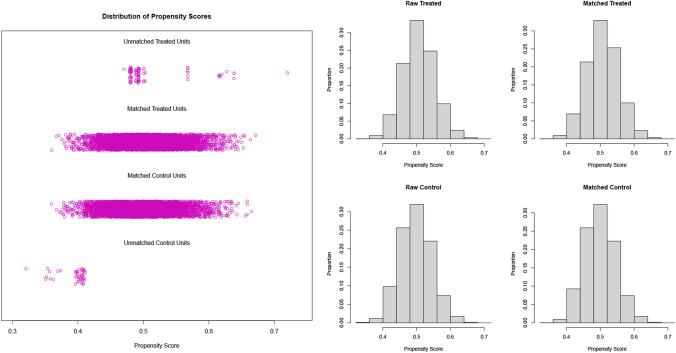
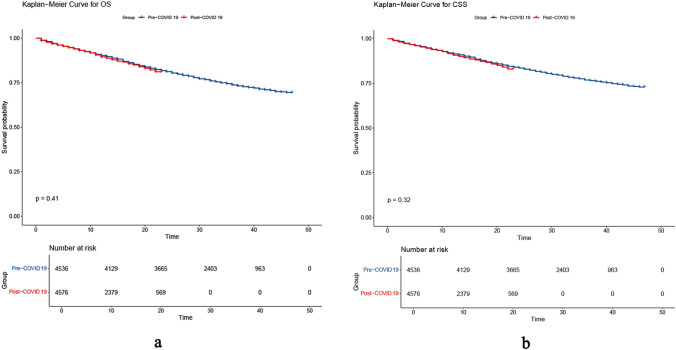
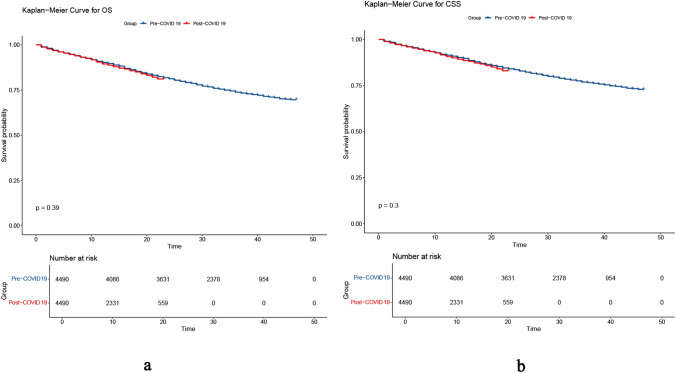
Methods: This multicenter retrospective study utilized the Surveillance, Epidemiology, and End Results database to compare changes in the diagnosis, treatment, prognosis, and risk factors among ovarian cancer patients pre- and post-COVID-19 pandemic. Patients diagnosed before the pandemic (pre-COVID-19 group) and those diagnosed during the pandemic (post-COVID-19 group) were matched through 1:1 propensity score matching. Kaplan-Meier analysis compared cancer-specific survival (CSS) and overall survival (OS). Factors associated with survival were identified by the Cox proportional hazards model, while a competing risks model was used to determine factors associated with cancer-specific death.
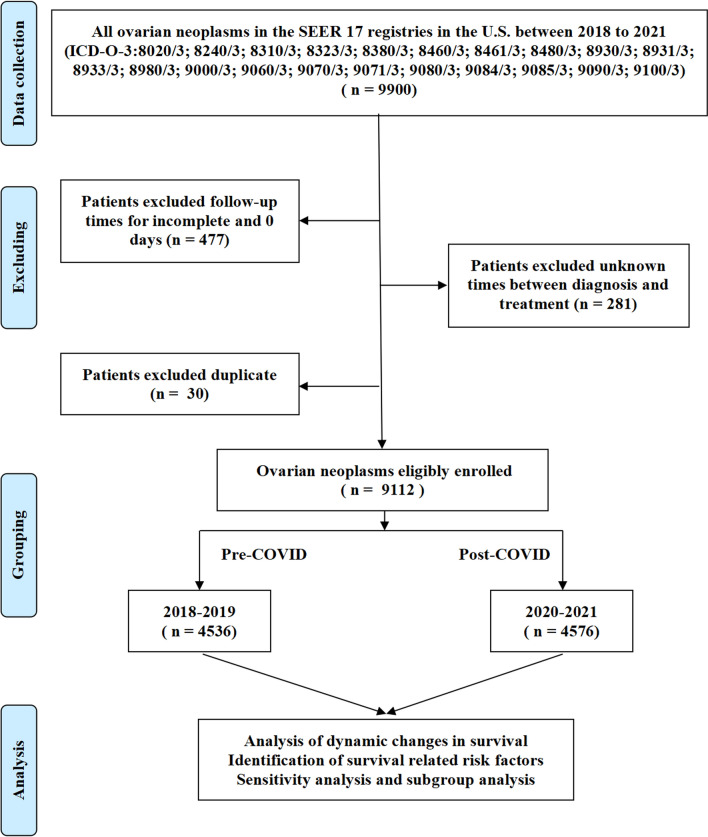
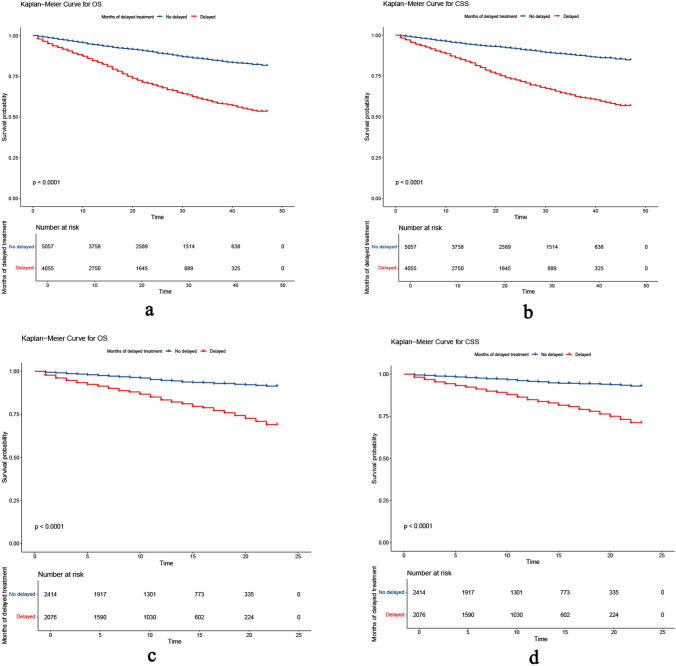
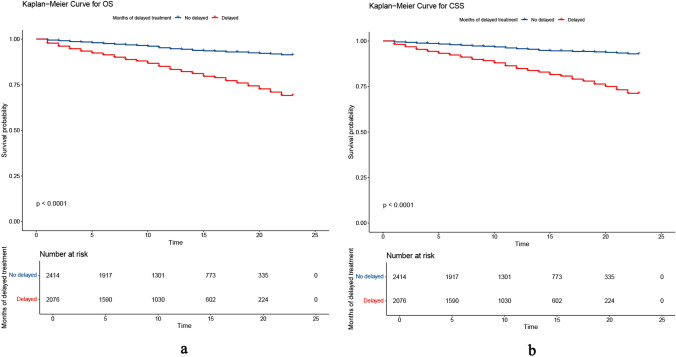
Results: A total of 9,112 ovarian cancer patients were included in the study, with 4,536 diagnosed before COVID-19 and 4576 diagnosed during COVID-19. The results showed that the post-COVID-19 group presented at a more advanced stage had lower tissue differentiation, experienced more delayed treatments, and received fewer surgical interventions. Although there was no significant difference in survival between the pre-COVID-19 group and the post-COVID-19 group, patients with delayed treatment had a worse prognosis than those without delayed treatment. Additionally, we identified independent factors associated with survival outcomes, including age, tumor grade, clinical stage, pathological stage, specific histology, treatment delays, surgical intervention, and systemic therapy.
Conclusions: The survival outcomes of the pre-COVID-19 group and the post-COVID-19 group were relatively consistent, likely due to the short follow-up. Future research is necessary to continue monitoring the outcomes of patients in the post-COVID-19 group to determine its long-term impact.
Keywords: COVID-19 pandemic; Cancer-specific survival; Delayed treatment; Ovarian cancer; Overall survival.
© 2025. The Author(s).
Conflict of interest statement
Declarations. Ethics approval and consent to participate: This study is a retrospective cohort study of tumor patients based on the US SEER database. Because it is open to everyone and we completed this study in compliance with the Declaration of Helsinki, informed consent and ethical approval were waived.The Ethics Committee of Fujian Cancer Hospital approved the study (K2024-206-01). Consent for publication: This manuscript has not been published or presented elsewhere in part or entirety and is not under consideration by another journal. Competing interests: The authors declare no competing interests.
Figures
References
-
- Elkrief A, Wu JT, Jani C, et al. Learning through a pandemic: the current state of knowledge on COVID-19 and cancer. Cancer Discov. 2022;12(2):303–30. 10.1158/2159-8290.CD-21-1368. - DOI - PMC - PubMed
Grants and funding
- 2022CXA029/Innovative Medicine Subject of Fujian Provincial Health Commission
- 2021Y2014/Fujian Clinical Research Center for Radiation and Therapy of Digestive, Respiratory and Genitourinary Malignancies
- 2023Y9449/Fujian Province Science and Technology Innovation Joint Fund Project
- 2023J011273/Natural Science Foundation of Fujian Province
- 2024YNG09/Fujian Cancer Hospital High-Level Talent Training Program
LinkOut - more resources
Full Text Sources