


Otomycosis: a systematic review and meta-analysis of prevalence and causative agents in the era of molecular diagnostics
- PMID: 40247196
- PMCID: PMC12004859
- DOI: 10.1186/s12879-025-10954-y
Otomycosis: a systematic review and meta-analysis of prevalence and causative agents in the era of molecular diagnostics
Abstract
Background: Molecular identification of fungal agents in otomycosis can provide a more accurate diagnosis and differentiation of species compared to conventional morphological methods. Previous reviews mostly relied on studies using conventional methods to explore the prevalence and distribution of otomycosis etiologies. We aim to estimate the prevalence and distribution of causative agents in otomycosis cases confirmed with molecular methods.
Methods: We conducted a systematic search of PubMed, Scopus, Web of Science, and Google Scholar. We selected cross-sectional studies that reported causative agents of otomycosis and used molecular methods for identification of fungi. We appraised the quality of evidence using the JBI Checklist for Prevalence Studies. Clinical and mycological data were collected, and prevalence of otomycosis was estimated by meta-analysis.
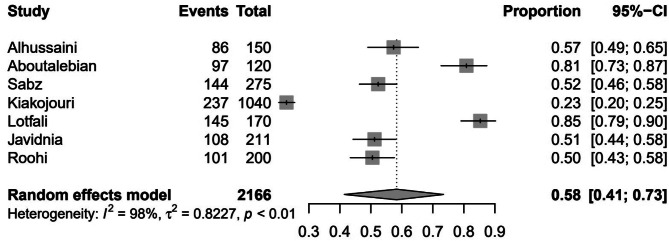
Results: Twenty studies reporting 1392 fungal isolates, consisting of 46 species from 11 distinct genera, were included in this review. The prevalence of otomycosis among clinically-suspected patients was 58.3% (95% CI: 41.4-73.5%). Aspergillus (75.8%, 95% CI: 70.3-80.6%) and Candida (15.3%, 95% CI: 8.7- 25.6%) were the most common etiologies. The most frequent Aspergillus species were A. niger (n = 352, 30.9%) and A. tubingensis (n = 270, 23.7%), and the most frequent Candida species were C. parapsilosis (n = 85, 39.7%) and C. albicans (n = 66, 30.8%). The quality of evidence was assessed to be poor in all included studies.
Conclusions: Otomycosis is caused by a diverse set of species, predominantly from Aspergillus and Candida genera. Molecular identification techniques provide a more accurate understanding of the distribution of species associated with otomycosis.
Clinical trial number: Not applicable.
Keywords: Aspergillus; Candida; Fungal otitis externa; Molecular identification; Otomycosis; Prevalence.
© 2025. The Author(s).
Conflict of interest statement
Declarations. Ethics approval and consent to participate: Not applicable. Consent for publication: Not applicable. Competing interests: The authors declare no competing interests.
Figures


References
-
- Zhang L, Wang X, Houbraken J, Mei H, Liao W, Hasimu H, et al. Molecular identification and in vitro antifungal susceptibility of Aspergillus isolates recovered from otomycosis patients in Western China. Mycopathologia. 2020;185:527–35. - PubMed
-
- Zahran EM, Mohamad SA, Yahia R, Badawi AM, Sayed AM, Abdelmohsen UR. Anti-otomycotic potential of nanoparticles of Moringa oleifera leaf extract: an integrated in vitro, in Silico and phase 0 clinical study. Food Funct. 2022;13(21):11083–96. - PubMed
-
- Alam I, Gupta RK, Bhargava A, Faiz S, Srivastava S, Haider F et al. A study of clinico-mycological profile and treatment of primary otomycosis. Asian J Med Sci. 2023;14(8).
Publication types
MeSH terms
Grants and funding
LinkOut - more resources
Full Text Sources
Medical
