


Alternative approaches to standard inpatient mental health care: development of a typology of service models
- PMID: 40247283
- PMCID: PMC12007381
- DOI: 10.1186/s13033-025-00669-7
Alternative approaches to standard inpatient mental health care: development of a typology of service models
Abstract
Background: Inpatient mental health care is an integral part of the continuum of mental health care in many countries, though it can be associated with challenges, such as reliance on coercive practices, negative patient experiences, and limited therapeutic options. Given these issues, there is a growing interest in exploring alternative approaches for individuals experiencing a mental health crisis. This research aimed to identify models which offer an alternative to standard inpatient mental health care across all age groups, both nationally and internationally, and to develop a typology for these alternative models.
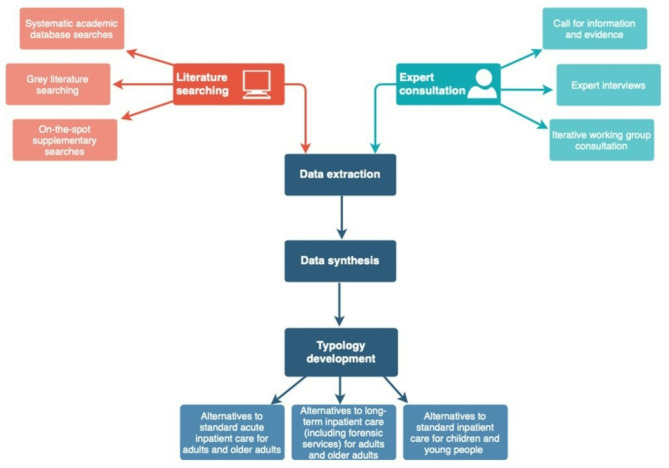
Methods: A dual literature search and expert consultation research methodology was adopted to identify relevant models. Three typologies of models were developed according to age group and acuity, including: alternatives to standard acute inpatient services for adults; alternatives to longer-stay inpatient services for adults, including rehabilitation and forensic inpatient services; and alternatives to standard inpatient services for children and young people.
Results: We identified an array of service models in each typology, some in community settings, some hospital-based and some working across settings. Models varied greatly in characteristics, extent of implementation and supporting evidence.
Conclusions: Through this mapping exercise, we have developed three novel typologies of alternatives to standard inpatient care. A range of community-based, hospital-based and cross-setting approaches were identified. The identification of services providing inpatient care in a substantially different way to the standard suggests that some improvements could be provided within existing structures. Potential inequities in access to alternatives were identified for certain groups, such as people who are compulsorily detained, younger children, and young people transitioning between children's and adults' services. These typologies can inform future description, evaluation and comparison of different service models. This research also yields some key considerations for the design, development and implementation of alternative mental health service models and service arrays.
Keywords: Acute care; Community care; Crisis care; Inpatient mental health care; Inpatient mental health care alternatives; Typology development.
© 2025. The Author(s).
Conflict of interest statement
Declarations. Ethics approval and consent to participate: Minimal risk ethics was obtained from the King’s College London ethics committee (Approval Number: MRA-22/23-34963). In accordance with ethical approval, an information sheet and consent form were attached to all call for information emails to experts. The information sheet detailed the study’s purpose and methods. The consent form explicitly explained that providing information to the research team would be considered confirmation of consent to participate, unless participants explicitly stated otherwise. This process ensured that all participants provided informed consent regarding their involvement in this study. Consent for publication: Not applicable. Competing interests: The authors declare no competing interests.
Figures
References
-
- Lawrence D, Bagshaw R, Stubbings D, Watt A. Restrictive practices in adult secure mental health services: A scoping review. Int J Forensic Ment Health. 2022;21(1):68–88. - DOI
Grants and funding
- PR-PRU-0916-22003/National Institute for Health and Care Research
- PR-PRU-0916-22003/National Institute for Health and Care Research
- PR-PRU-0916-22003/National Institute for Health and Care Research
- PR-PRU-0916-22003/National Institute for Health and Care Research
- PR-PRU-0916-22003/National Institute for Health and Care Research
- PR-PRU-0916-22003/National Institute for Health and Care Research
- PR-PRU-0916-22003/National Institute for Health and Care Research
- PR-PRU-0916-22003/National Institute for Health and Care Research
- PR-PRU-0916-22003/National Institute for Health and Care Research
- PR-PRU-0916-22003/National Institute for Health and Care Research
- PR-PRU-0916-22003/National Institute for Health and Care Research
- PR-PRU-0916-22003/National Institute for Health and Care Research
- PR-PRU-0916-22003/National Institute for Health and Care Research
- PR-PRU-0916-22003/National Institute for Health and Care Research
- PR-PRU-0916-22003/National Institute for Health and Care Research
- PR-PRU-0916-22003/National Institute for Health and Care Research
- PR-PRU-0916-22003/National Institute for Health and Care Research
LinkOut - more resources
Full Text Sources
