


Pharmacological strategies for targeting biofilms in otorhinolaryngologic infections and overcoming antimicrobial resistance (Review)
- PMID: 40247931
- PMCID: PMC12001231
- DOI: 10.3892/br.2025.1973
Pharmacological strategies for targeting biofilms in otorhinolaryngologic infections and overcoming antimicrobial resistance (Review)
Abstract
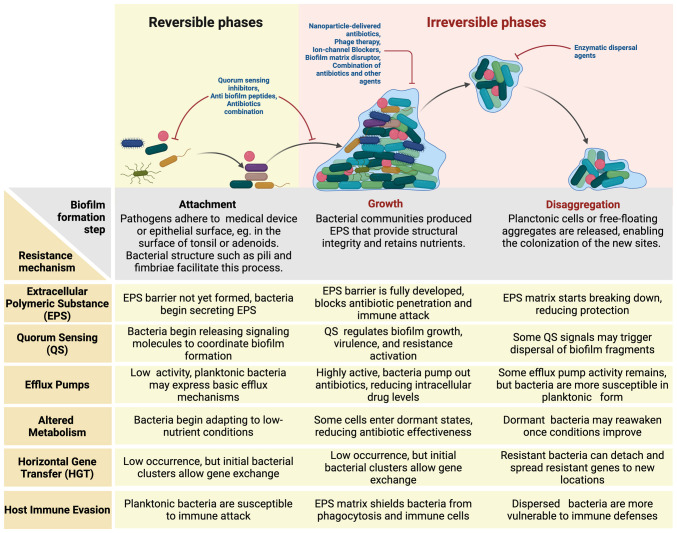
Biofilm formation is a key factor in the persistence and recurrence of otorhinolaryngology (ORL) infections, driving antimicrobial resistance and treatment failure. Chronic conditions, such as rhinosinusitis, otitis media and tonsillitis, are linked to biofilm-producing pathogens, forming protective extracellular matrices that shield bacteria from immune defenses and antibiotics. The present review explores emerging pharmacological strategies to disrupt biofilm integrity and improve treatment outcomes. Strategies such as quorum sensing inhibitors, antibiofilm peptides, enzymatic dispersal agents, and drug repurposing can potentially disrupt biofilms and counter-resistance mechanisms. Furthermore, novel therapies (including nanotechnology-based drug delivery systems, phage therapy and immunomodulation) offer innovative alternatives for managing biofilm-associated infections. However, clinical implementation remains challenging. Future research should prioritize optimizing drug formulations, refining delivery techniques, and exploring synergistic combinations to enhance biofilm eradication. Implementing these innovative strategies can improve the management of chronic ORL infections, reducing recurrence rates and enhancing patient outcomes.
Keywords: antimicrobial resistance; biofilm-associated infections; infectious diseases; otorhinolaryngology.
Copyright: © 2025 Empitu et al.
Conflict of interest statement
The authors declare that they have no competing interests.
Figures
References
-
- Behzadi P, Gajdács M, Pallós P, Ónodi B, Stájer A, Matusovits D, Kárpáti K, Burián K, Battah B, Ferrari M, et al. Relationship between biofilm-formation, phenotypic virulence factors and antibiotic resistance in environmental Pseudomonas aeruginosa. Pathogens. 2022;11(1015) doi: 10.3390/pathogens11091015. - DOI - PMC - PubMed
-
- Mohammed RQ, Abdullah PB. Infection with acute otitis media caused by Pseudomonas aeruginosa (MDR) and Staphylococcus aureus (MRSA) Biochem Cell Arch. 2020;20:905–908.
Publication types
LinkOut - more resources
Full Text Sources