


Sarcopenia in Peritoneal Dialysis: Prevalence, Pathophysiology, and Management Strategies
- PMID: 40247955
- PMCID: PMC12005912
- DOI: 10.1016/j.xkme.2025.100989
Sarcopenia in Peritoneal Dialysis: Prevalence, Pathophysiology, and Management Strategies
Abstract
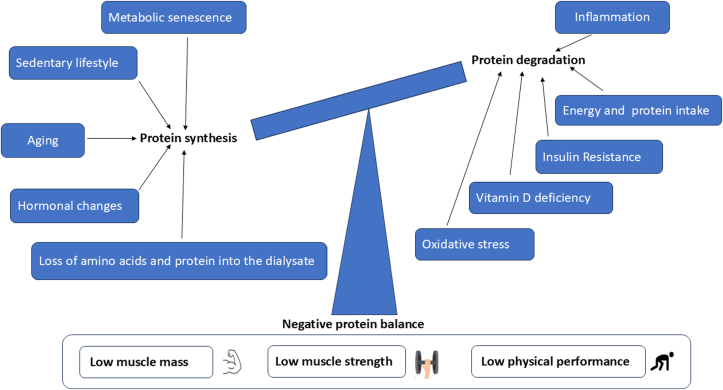
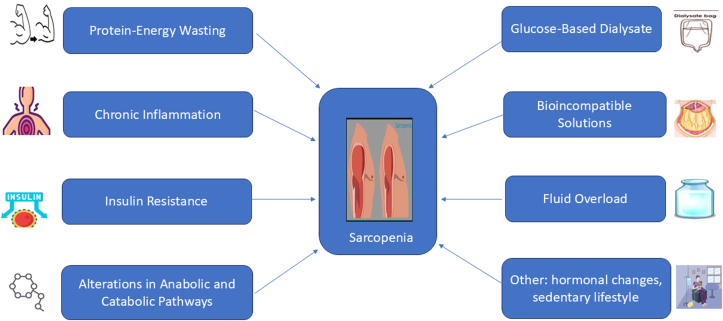
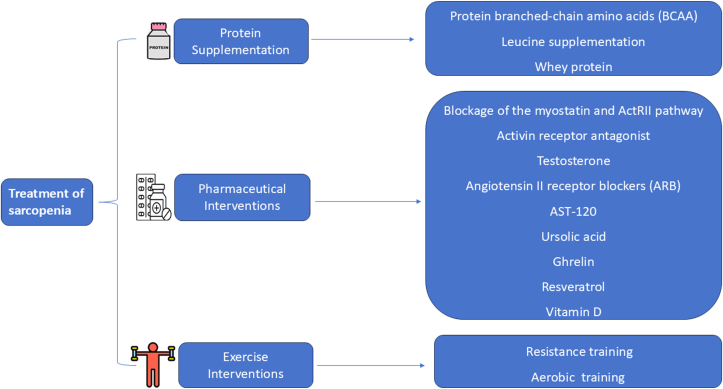
Sarcopenia, defined as the loss of skeletal muscle mass, strength, and function, is a significant complication in patients with chronic kidney disease, particularly those undergoing peritoneal dialysis (PD). This review explores the prevalence, pathophysiology, diagnostic challenges, and management strategies of sarcopenia in the PD population. The multifactorial etiology of sarcopenia in PD, including protein-energy wasting, chronic inflammation, insulin resistance, and hormonal imbalances, underscores the complexity of its management. The prevalence of sarcopenia in patients treated with PD is influenced by age, duration of dialysis, and comorbid conditions, presenting a considerable variation across studies due to differing diagnostic criteria. Diagnostic challenges arise from fluid overload and the PD process, affecting the accuracy of muscle mass measurements. Intervention strategies focusing on nutritional supplementation and physical exercise have shown promise; however, the need for PD-specific diagnostic criteria and treatment protocols remains. This review highlights the critical effect of sarcopenia on functional status and survival in patients treated with PD, emphasizing the importance of addressing this condition to improve patient outcomes. Future directions call for comprehensive, longitudinal studies to better understand sarcopenia's progression in patients treated with PD and the development of tailored interventions.
Keywords: Sarcopenia; dialysis; muscle mass; peritoneal dialysis; protein-energy wasting; treatment.
© 2025 The Authors.
Figures
References
Publication types
LinkOut - more resources
Full Text Sources
Miscellaneous
