


Human Source Severe Acute Respiratory Syndrome Coronavirus 2 Aerosol Transmission to Remote Sentinel Hamsters
- PMID: 40256039
- PMCID: PMC12006787
- DOI: 10.1093/ofid/ofaf196
Human Source Severe Acute Respiratory Syndrome Coronavirus 2 Aerosol Transmission to Remote Sentinel Hamsters
Abstract
Background: Bioaerosol-mediated transmission of severe acute respiratory syndrome coronavirus 2 (SARS-CoV-2) via building ventilation systems has yet to be convincingly demonstrated. We used the South African Airborne Infections Research (AIR) facility near Pretoria to study human-to-animal (H2A) transmission of SARS-CoV-2 in newly diagnosed patients. While the facility was built to study tuberculosis transmission, this was its first adaptation to study H2A virus transmission.
Methods: Patients with clinically confirmed coronavirus disease 2019 were housed for up to 4 days in in the AIR facility with continuously exhausting patient ward air to hamsters housed in animal exposure rooms. After a 3-week exposure period, animals were held for an additional week to allow for antibody development. Animal sera were analyzed for anti-spike and plaque reduction activities and lung samples for pathology.
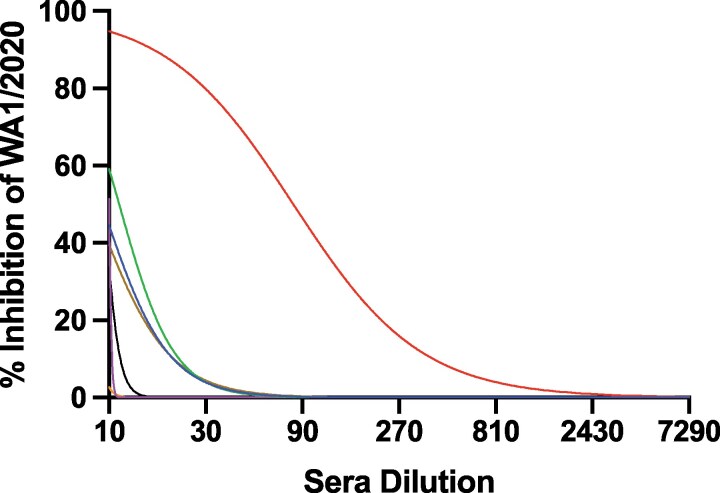
Results: Seven patients provided ≥400 in-residence hours over a 17-day period. Pair-housed naive golden Syrian hamsters (n = 216) received continuous exposure to mixed patient ward exhaust. Serum analyses revealed anti-SARS-CoV-2 immunoglobulin G in 58% of animals tested. Plaque reduction assays on 7 high-titer serum samples revealed neutralizing activity.
Conclusions: These results support the concept that viral bioaerosols generated from patients remain infectious over long-distance transport through a building ventilation system. The seroconversion among sentinel animals supports the long-held belief that airborne infections manifest as a stochastic rather than deterministic event that is subject to a threshold dose effect. Further confirmatory studies are necessary to characterize the relationship between the bioaerosol delivered and the infections that result in this controlled H2A transmission model.
Keywords: COVID-19; hamster; infectious aerosols; infectious disease aerobiology; respiratory transmission.
© The Author(s) 2025. Published by Oxford University Press on behalf of Infectious Diseases Society of America.
Conflict of interest statement
Potential conflicts of interest. All authors: No reported conflicts of interest.
Figures


References
-
- Meyerowitz EA, Richterman A, Gandhi RT, Sax PE. Transmission of SARS-CoV-2. Ann Intern Med 2021; 174:1037. - PubMed
Grants and funding
LinkOut - more resources
Full Text Sources
Miscellaneous
