


Brain oxygenation monitoring during neonatal stabilization and resuscitation and its potential for improving preterm infant outcomes: a systematic review and meta-analysis with Bayesian analysis
- PMID: 40259049
- PMCID: PMC12011959
- DOI: 10.1007/s00431-025-06138-0
Brain oxygenation monitoring during neonatal stabilization and resuscitation and its potential for improving preterm infant outcomes: a systematic review and meta-analysis with Bayesian analysis
Abstract
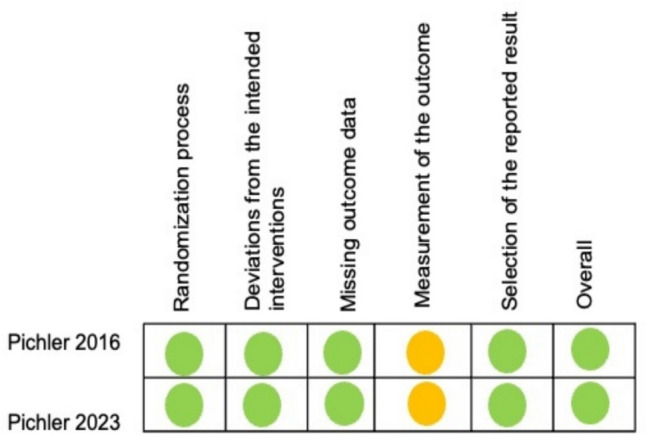
Neonatal stabilization and resuscitation in preterm infants are critical interventions. Cerebral tissue oxygen saturation (CrSO2) measured with near-infrared spectroscopy monitoring offers potential benefits by providing real-time information on brain oxygenation. This systematic review aimed to determine if CrSO2-monitoring to guide neonatal resuscitation after birth can improve survival without cerebral injury. A systematic search of MEDLINE, Google Scholar, EMBASE, the Cumulative Index of Nursing and Allied Health Literature, Clinical Trials.gov, and the Cochrane Central Register of Controlled Trials was performed through December 2024. We included only human studies that investigated CrSO2-guided interventions during neonatal resuscitation after birth in preterm infants. A meta-analysis was performed using individual patient data and the Bayesian method. The main outcome assessed was survival without cerebral injury (Study registration:PROSPERO CRD42024512148). Two studies were identified, including a total of 667 preterm infants with less than 34 weeks of gestation, describing CrSO2-guided interventions during neonatal resuscitation. The meta-analysis revealed a high probability of treatment superiority for NIRS-guided interventions that demonstrated improved outcomes compared to standard care, with a 4.5% increase in the rate of survival without cerebral injury (93% probability) and 4.2% reduction of IVH of any grade (94% probability). The risk of bias can be described as low.
Conclusion: This meta-analysis suggests that CrSO2-guided interventions may offer a meaningful advantage in preterm infant resuscitation after birth, improving survival without brain injury. The analysis indicates a high probability of a clinically important benefit. This warrants consideration in clinical practice.
What is known: • Studies have shown that near-infrared spectroscopy can monitor brain oxygenation in preterm infants immediately after birth.
What is new: • This is the first meta-analysis to examine the impact of near-infrared spectroscopy based interventions on neonatal resuscitation outcomes. • Interventions based on monitoring preterm infants' cerebral oxygenation may improve their chances of surviving without severe brain injury, compared to standard care.
Keywords: Bayesian; Brain oxygenation; Cerebral tissue oxygen saturation; Delivery room; NIRS; Near-infrared spectroscopy; Neonatal resuscitation; Neonatal stabilization; Neonates; Preterm infants.
© 2025. The Author(s).
Conflict of interest statement
Declarations. Competing interests: The authors declare no competing interests. AI statement: During the preparation of this work, the authors did not use artificial intelligence.
Figures


References
-
- Platt MJ (2014) Outcomes in preterm infants. Public Health 128(5):399–403 - PubMed
-
- Fathi O, Bapat R, Shepherd EG, Logan JW, Fathi O, Bapat R, et al. (2018) Golden hours: an approach to postnatal stabilization and improving outcomes. Neonatal Medicine.
-
- Patra A, Bhandary P, Giannone P.(2016) the golden hour: providing very premature infants a favorable beginning. J Pediatr Neonatal Care. ;Volume 5(Issue 3).
Publication types
MeSH terms
Substances
LinkOut - more resources
Full Text Sources
Medical
