


Virucidal Efficacy of Laser-Generated Copper Nanoparticle Coatings against Model Coronavirus and Herpesvirus
- PMID: 40263124
- PMCID: PMC12067380
- DOI: 10.1021/acsami.5c03330
Virucidal Efficacy of Laser-Generated Copper Nanoparticle Coatings against Model Coronavirus and Herpesvirus
Abstract
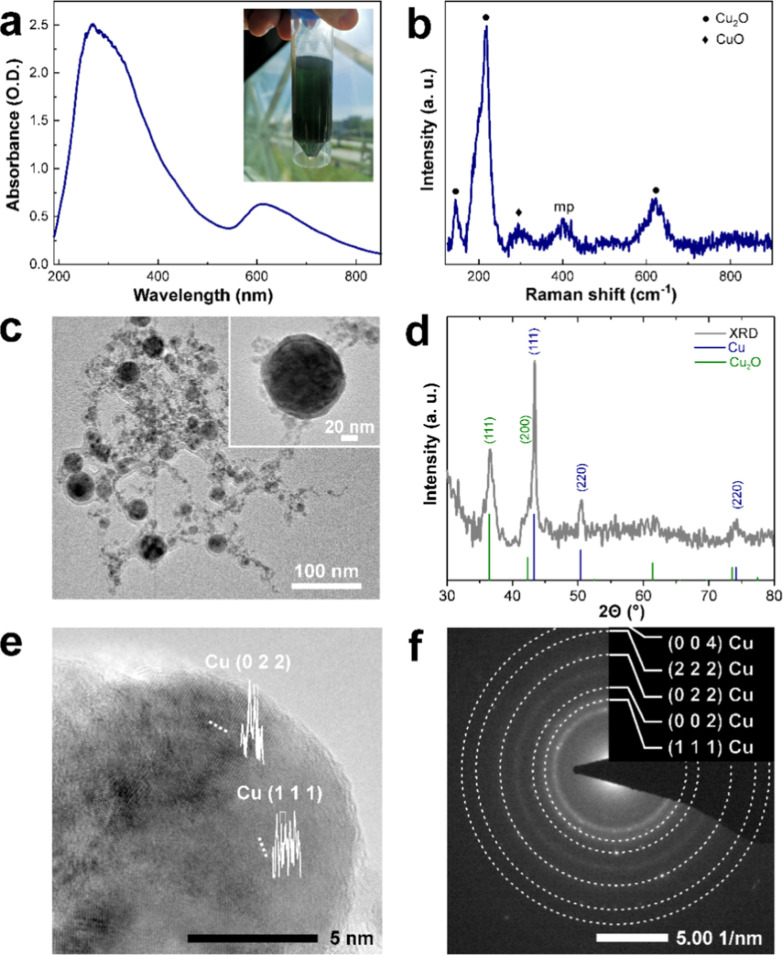
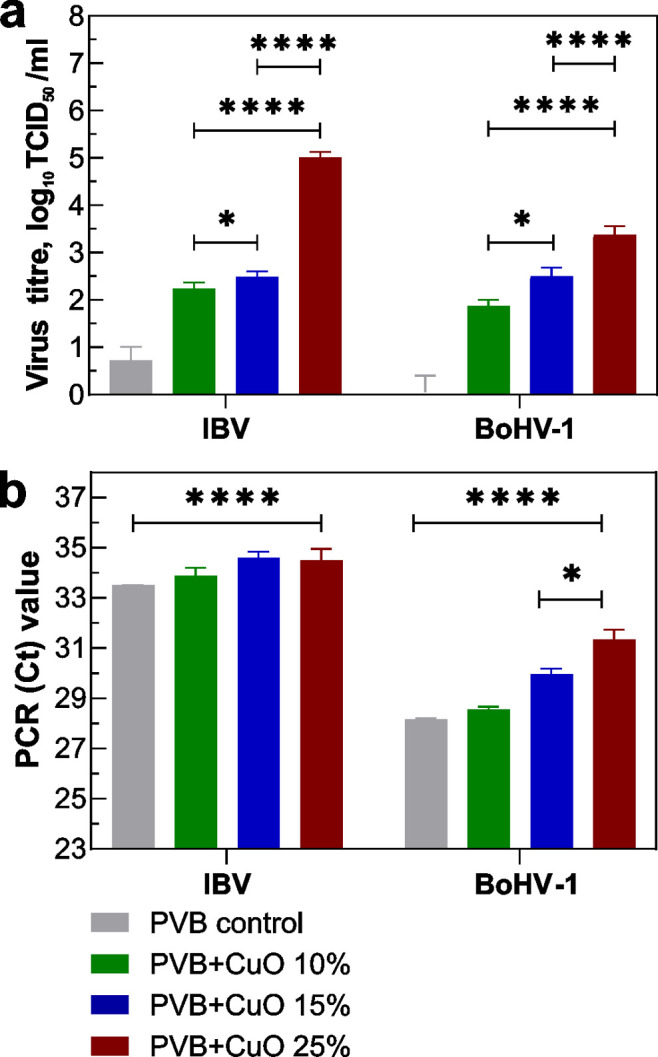
High-efficiency antiviral surfaces can be an effective means of fighting viral diseases, such as the recent COVID-19 pandemic. Copper and copper oxides, their nanoparticles (NPs) (CuNPs), and coatings are among the effective antiviral materials having internal and external biocidal effects on viruses. In this work, CuNP colloids were produced via femtosecond laser ablation of the metal target in water, a photophysical, cost-effective green synthesis alternative utilizing sodium citrate surfactant stabilizing the NPs. Raman spectroscopy and X-ray diffraction studies confirmed that the 32 nm mean size CuNPs are mixtures of mainly metallic copper and copper(I) oxide. Polyvinyl butyral was utilized as the binding agent for the CuNPs deposited via high-throughput spray-coating technology. The virucidal efficacy of such coatings containing Cu content ranging from 2.9 to 11.2 atom % was confirmed against animal-origin coronavirus containing ribonucleic acid, the agent of avian infectious bronchitis (IBV), and herpesvirus containing DNA, the agent of bovine herpesvirus (BoHV-1) infection. It was demonstrated that after a short time of exposure, the Cu NP-based coatings do not have a toxic effect on the cell cultures while demonstrating a negative effect on the biological activity of both model viruses that was confirmed by quantification of the viruses via the determination of tissue culture infectious dose (TCID50) virus titer and their viral nucleic acids via determination of threshold cycle (Ct) employing real-time polymerase chain reaction analysis. The assays showed that the decrease in TCID50 virus titer and increase in Ct values correlated with Cu content in Cu NP-based coatings for both investigated viruses. Contact with coatings decreased IBV and BoHV-1 numbers from 99.42% to 100.00% and from 98.65% to 99.96%, respectively. These findings suggest that CuNPs show inhibitory effects leading to the inactivation of viruses and their nuclei regardless of the presence of a viral envelope.
Keywords: copper nanoparticles; coronavirus; herpesvirus; laser ablation in liquid; spray-coating; virucidal surface.
Conflict of interest statement
The authors declare no competing financial interest.
Figures
References
-
- World Health Organization World Health Organization Coronavirus (Covid-19) Dashboard. World Health Organization, Geneva, Switzerland. https://covid19.who.int, 2022.
-
- United Nations Population Fund World Population Dashboard, 2023. https://www.unfpa.org/data/world-population-dashboard (accessed May 10, 2023).
-
- Das Jana I.; Kumbhakar P.; Banerjee S.; Gowda C. C.; Kedia N.; Kuila S. K.; Das N. C.; Das A. K.; Manna I.; Tiwary C. S.; et al. Copper Nanoparticle-Graphene Composite-Based Transparent Surface Coating with Antiviral Activity against Influenza Virus. ACS Appl. Nano Mater. 2021, 4 (1), 352–362. 10.1021/acsanm.0c02713. - DOI
-
- Vasickova P.; Pavlik I.; Verani M.; Carducci A. Issues Concerning Survival of Viruses on Surfaces. Food Environ. Virol. 2010, 2 (1), 24–34. 10.1007/s12560-010-9025-6. - DOI
MeSH terms
Substances
LinkOut - more resources
Full Text Sources
Miscellaneous
