


Museomics of an extinct European flat oyster population
- PMID: 40263463
- PMCID: PMC12015263
- DOI: 10.1038/s41598-025-96743-8
Museomics of an extinct European flat oyster population
Abstract
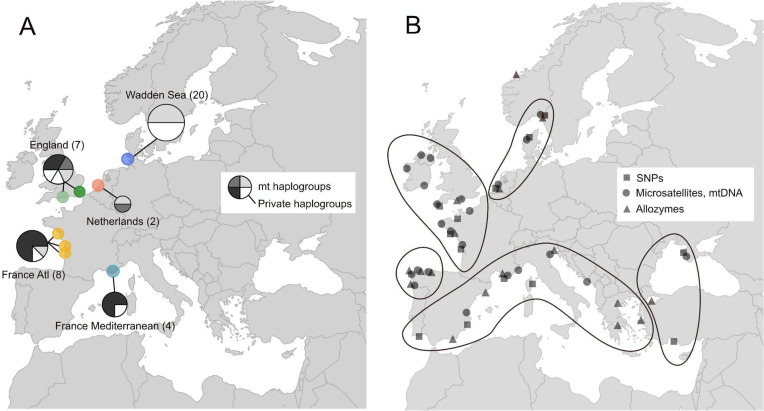
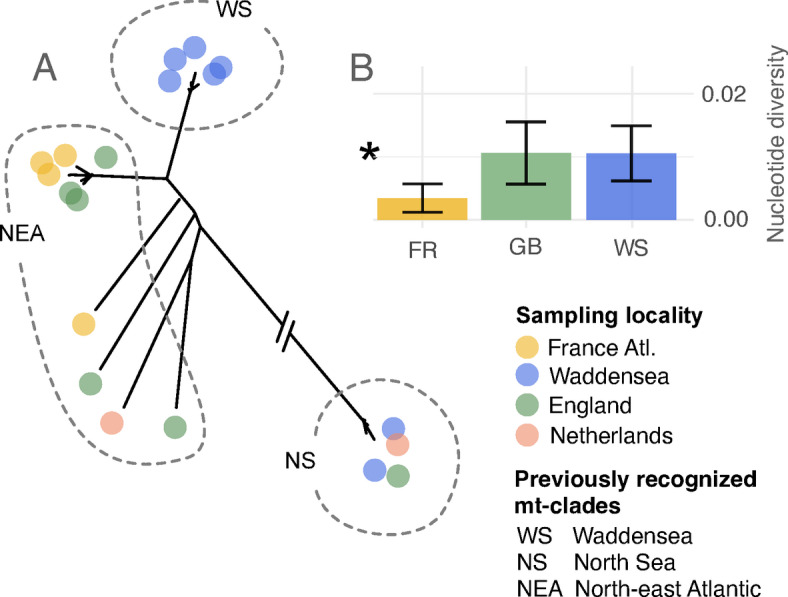
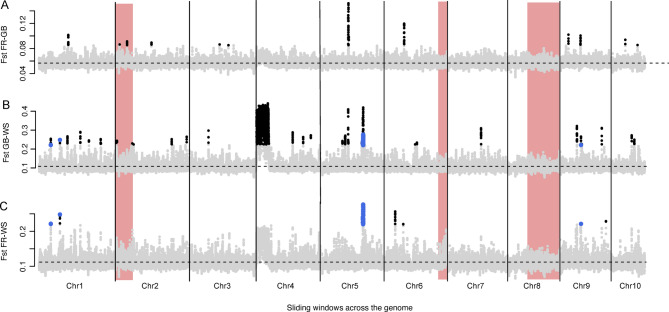
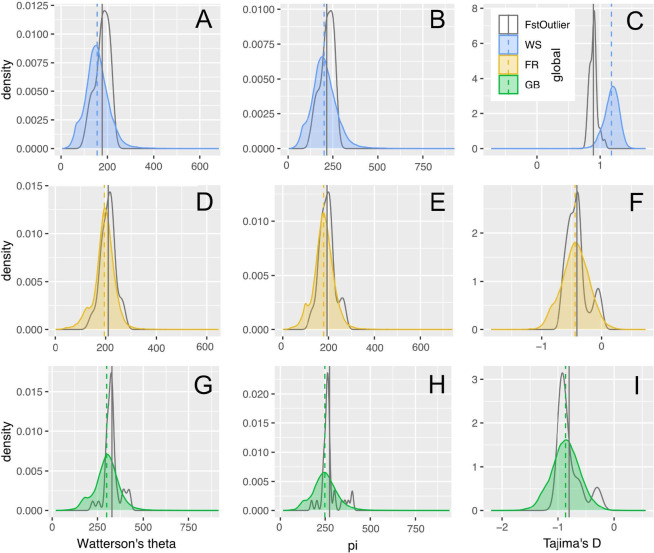
Understanding the factors that predispose species and populations to decline and extinction is a major challenge of biodiversity research. In the present study, we investigated the historical population genomics of an extinct population of the European oyster (Ostrea edulis L.) from the Wadden Sea collected between 1868 and 1888, and compared it to French and English populations sampled at the same time. Our museomic results indicate that the now-extinct population was genetically isolated from the French and English populations and showed signs of local adaptation in the form of Fst outlier loci between the Wadden Sea and the other two populations. Thus the Wadden Sea oysters may have been predisposed for extinction because they were not naturally replenished from other populations. A comparison of population-wide genomic diversity may hint towards a sudden population contraction of the Wadden Sea population, possibly being the result of stronger - or earlier - population decline in this population than in the others. In summary, our historical population genomic exploration hints at some potential causes of population decline in flat oysters from the Wadden Sea, which might have led to their extinction.
© 2025. The Author(s).
Conflict of interest statement
Declarations. Competing interests: The authors declare no competing interests.
Figures


References
-
- Biosafety Unit. Status and Trends of Global Biodiversity. in Global Biodiversity Outlook. Secretariat of the Convention on Biological Diversity, Quebec, Canada, (2001).
-
- Cardinale, B. J. et al. Biodiversity loss and its impact on humanity. Nature486, 59–67 (2012). - PubMed
-
- Dirzo, R. et al. Defaunation in the anthropocene. Science345, 401–406 (2014). - PubMed
-
- Ceballos, G. & Ehrlich, P. R. Mammal population losses and the extinction crisis. Science296, 904–907 (2002). - PubMed
-
- Collen, B. et al. Monitoring change in vertebrate abundance: the living planet index. Conserv. Biol.23, 317–327 (2009). - PubMed
MeSH terms
LinkOut - more resources
Full Text Sources
Miscellaneous
