Traditional Arabic & Islamic Medicine (TAIM): Principles of Dietary Practices and the TAIM Food Pyramid
- PMID: 40264900
- PMCID: PMC12013825
- DOI: 10.5539/gjhs.v17n2p36
Traditional Arabic & Islamic Medicine (TAIM): Principles of Dietary Practices and the TAIM Food Pyramid
Abstract
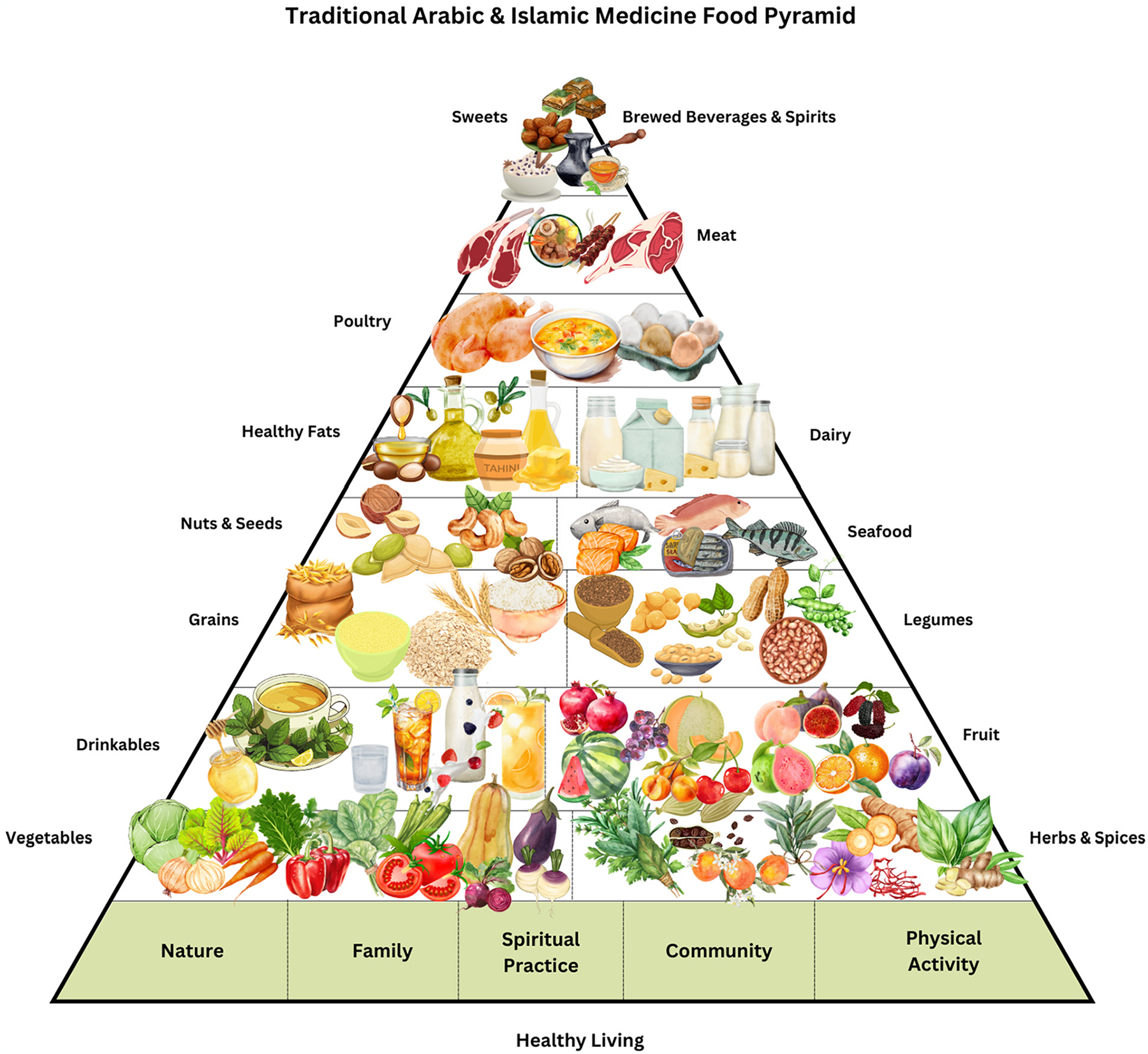
Middle Eastern and Mediterranean culinary tradition and dietary practices are used interchangeably due to geographical proximity and similarities in their cuisine. While these regions share historical impact and cultural exchanges there are differences that delineate each region's dietary influences. Dietary practices are one of five core elements of an overarching Traditional Arabic and Islamic Medicine (TAIM) conceptual framework, yet current dietary guidelines are lacking. We introduce the TAIM food pyramid as a visual representation of TAIM's historical and regional nuance, illustrate dietary patterns, and provide a cultural competency strategy. We used Oldways as a model for creating the TAIM food pyramid while illustrating its extension of a wholistic paradigm representing the medical and indigenous traditions, beliefs and practices of a geographic region and cultural community. We focus on two important aspects: historical roots of traditional Arabic Medico-Culinary cuisine coupled with Islamic medicine and influences of Prophetic tradition on foods. The TAIM food pyramid is an illustration of a healing tradition emphasizing sound nutrition, food safety, social connection, community and sustainability. The pyramid is similar in structure to global traditional healing diets within the context of culture and lifestyle of the Middle East and North African communities. Despite trends in research focusing on the Mediterranean diet, little is known about the Middle Eastern diet. The absence of a TAIM food pyramid is a clear gap in research and a missed opportunity for further analysis. Health care delivery that is culturally competent improves health equity and translates to patient centered, whole-person care.
Keywords: Cultural competency; Diet Therapy; Food pyramid; Middle Eastern Diet; Traditional Arabic and Islamic medicine (TAIM).
Conflict of interest statement
Competing Interests Statement The authors declare that they have no competing interests.
Figures
References
-
- Ahmad A (2023). Importance of Ilaj bil Ghiza (Dieto-therapy) in Unani System of Medicine. JETIR, 10(9), 160–165.
-
- Ahmad S, & Goel K (2012). Psycho-Social Behaviour and Health Benefits of Islamic Fasting During the Month of Ramadan. J Community Med Health Educ, 2. 10.4172/2161-0711.1000178. - DOI
-
- Akram M (2016). Meaning and Significance of Fasting in Comparative Perspective: A Study with Special Reference to Judaism, Christianity, and Islam. Hamdard Islamicus, 39(2), 37–60. 10.17613/pkjv-5856. - DOI
-
- Al-Bayhaqi A (1990). Sunan al-Kubrá lil-Bayhaqi. Hadith Number 19668. In Sunan al-Kubra lil Bayhaqi: Darussalam publications.
-
- Al-Bukhari M, & Al-Bukhari S (1996a). Hadith Number 2320. Translated by Muhammad Muhsin Khan. Darussalam publications.
Grants and funding
LinkOut - more resources
Full Text Sources
Miscellaneous