Establishment of a two-dimensional PCR method for simultaneous detection of nine sexually transmitted disease pathogens: insights into coinfection rates and epidemiological trends in HPV screening
- PMID: 40272199
- PMCID: PMC12131753
- DOI: 10.1128/spectrum.00237-25
Establishment of a two-dimensional PCR method for simultaneous detection of nine sexually transmitted disease pathogens: insights into coinfection rates and epidemiological trends in HPV screening
Abstract
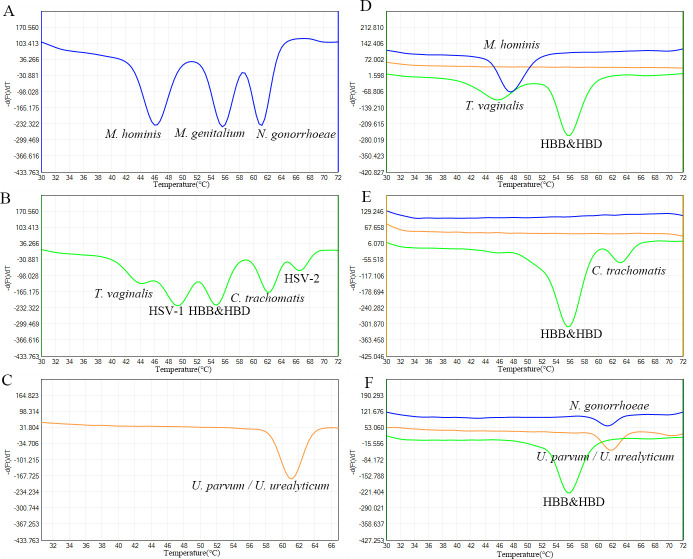
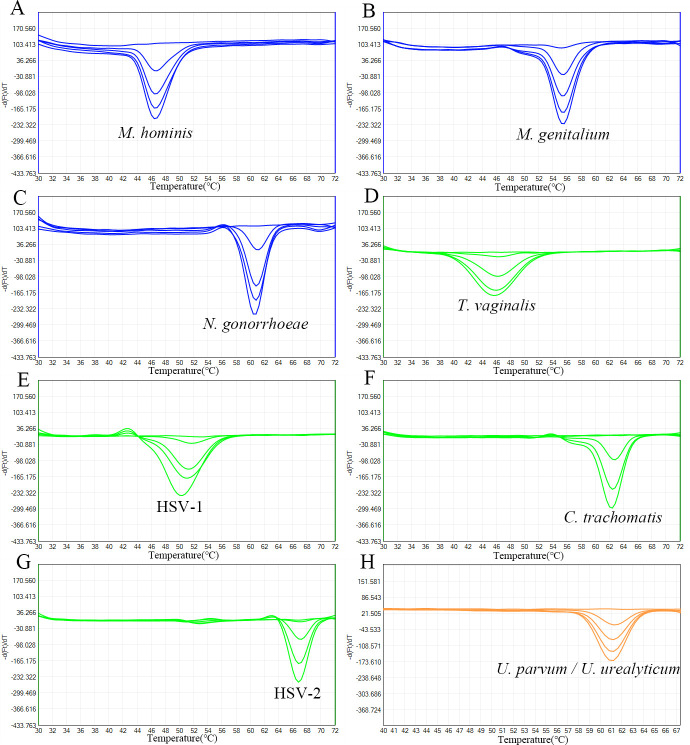
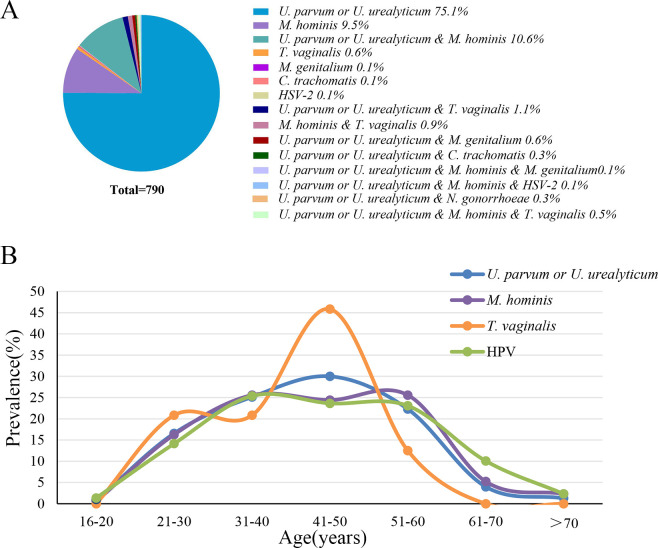
This study developed a two-dimensional PCR (2D-PCR) method for simultaneous detection of nine sexually transmitted disease pathogens (STDPs) in cervical brush samples collected after human papillomavirus (HPV) screening, aiming to evaluate co-infection rates and epidemiological trends. The 2D-PCR assay was optimized under single-tube closed conditions, with sensitivity and accuracy validated. The prevalent nine STDPs were assessed in 2,193 females undergoing routine gynecological inspections and HPV screening. Statistical analysis revealed correlations between HPV genotypes and identified pathogens. Results showed detection limits (LODs) of 10²-10³ copies/μL for STDPs, with high concordance to triplex real-time PCR (Kappa = 0.90). Overall, 48.6% of samples tested positive for ≥1 pathogen, with 36.02% positive for ≥1 STDP. The most prevalent STDPs were Ureaplasma parvum/Ureaplasma urealyticum (27.04%), Mycoplasma hominis (3.42%), and Trichomonas vaginalis (0.23%). HPV-positive individuals exhibited higher STDP infection rates (46.32%) than HPV-negative counterparts (32.86%). Significant associations were observed between HPV infection and U. parvum/U. urealyticum or M. hominis. HPV 52 was the predominant genotype in STDP-infected individuals (6.2%), with genotypes 52, 53, 6, 11, 42, 43, and 61 significantly more prevalent in STDP-positive groups. The 2D-PCR method proved sensitive and specific for multiplex STDPs detection, while epidemiological data highlighted significant STDP-HPV correlations.
Importance: This study introduces the first single-tube 2D-PCR method for efficient, high-throughput detection of nine STDPs, addressing a critical gap in co-infection diagnostics. The high prevalence of STDPs and their strong association with human papillomavirus (HPV) infection underscore the clinical relevance of co-pathogen screening, particularly in HPV-positive populations. The significant linkage between U. parvum/U. urealyticum, M. hominis, and HPV infection suggests potential synergistic mechanisms influencing HPV persistence or progression. Notably, the predominance of HPV 52 and increased prevalence of genotypes 53, 6, 11, 42, 43, and 61 in STDP-infected individuals highlight how pathogen co-infections may modulate HPV genotype distribution. These findings provide a robust tool for integrated STDPs/HPV screening and offer epidemiological insights to guide targeted prevention strategies, ultimately enhancing management of sexually transmitted infections and HPV-related cervical disease.
Keywords: 2D-PCR; HPV; co-infection; epidemiology; sexually transmitted diseases.
Conflict of interest statement
The authors declare no conflict of interest.
Figures
References
-
- WHO . 2023. The diagnostics landscape for sexually transmitted infections. World Health Organization, Geneva.
-
- Usyk M, Zolnik CP, Castle PE, Porras C, Herrero R, Gradissimo A, Gonzalez P, Safaeian M, Schiffman M, Burk RD, Costa Rica HPV Vaccine Trial (CVT) Group . 2020. Cervicovaginal microbiome and natural history of HPV in a longitudinal study. PLoS Pathog 16:e1008376. doi:10.1371/journal.ppat.1008376 - DOI - PMC - PubMed
-
- Qiu L, Chen F, Zhao W, Meng Y, Wang Y, Cheng W, Yang Q, Sui L, Wei L, Di W. 2024. 2024 cervical cancer screening and early precision diagnosis status white paper. Chin J Pract Gynecol Obstet 40:85–95. doi:10.19538/j.fk2024010118 - DOI
Publication types
MeSH terms
Grants and funding
LinkOut - more resources
Full Text Sources
Medical
Miscellaneous