


Generation of a compound heterozygous ABCA4 rat model with pathological features of STGD1
- PMID: 40273359
- PMCID: PMC12138338
- DOI: 10.1093/hmg/ddaf057
Generation of a compound heterozygous ABCA4 rat model with pathological features of STGD1
Abstract
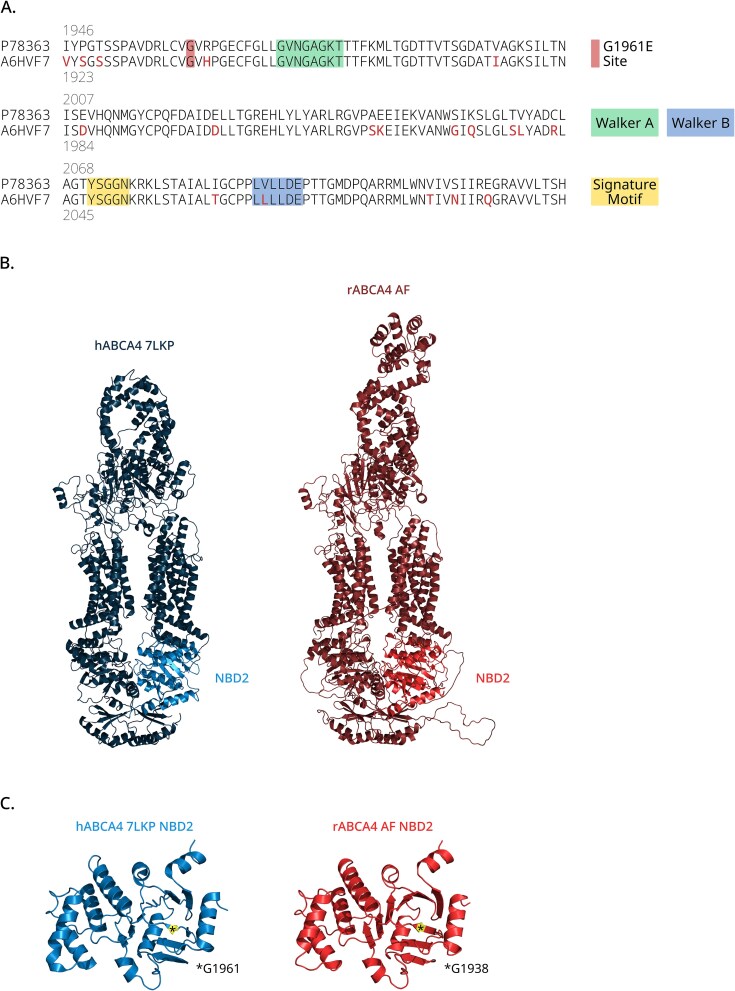
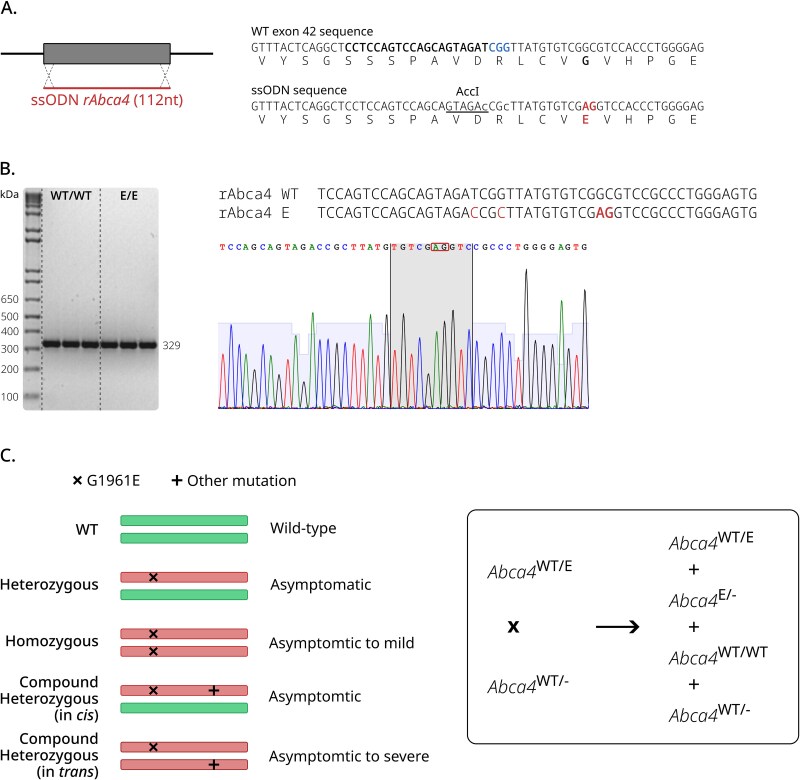
The ABCA4 protein plays an essential role in mammalian vision, ensuring the correct localization of all-trans-retinal within the visual cycle. Mutations in the ABCA4 gene are responsible for the juvenile maculopathy, Stargardt disease (STGD1). We investigated the most common variant underlying STGD1 phenotype in a rat model carrying the ortholog to the human c.5882G > A/p.(Gly1961Glu) (G1961E) in ABCA4. While the pathogenicity of this variant has recently been questioned, we examine here whether the ortholog rat variant is associated with vitamin A toxicity in the retina. By crossing the rat line with a rat line deficient in ABCA4 protein, we reveal a more pathogenic phenotype in line with compound heterozygosity, making the model suitable for testing of gene, cell and pharmacological therapies.
Keywords: ATPase Binding Cassette Transporter 4; G1961E variant; Stargardt disease; genetically modified rat.
© The Author(s) 2025. Published by Oxford University Press.
Figures
References
-
- Higgins CF. ABC transporters: from microorganisms to man. Annu Rev Cell Biol 1992;8:67–113. - PubMed
-
- Sun H, Nathans J. Stargardt’s ABCR is localized to the disc membrane of retinal rod outer segments. Nat Genet 1997;17:15–16. - PubMed
-
- Molday RS, Garces FA, Scortecci JF. et al. Structure and function of ABCA4 and its role in the visual cycle and Stargardt macular degeneration. Prog Retin Eye Res 2022;89:101036. - PubMed
-
- Eldred GE, Lasky MR. Retinal age pigments generated by self-assembling lysosomotropic detergents. Nature 1993;361:724–726. - PubMed
MeSH terms
Substances
Grants and funding
LinkOut - more resources
Full Text Sources
Medical
