. 2025 Jul;39(7):1650-1660.
doi: 10.1038/s41375-025-02615-5. Epub 2025 Apr 24.

ATM aberrations in chronic lymphocytic leukemia: del(11q) rather than ATM mutations is an adverse-prognostic biomarker

Affiliations

ATM aberrations in chronic lymphocytic leukemia: del(11q) rather than ATM mutations is an adverse-prognostic biomarker

Birna Thorvaldsdottir et al. Leukemia. 2025 Jul.

Abstract

Despite the well-established adverse impact of del(11q) in chronic lymphocytic leukemia (CLL), the prognostic significance of somatic ATM mutations remains uncertain. We evaluated the effects of ATM aberrations (del(11q) and/or ATM mutations) on time-to-first-treatment (TTFT) in 3631 untreated patients with CLL, in the context of IGHV gene mutational status and mutations in nine CLL-related genes. ATM mutations were present in 246 cases (6.8%), frequently co-occurring with del(11q) (112/246 cases, 45.5%). ATM-mutated patients displayed a different spectrum of genetic abnormalities when comparing IGHV-mutated (M-CLL) and unmutated (U-CLL) cases: M-CLL was enriched for SF3B1 and NFKBIE mutations, whereas U-CLL showed mutual exclusivity with trisomy 12 and TP53 mutations. Isolated ATM mutations were rare, affecting 1.2% of Binet A patients and <1% of M-CLL cases. While univariable analysis revealed shorter TTFT for Binet A patients with any ATM aberration compared to ATM-wildtype, multivariable analysis identified only del(11q), trisomy 12, SF3B1, and EGR2 mutations as independent prognosticators of shorter TTFT among Binet A patients and within M-CLL and U-CLL subgroups. These findings highlight del(11q), and not ATM mutations, as a key biomarker of increased risk of early progression and need for therapy, particularly in otherwise indolent M-CLL, providing insights into risk-stratification and therapeutic decision-making.


Conflict of interest statement

Competing interests: PG: Honoraria/advisory board: AbbVie, Acerta/AstraZeneca, Adaptive, ArQule/MSD, BeiGene, CelGene/Juno, Gilead, Janssen, Loxo/Lilly, Sunesis. Research funding: AbbVie, Gilead, Janssen, Novartis, Sunesis; LS: advisory board AbbVie, AstraZeneca, Janssen; RR: honoraria/advisory board: AbbVie, AstraZeneca, Illumina, Janssen, Lilly and Roche; KS: honoraria/advisory board: AbbVie, Acerta/AstraZeneca, Gilead, Janssen. Research funding: AbbVie, Gilead, Janssen; PB: honoraria from Abbvie, Gilead and Janssen. Research funding from Gilead; GG: Advisory Board/Speaker’s bureau: Abbvie, AstraZeneca, Beigene, Hikma, Incyte, Johnson & Johnson, Lilly; LB: honoraria/advisory board: Abbvie, Amgen, Astellas, BMS/Celgene, Daiichi Sankyo, Gilead, Hexal, Janssen, Jazz Pharmaceuticals, Menarini, Novartis, Pfizer, Sanofi, Seattle Genetics. Research funding: Bayer, Jazz Pharmaceuticals; GMR: honoraria from Abbvie, AstraZeneca, Gilead and Janssen. Research funding from Gilead; CB: Honoraria/advisory board: AstraZeneca and Eli Lilly. CUN received research grants and/or honoraria from Abbvie, AstraZeneca, Janssen, Genmab, Beigene, Octapharma, MSD, Lilly, Synamics, CSL Behring, Takeda, Nofo Nordisk Foundation. The other authors declare no competing financial interests

Figures
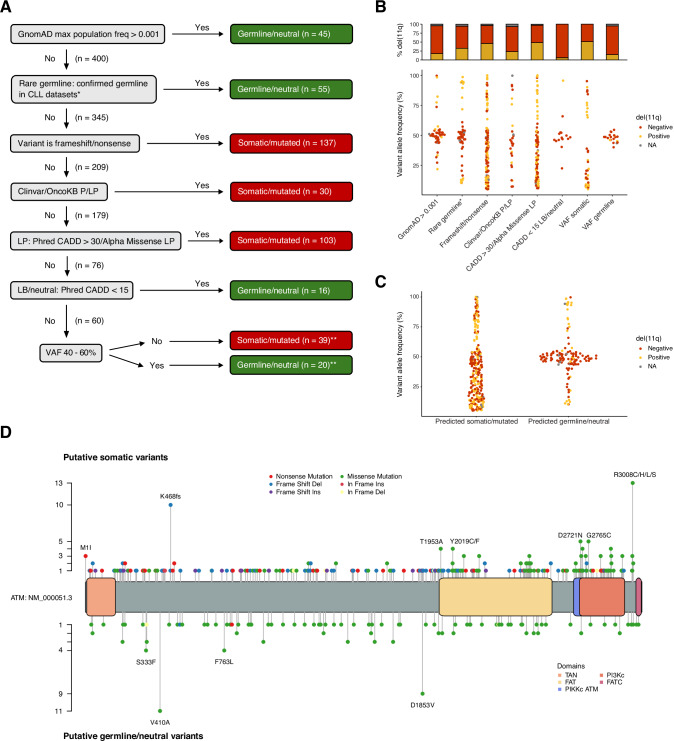
Fig. 1
Fig. 1. Classification of reported ATM variants.
A Hierarchical flowchart used to assign ATM variants to putative ‘germline/neutral’ or ’somatic/mutated’ categories. B Distribution of variant allele frequencies (VAFs) for ATM variants in each flowchart category, bar chart shows the proportion del(11q) positive cases for each category. C Distribution of VAFs for all variants assigned as ‘germline/neutral’ and ‘somatic/mutated’. D Graphical representation of amino acid changes and frequencies for all ATM variants in the cohort. Putative somatic variants are displayed above and putative germline/predicted neutral variants are shown below. *Confirmed germline by sequencing in published datasets [30, 31] and in unpublished data. **Four ATM variants, each observed in multiple patients and variably classified as either germline/neutral or somatic/mutated depending on the final step of the classification system, were reviewed and reassigned to a single classification category (Supplementary Table S2).
Fig. 2
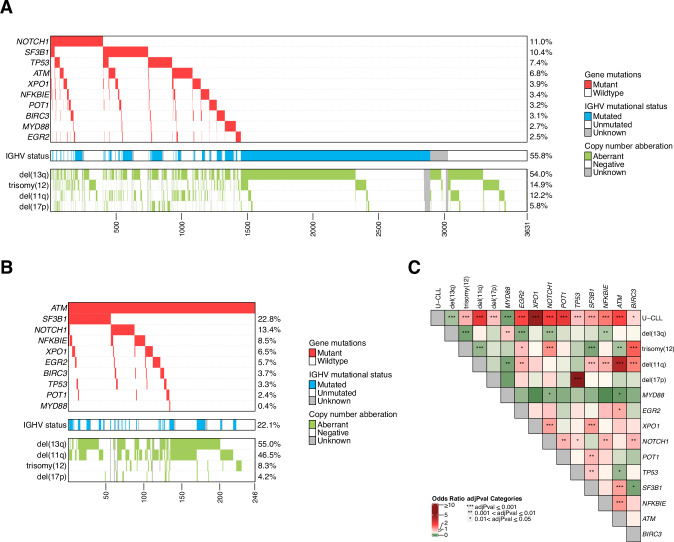
Fig. 2. Overview of recurrent genetic aberrations in the entire cohort and ATM-mutated cases.
A Overview of all 3631 CLL cases included in the study, sorted by frequency of mutations in 10 recurrently mutated genes. B Oncoplot showing detected mutations in recurrently mutated genes, IGHV somatic hypermutation status and chromosomal aberrations in 246 ATM-mutated cases. C Co-occurrence of recurrent gene mutations and chromosomal aberrations in the entire cohort. Odds ratios (OR) and BH-adjusted p values derived from two-sided Fisher exact tests. OR 0–1 indicates a trend towards mutual exclusivity, OR > 1 indicates a trend towards co-occurrence. U-CLL, CLL with unmutated IGHV genes, M-CLL, CLL with mutated IGHV genes.
Fig. 3
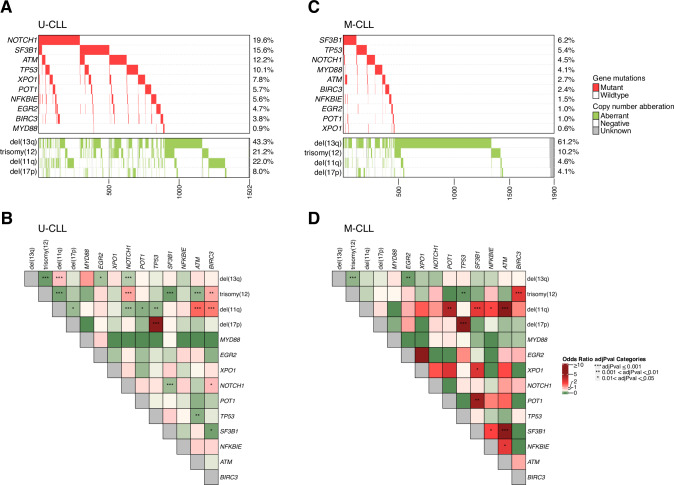
Fig. 3. Overview of detected recurrent genetic abnormalities in U-CLL and M-CLL.
A Oncoplot and (B) co-occurrence plot displaying recurrently mutated genes and chromosomal aberrations in 1502 U-CLL cases. C Oncoplot and (D) co-occurrence plot with recurrently mutated genes and chromosomal aberrations in 1900 M-CLL cases. Odds ratios (OR) and BH-adjusted p values derived from two-sided Fisher exact tests. OR 0–1 indicates a trend towards mutual exclusivity, OR > 1 indicates a trend towards co-occurrence. U-CLL CLL with unmutated IGHV genes, M-CLL CLL with mutated IGHV genes.
Fig. 4
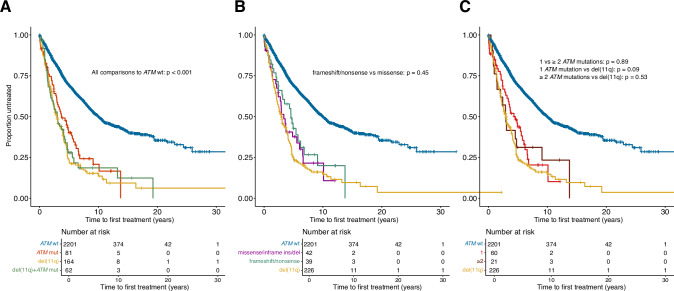
Fig. 4. Clinical impact of ATM aberrations in Binet A CLL patients.
Kaplan-Meier survival analysis using TTFT subdivided by (A) ATM aberration; somatic ATM mutation only, del(11q) only and combined ATM mutation and del(11q), (B) type of ATM mutation; frameshift/nonsense, missense/inframe indels with del(11q) displayed separately, and (C) comparing one versus multiple ATM mutations with del(11q) displayed separately.
Fig. 5
Fig. 5. Clinical impact of ATM aberrations in Binet A CLL patients stratified by IGHV somatic hypermutation status.
Kaplan-Meier survival analysis using TTFT in Binet stage A in (A) U-CLL and (B) M-CLL patients. Pairwise comparisons were performed using the Cox–Mantel log-rank test. C Multivariable analysis using TTFT in Binet stage A CLL patients with U-CLL and M-CLL. U-CLL, CLL with unmutated IGHV genes, M-CLL, CLL with mutated IGHV genes. CI95, 95% confidence interval; * indicates a p value < 0.05, ** p < 0.01, and *** p < 0.001.

References

    1. Lee J-H, Paull TT. Cellular functions of the protein kinase ATM and their relevance to human disease. Nat Rev Mol Cell Biol. 2021;22:796–814. - PubMed
    1. Puente XS, Beà S, Valdés-Mas R, Villamor N, Gutiérrez-Abril J, Martín-Subero JI, et al. Non-coding recurrent mutations in chronic lymphocytic leukaemia. Nature. 2015;526:519–24. - PubMed
    1. Landau DA, Tausch E, Taylor-Weiner AN, Stewart C, Reiter JG, Bahlo J, et al. Mutations driving CLL and their evolution in progression and relapse. Nature. 2015;526:525–30. - PMC - PubMed
    1. Nadeu F, Delgado J, Royo C, Baumann T, Stankovic T, Pinyol M, et al. Clinical impact of clonal and subclonal TP53, SF3B1, BIRC3, NOTCH1, and ATM mutations in chronic lymphocytic leukemia. Blood. 2016;127:2122–30. - PMC - PubMed
    1. Knisbacher BA, Lin Z, Hahn CK, Nadeu F, Duran-Ferrer M, Stevenson KE, et al. Molecular map of chronic lymphocytic leukemia and its impact on outcome. Nat Genet. 2022;54:1664–74. - PMC - PubMed

Substances

LinkOut - more resources