


An Amplitude Analysis-Based Magnetoelastic Biosensing Method for Quantifying Blood Coagulation
- PMID: 40277533
- PMCID: PMC12025017
- DOI: 10.3390/bios15040219
An Amplitude Analysis-Based Magnetoelastic Biosensing Method for Quantifying Blood Coagulation
Abstract
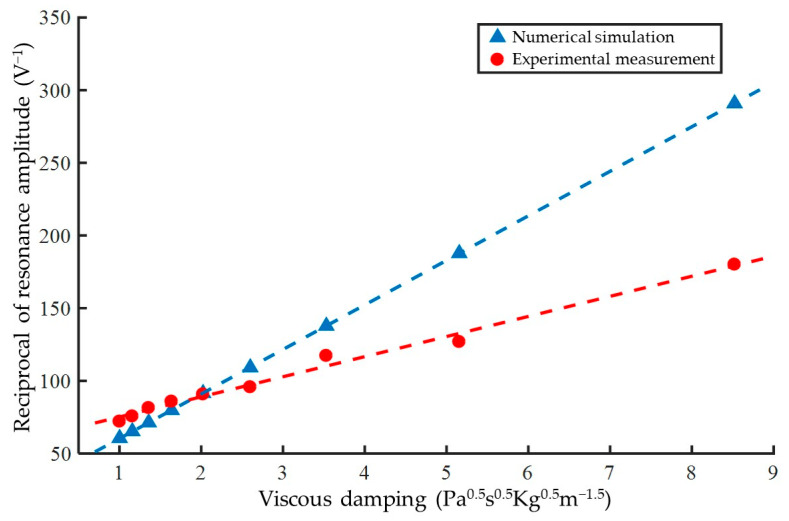
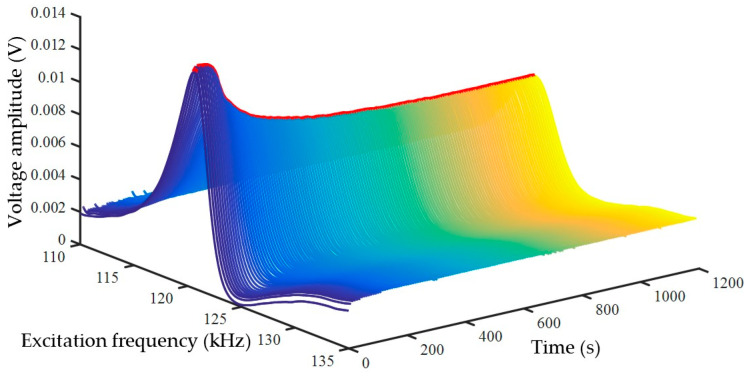
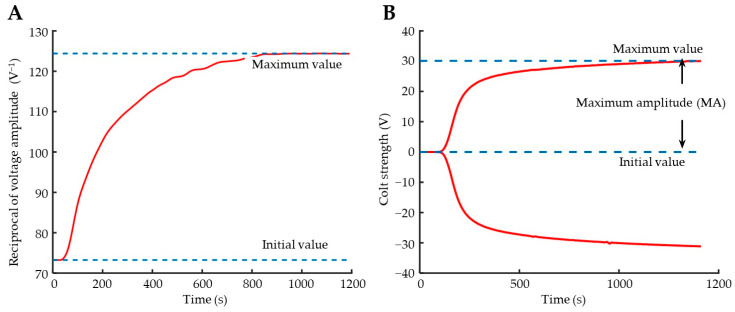
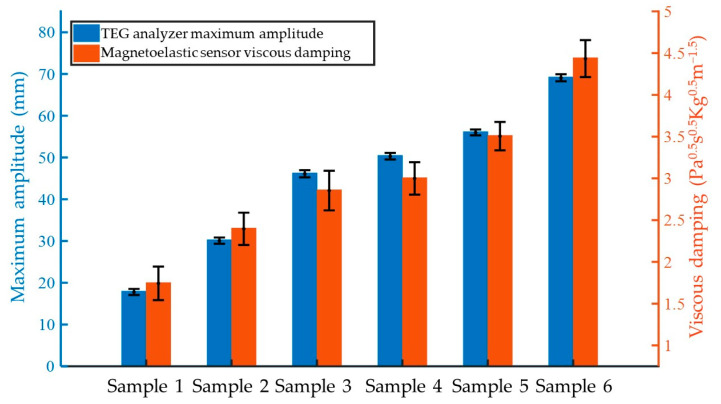
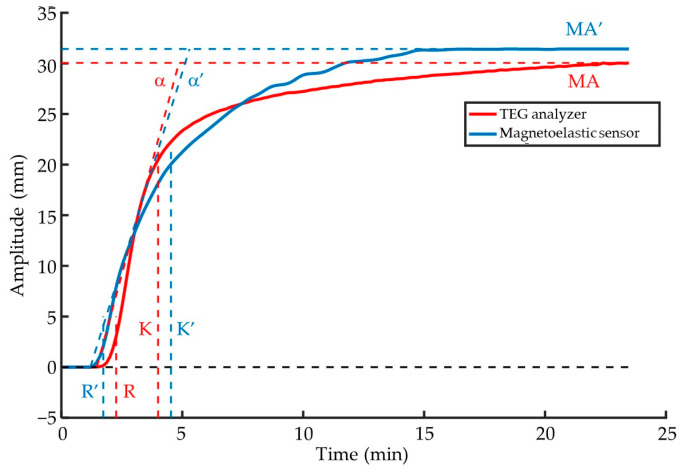
Blood coagulation tests are crucial in the clinical management of cardiovascular diseases and preoperative diagnostics. However, the widespread adoption of existing detection devices, such as thromboelastography (TEG) instruments, is hindered by their bulky size, prohibitive cost, and lengthy detection times. In contrast, magnetoelastic sensors, known for their low cost and rapid response, have garnered attention for their potential application in various coagulation tests. These sensors function by detecting resonant frequency shifts in response to changes in blood viscosity during coagulation. Nevertheless, the frequency-based detection approach necessitates continuous and precise frequency scanning, imposing stringent demands on equipment design, processing, and analytical techniques. In contrast, amplitude-based detection methods offer superior applicability in many sensing scenarios. This paper presents a comprehensive study on signal acquisition from magnetoelastic sensors. We elucidate the mathematical relationship between the resonant amplitude of the response signal and liquid viscosity, propose a quantitative viscosity measurement method based on the maximum amplitude of the signal, and construct a corresponding sensing device. The proposed method was validated using glycerol solutions, demonstrating a sensitivity of 13.83 V-1/Pa0.5s0.5Kg0.5m-1.5 and a detection limit of 0.0817 Pa0.5s0.5Kg0.5m-1.5. When applied to real-time monitoring of the coagulation process, the resulting coagulation curves and maximum amplitude (MA) parameters exhibited excellent consistency with standard TEG results (R2 values of 0.9552 and 0.9615, respectively). Additionally, other TEG parameters, such as R-time, K-time, and α-angle, were successfully obtained, effectively reflecting viscosity changes during blood coagulation.
Keywords: blood coagulation; clot strength; magnetoelastic sensors; thromboelastography (TEG); viscosity measurement.
Conflict of interest statement
The authors declare no conflicts of interest.
Figures

References
MeSH terms
Grants and funding
LinkOut - more resources
Full Text Sources
