


The association between non-high-density lipoprotein cholesterol to high-density lipoprotein cholesterol ratio and preserved ratio impaired spirometry: NHANES 2007-2012
- PMID: 40281503
- PMCID: PMC12023359
- DOI: 10.1186/s12944-025-02571-0
The association between non-high-density lipoprotein cholesterol to high-density lipoprotein cholesterol ratio and preserved ratio impaired spirometry: NHANES 2007-2012
Abstract
Background: Preserved ratio impaired spirometry (PRISm) refers to a form of lung function deterioration, and previous studies have established the association with Chronic Obstructive Pulmonary Disease (COPD). Research has also shown the association between COPD and lipid metabolism disturbances. Despite these findings, the association between lipid metabolism markers and PRISm remains poorly understood.
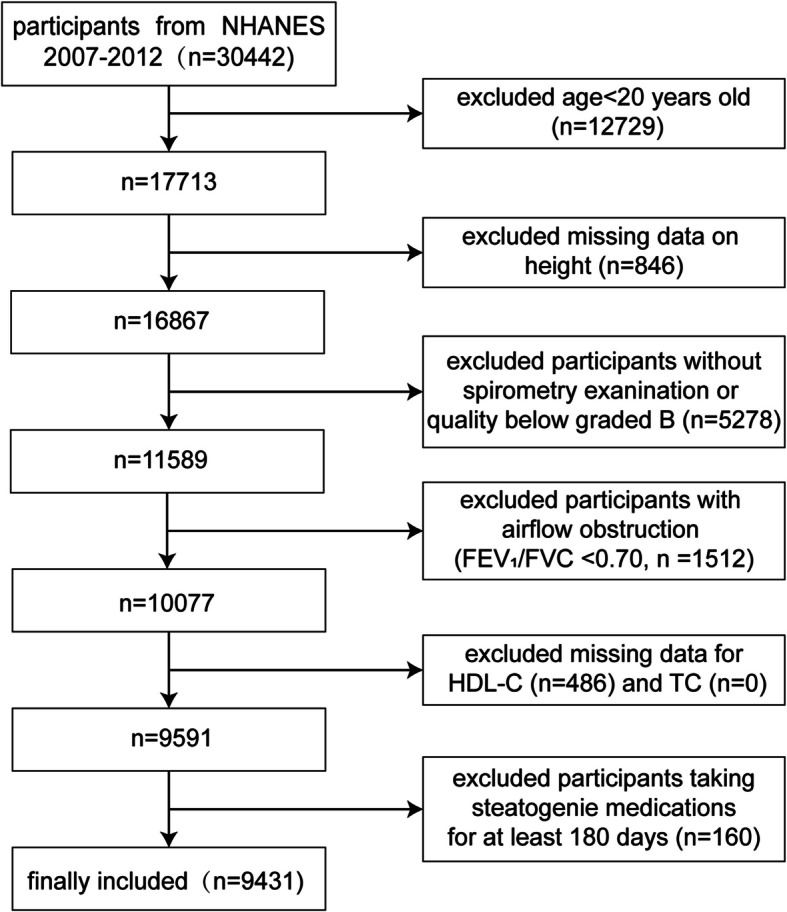
Methods: This analysis was conducted on the 2007-2012 data from the National Health and Nutrition Examination Survey (NHANES), including a total of 9,431 participants. The Non-High-Density Lipoprotein Cholesterol to High-Density Lipoprotein Cholesterol Ratio (NHHR) was calculated based on lipid profiles, and PRISm patients were classified according to pulmonary function tests. To explore the association between NHHR and PRISm, multivariable logistic regression analysis was used.
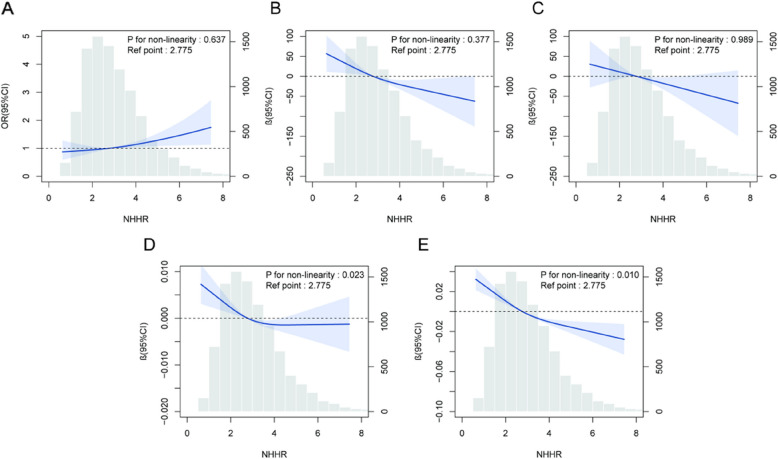
Results: A strong linear association was observed between NHHR and PRISm. In Adjusted Model 2, the weighted multivariable logistic regression analysis revealed that each unit increase in NHHR increased the chance of developing PRISm by 8% (OR:1.08, 95%CI:1.01-1.16, P = 0.039).Participants within the highest NHHR tertile demonstrated a 1.36-fold increased likelihood of presenting with PRISm compared to those in the lowest NHHR tertile (OR:1.36, 95% CI: 1.01-1.83, P = 0.048). Additionally, weighted Restricted Cubic Spline affirmed a linear association between NHHR and PRISm (P for non-linearity = 0.637), while clear non-linear associations were found between NHHR and FEV1% predicted (P for non-linearity = 0.010) and FEV1/FVC (P for non-linearity = 0.023). Subgroup analysis and interaction tests revealed a significant interaction effect among different waist circumference categories (P for interaction = 0.020). Notably, in individuals without abdominal obesity, NHHR showed a strong positive association with PRISm (OR = 1.23, 95% CI: 1.07-1.42, P = 0.01).
Conclusion: These results indicate that NHHR is positively associated with PRISm and is significantly associated with the decline in lung function. This study offers distinctive perspectives that may contribute to the avoidance and management of early-stage pulmonary dysfunction.
Keywords: Cross-sectional study; Lipid metabolism; NHANES; NHHR; PRISm.
© 2025. The Author(s).
Conflict of interest statement
Declarations. Ethics approval and consent to participate: The NHANES protocol was approved by the Ethics Review Board of the NCHS. Each participant provided written informed consent during the survey. This study is a secondary analysis based on the publicly available NHANES database, and therefore, does not require further ethical review by the hospital's ethics committee. Consent for publication: The authors gave their approval for the publication. Competing interests: The authors declare no competing interests.
Figures
References
-
- Global Initiative for Chronic Obstructive Lung Disease (GOLD) . Global strategy for prevention, diagnosis and management of COPD: 2023 report 2023. 10 December 2023. Available from: https://goldcopd.org/2023-gold-report-2/.
-
- Martinez FJ, Agusti A, Celli BR, Han MK, Allinson JP, Bhatt SP, et al. Treatment Trials in Young Patients with Chronic Obstructive Pulmonary Disease and Pre-Chronic Obstructive Pulmonary Disease Patients: Time to Move Forward. Am J Respir Crit Care Med. 2022;205(3):275–87. 10.1164/rccm.202107-1663SO. - PMC - PubMed
-
- Adibi A, Sadatsafavi M. Looking at the COPD spectrum through “PRISm.” Eur Respir J. 2020;55(1):1902217. 10.1183/13993003.02217-2019. - PubMed
MeSH terms
Substances
LinkOut - more resources
Full Text Sources
Medical
