


Addressing Akrasia in Childhood, Adolescent and Young Adult Cancer Survivors: Implications for Long-Term Follow-Up and Preventive Health Interventions
- PMID: 40282486
- PMCID: PMC12025612
- DOI: 10.3390/cancers17081310
Addressing Akrasia in Childhood, Adolescent and Young Adult Cancer Survivors: Implications for Long-Term Follow-Up and Preventive Health Interventions
Abstract
Background: Childhood, adolescent, and young adult cancer survivors (CAYACS) face significant long-term health risks, yet adherence to long-term follow-up (LTFU) care remains inconsistent. This study explores the concept of akrasia (i.e., acting against one's better judgment by engaging in behaviors known to be harmful or counterproductive) to understand the psychological, cognitive, and systemic barriers influencing survivor engagement in LTFU.
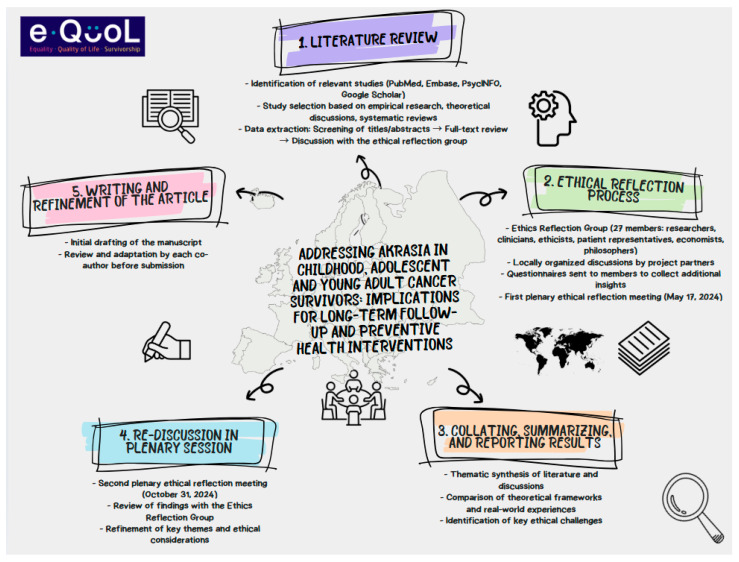
Method: Using an ethical reflection approach based on a literature review, we discussed survivor experiences, behavioral science insights, and ethical principles to identify solutions that balance patient autonomy with supportive interventions. A narrative approach was used to summarize the key points discussed during the ethics reflection group meetings.
Results: Our findings highlight key barriers such as trauma, avoidance behaviors, and cognitive constraints that contribute to non-adherence. Strategies such as shared decision-making, digital health tools, and nudge-based interventions are proposed to enhance survivor engagement. Ethical considerations emphasize the need for personalized and flexible care approaches that respect survivor agency while mitigating obstacles to adherence.
Conclusions: Addressing akrasia through ethical and behavioral frameworks could improve LTFU adherence, ultimately enhancing survivorship care and long-term health outcomes.
Keywords: adhesion; akrasia; autonomy; childhood cancer survivors; nudge; patient activation; screening; shared decision-making; survivorship; tailored information; young adult cancer survivors.
Conflict of interest statement
The authors have no relevant financial or non-financial interests to disclose.
Figures
References
-
- Gatta G., Botta L., Rossi S., Aareleid T., Bielska-Lasota M., Clavel J., Dimitrova N., Jakab Z., Kaatsch P., Lacour B., et al. Long-term survival and cure fraction estimates for childhood cancer in Europe (EUROCARE-6): Results from a population-based study. Lancet Oncol. 2022;23:1525–1536. doi: 10.1016/S1470-2045(22)00637-4. - DOI - PubMed
-
- Vassal G., Schrappe M., Pritchard-Jones K., Arnold F., Basset L., Biondi A., Bode G., Eggert A., Hjorth L., Kameric L., et al. The SIOPE strategic plan: A European cancer plan for children and adolescents. J. Cancer Policy. 2016;8:17–32. doi: 10.1016/j.jcpo.2016.03.007. - DOI
-
- Miller B.M., Yockel M.R., Appel B.E., Dash C., Harris-Hollingsworth N., Kadan Lottick N.S., Potosky A.L., Rowland J., Suntum T., Chaillet K., et al. Multilevel Facilitators and Barriers to Healthcare Organization and Delivery among Childhood Cancer Survivors. Pediatr. Blood Cancer. 2024;72:e31435. doi: 10.1002/pbc.31435. - DOI - PubMed
-
- Bougas N., Allodji R.S., Fayech C., Haddy N., Mansouri I., Journy N., Demoor C., Allard J., Thebault E., Surun A., et al. Surveillance after childhood cancer: Are survivors with an increased risk for cardiomyopathy regularly followed-up? Br. J. Cancer. 2023;129:1298–1305. doi: 10.1038/s41416-023-02400-0. - DOI - PMC - PubMed
Publication types
Grants and funding
LinkOut - more resources
Full Text Sources
