


COVID-19-Related Diplopia and Its Treatment
- PMID: 40282917
- PMCID: PMC12029126
- DOI: 10.3390/medicina61040626
COVID-19-Related Diplopia and Its Treatment
Abstract
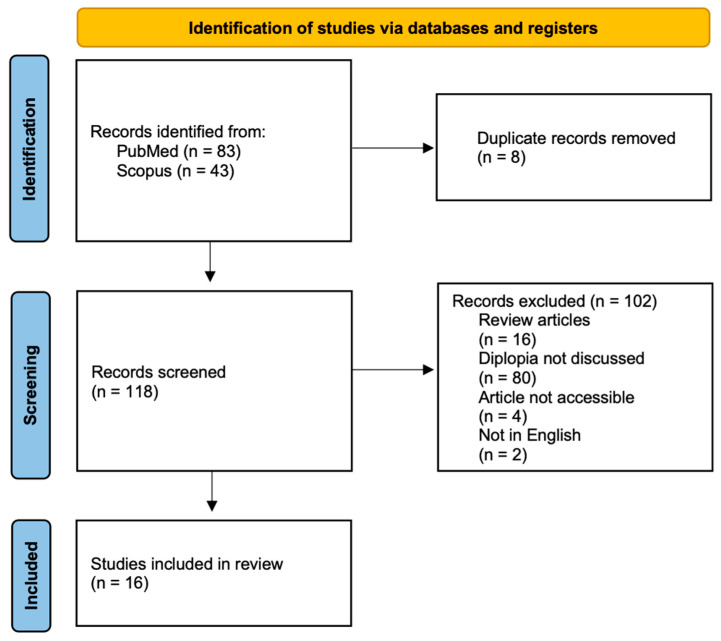
Background and Objectives: The effects of COVID-19 disease can manifest and cause eye complications, one of which is diplopia. Diplopia is a medical condition that makes one object appear like two images. People may also experience diplopia after receiving the COVID-19 vaccine, after contracting COVID-19, or following a COVID-19 infection. Materials and Methods: This review aims to summarize the cases of COVID-19 that can cause diplopia and its treatment in the past 5 years. The literature search databases used for this review were PubMed and Scopus. The keywords used were "diplopia," "COVID-19," and "treatment." Sixteen articles were reviewed after screening and applying the inclusion criteria. Results: The results show that over the past 5 years, cases of diplopia related to COVID-19 have occurred in America, Europe, Asia, and Africa. Most studies are case reports, and the total number of patients was 26, with an age range of 14 to 81. Conclusions: The diplopia cases recovered within 1 day to 8 months. Patients who experienced diplopia after receiving the COVID-19 vaccine, during COVID-19 infection, or after COVID-19 infection exhibited different symptoms. Nasopharyngeal swabs, magnetic resonance imaging (MRI), computerized tomography (CT) scans, visual acuity tests, slit lamp biomicroscope examinations, eye movement tests, funduscopic examinations, and blood tests were the most commonly performed tests. Corticosteroids such as prednisone, methylprednisolone, and prednisolone were the most commonly used drugs to treat diplopia. In addition to corticosteroids, antibiotics, antivirals, antiplatelets, and vitamins were also given. An eye patch was considered to alleviate the diplopia.
Keywords: COVID-19; corticosteroids; diplopia; treatment; vaccine.
Conflict of interest statement
The authors declare no conflicts of interest.
Figures
References
Publication types
MeSH terms
Substances
LinkOut - more resources
Full Text Sources
Medical
Miscellaneous
