


Applicability of the Instrumented Pendulum Test for Assessing Limb Viscoelastic Properties in Neurological and Internal Diseases: A Narrative Review
- PMID: 40283090
- PMCID: PMC12028550
- DOI: 10.3390/life15040535
Applicability of the Instrumented Pendulum Test for Assessing Limb Viscoelastic Properties in Neurological and Internal Diseases: A Narrative Review
Abstract
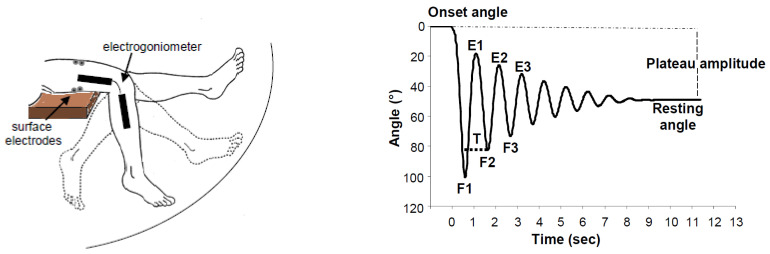
Background: The pendulum test was first introduced by Wartenberg as a clinical tool for neurological examination in patients with hypertonia. It was later instrumented to measure the kinematic parameters of gravity-imposed knee movements in patients with spasticity. More recently, the instrumented pendulum test has enabled the quantification of stiffness, viscosity, and damping in both the lower and upper limbs across various neurological and internal diseases.
Objective: To highlight the utility of the instrumented pendulum test as a valuable tool for the quantification of stiffness, viscosity, and damping of knee and elbow joints within a clinical setting.
Design: Narrative review.
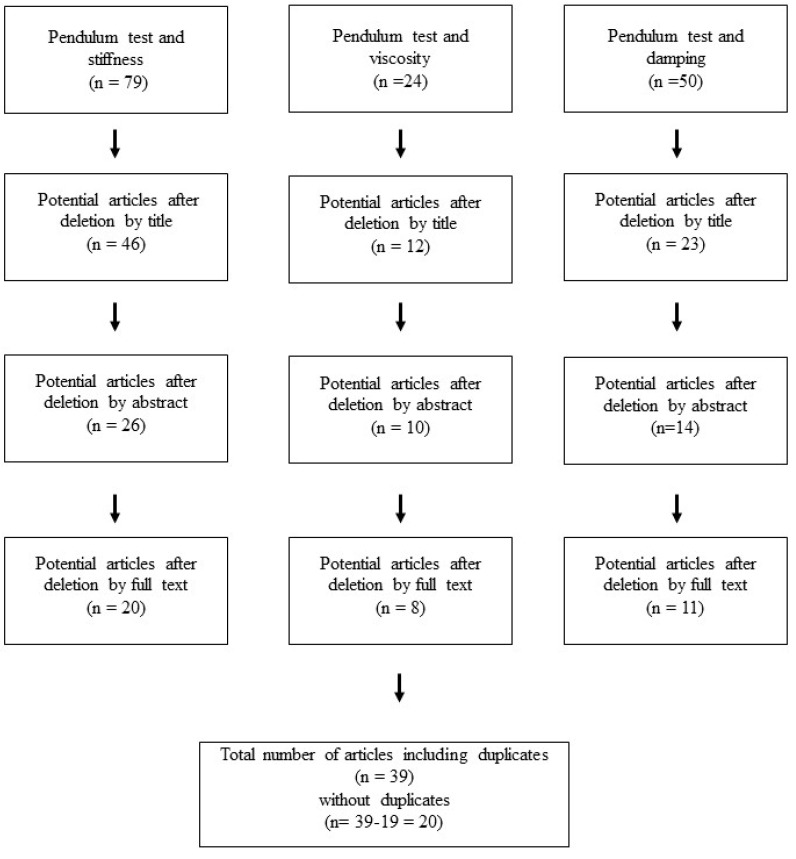
Methods: A comprehensive search was conducted using PubMed/MEDLINE, focusing on the terms "pendulum test" combined with "viscosity", "stiffness", and "damping".
Results: The instrumented pendulum test effectively quantifies stiffness, viscosity, and damping of the knee and elbow across various conditions, including rheumatic diseases, chronic obstructive pulmonary disease, hypertonia, and hypotonia. Studies have also demonstrated correlations between these non-neural parameters and factors such as age and disease severity.
Conclusions: Findings suggest that the instrumented pendulum test could serve as a valuable tool in clinical decision-making for targeted pharmacological treatments, such as botulinum toxin-A or hyaluronidase injections for spasticity, as well as interventions for myofascial system disorders.
Keywords: Down syndrome; chronic obstructive pulmonary disease; damping; hypertonia; hypotonia; instrumented pendulum test; rheumatoid arthritis; spasticity; stiffness; viscosity.
Conflict of interest statement
The authors declare no conflicts of interest.
Figures
References
-
- Kodama Y., Masuda S., Ohmori T., Kanamaru A., Tanaka M., Sakaguchi T., Nakagawa M. Response to mechanical properties and physiological challenges of fascia: Diagnostic and rehabilitative therapeutic intervention for myofascial system disorders. Bioengineering. 2023;10:474. doi: 10.3390/bioengineering10040474. - DOI - PMC - PubMed
Publication types
Grants and funding
LinkOut - more resources
Full Text Sources
