


Design of an Electronic Nose System with Automatic End-Tidal Breath Gas Collection for Enhanced Breath Detection Performance
- PMID: 40283338
- PMCID: PMC12029757
- DOI: 10.3390/mi16040463
Design of an Electronic Nose System with Automatic End-Tidal Breath Gas Collection for Enhanced Breath Detection Performance
Abstract
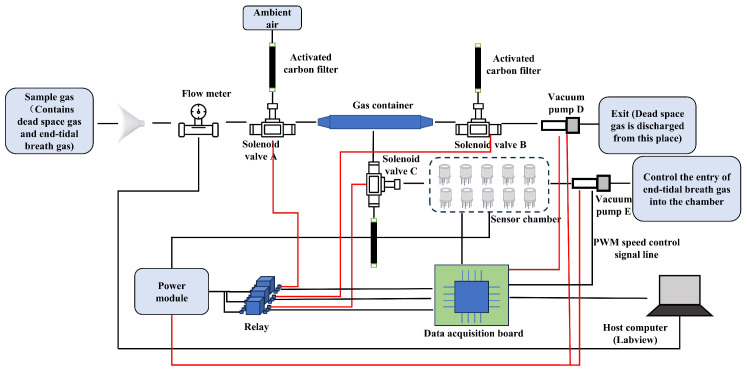
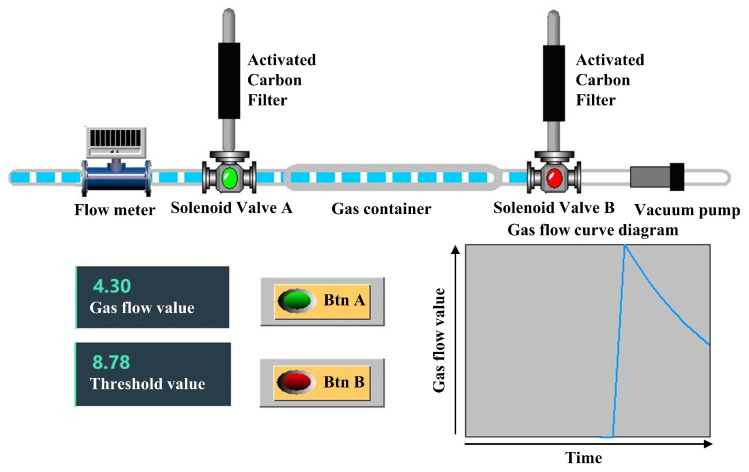
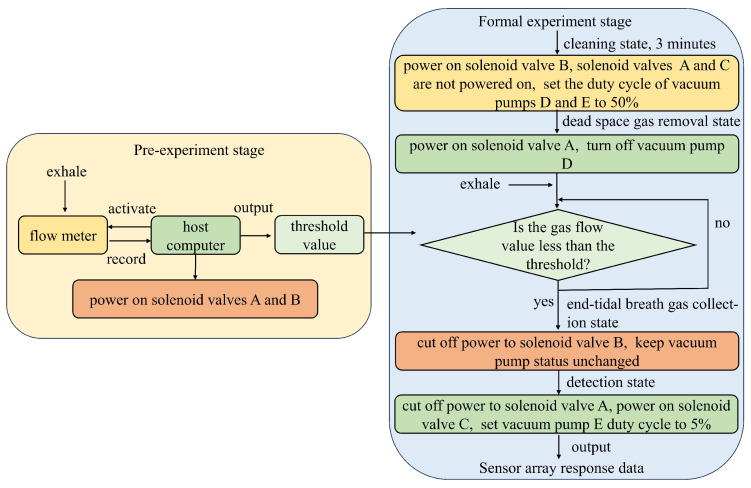
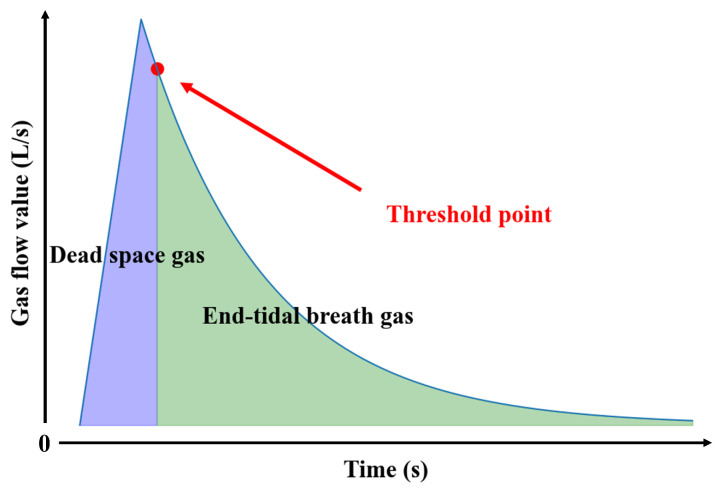
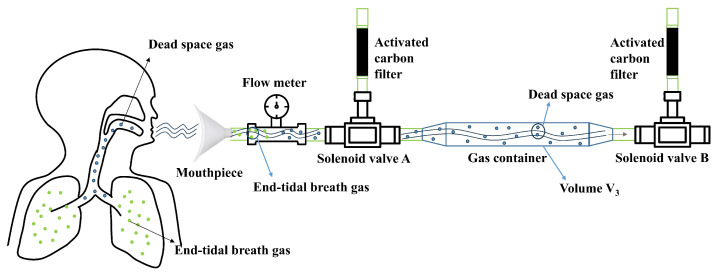
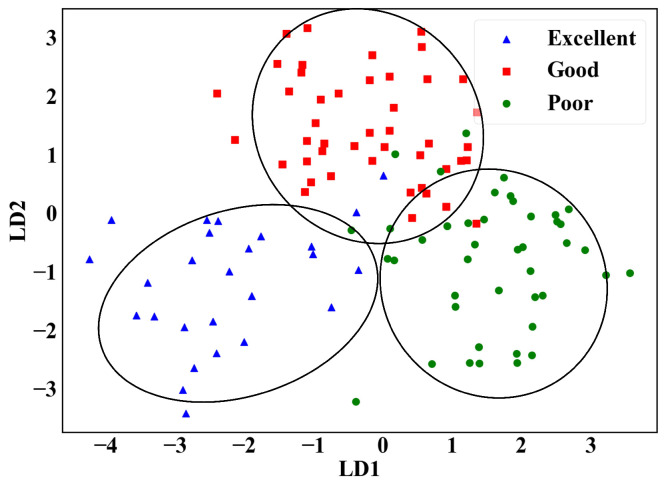
End-tidal breath gases originate deep within the lungs, and their composition is an especially accurate reflection of the body's metabolism and health status. Therefore, accurate collection of end-tidal breath gases is crucial to enhance electronic noses' performance in breath detection. Regarding this issue, this study proposes a novel electronic nose system and employs a threshold control method based on exhaled gas flow characteristics to design a gas collection module. The module monitors real-time gas flow with a flow meter and integrates solenoid valves to regulate the gas path, enabling automatic collection of end-tidal breath gas. In this way, the design reduces dead space gas contamination and the impact of individual breathing pattern differences. The sensor array is designed to detect the collected gas, and the response chamber is optimized to improve the detection stability. At the same time, the control module realizes automation of the experiment process, including control of the gas path state, signal transmission, and data storage. Finally, the system is used for breath detection. We employ classical machine learning algorithms to classify breath samples from different health conditions with a classification accuracy of more than 90%, which is better than the accuracy achieved in other studies of this type. This is due to the improved quality of the gas we extracted, demonstrating the superiority of our proposed electronic nose system.
Keywords: electronic nose; end-tidal breath gases; exhaled breath analysis.
Conflict of interest statement
Author Xiangming Meng was employed by the company Chongqing Onespace Technology Co., Ltd. The remaining authors declare that the research was conducted in the absence of any commercial or financial relationships that could be construed as a potential conflict of interest.
Figures
References
-
- Shanmugasundaram A., Manorama S.V., Kim D.-S., Jeong Y.-J., Weon Lee D. Toward Point-of-Care chronic disease Management: Biomarker detection in exhaled breath using an E-Nose sensor based on rGO/SnO2 superstructures. Chem. Eng. J. 2022;448:137736. doi: 10.1016/j.cej.2022.137736. - DOI
Grants and funding
LinkOut - more resources
Full Text Sources
