


Pregnancy After Laparoscopic Hysteropexy: A Systematic Review
- PMID: 40283607
- PMCID: PMC12027503
- DOI: 10.3390/jcm14082777
Pregnancy After Laparoscopic Hysteropexy: A Systematic Review
Abstract
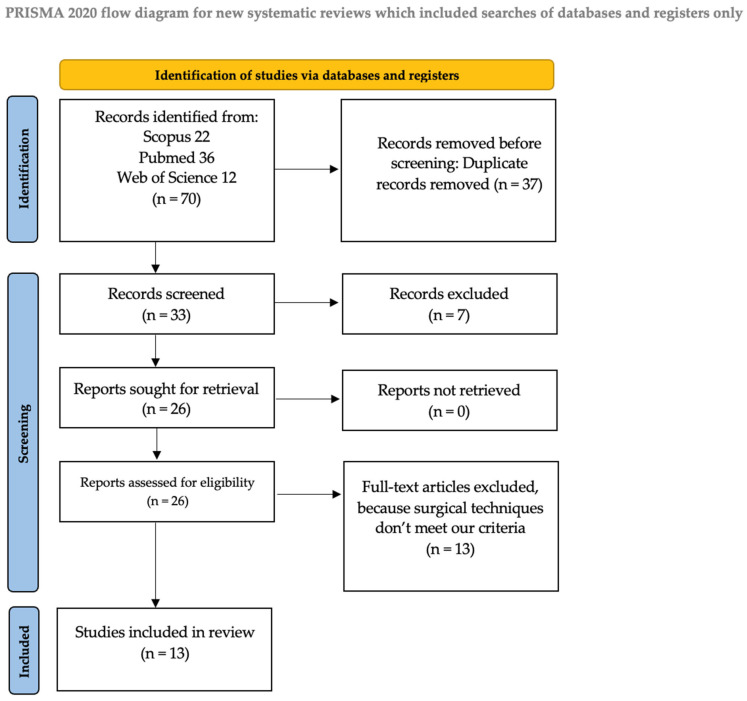
Background: Nowadays, there is an increasing desire among women suffering from pelvic organ prolapse (POP) to choose a uterus-sparing surgical treatment in order to preserve their fertility. The objective of this study was to conduct a systematic review of the literature to assess how pregnancy and delivery affect the recurrence of POP in women who had previously undergone laparoscopic hysteropexy as well as to improve and individualise the future counselling of patients of reproductive age desiring uterine-preserving treatment for POP. Methods: A comprehensive literature review was conducted using the MEDLINE (PubMed), Web of Science, and Scopus databases for articles published until January 2025, without previous historical limits. The research strategy adopted included different combinations of the following terms: hysteropexy, pregnancy, laparoscopy, and prolapse. Results: A total of ten case reports and three case series met the inclusion criteria for the review, comprising 26 patients. All authors used laparoscopic sacral hysteropexy (LSHP) for the treatment of POP. All patients underwent caesarean delivery at a mean gestational age of 38 weeks. Over a mean follow-up period of 9 months, only 4% of patients developed a recurrent uterine prolapse. A total of 8% of the patients developed de novo anterior compartment prolapse, 8% developed a recurrence of anterior compartment prolapse, and 4% developed posterior compartment prolapse. Conclusions: LSHP seems to be a safe option for women of reproductive age with incomplete family planning, as it does not seem to negatively impact foetal growth. Pregnancy does not appear to affect the long-term efficacy of hysteropexy in maintaining apical support. Given the limited data on the safety and efficacy of uterine-sparing surgery for POP followed by a subsequent pregnancy, further evidence is of great importance towards evaluating safety, efficacy, and providing better counselling for women.
Keywords: hysteropexy; laparoscopy; pregnancy; prolapse.
Conflict of interest statement
The authors declare no conflicts of interest.
References
-
- Haylen B.T., Maher C.F., Barber M.D., Camargo S., Dandolu V., Digesu A., Goldman H.B., Huser M., Milani A.L., Moran P.A., et al. An International Urogynecological Association (IUGA)/International Continence Society (ICS) Joint Report on the Terminology for Female Pelvic Organ Prolapse (POP) Int. Urogynecol. J. 2016;27:165–194. doi: 10.1007/s00192-015-2932-1. - DOI - PubMed
Publication types
LinkOut - more resources
Full Text Sources
Miscellaneous
