


Solidago canadensis L. Herb Extract, Its Amino Acids Preparations and 3D-Printed Dosage Forms: Phytochemical, Technological, Molecular Docking and Pharmacological Research
- PMID: 40284403
- PMCID: PMC12030483
- DOI: 10.3390/pharmaceutics17040407
Solidago canadensis L. Herb Extract, Its Amino Acids Preparations and 3D-Printed Dosage Forms: Phytochemical, Technological, Molecular Docking and Pharmacological Research
Abstract
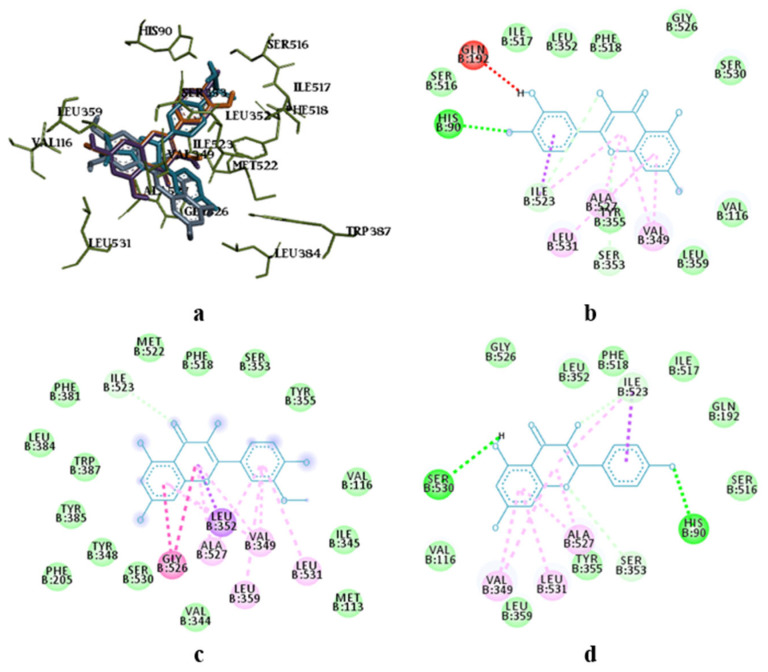
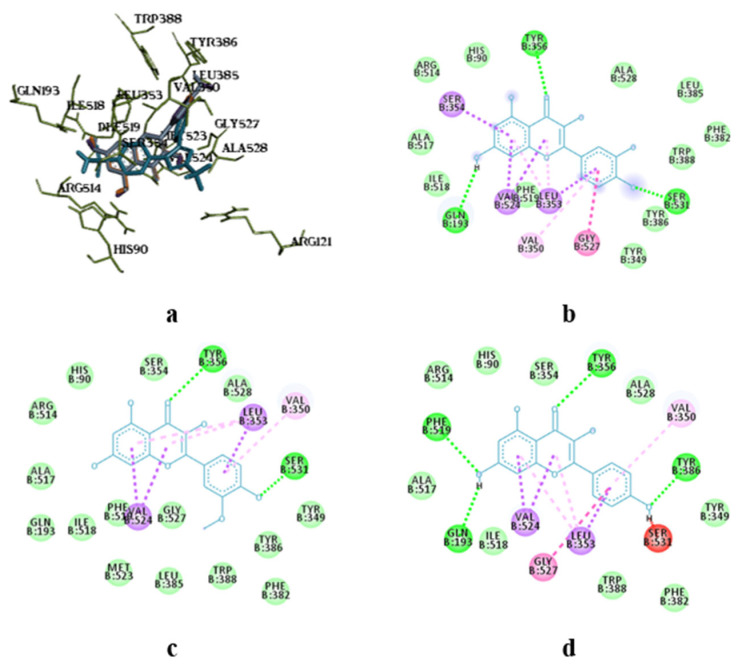
Background/Objectives: The Canadian goldenrod (Solidago canadensis L.) is one of the most widespread species of the genus Solidago from the Asteraceae family. It has a rich composition of biologically active compounds and is traditionally used to address kidney, urinary tract, and liver diseases. Previously, it was proven that the S. canadensis extract obtained with a 40% ethanol solution had the most promising anti-inflammatory and hepatoprotective activity. Therefore, this extract was selected for the further formulation of amino acid preparations and 3D-printed dosage forms. The aims of the present study were to investigate the chemical composition, toxicity, and antimicrobial, anti-inflammatory, and hepatoprotective activity of S. canadensis dry extract, its amino acid preparations, and 3D-printed dosage forms. Results: A total of 18 phenolic compounds and 14 amino acids were determined in the extracts. The S. canadensis herb extracts were verified to be practically non-toxic preparations (toxicity class V, LD₅₀ > 5000 mg/kg). They also showed moderate antimicrobial activity against Staphylococcus aureus, Enterococcus faecalis, and β-hemolytic Streptococcus pyogenes. The most pronounced hepatoprotective activity was observed with S. canadensis herb extract and its amino acid preparations with phenylalanine, alanine, and lysine at a dose of 25 mg/kg body weight. The most pronounced anti-inflammatory activity was found with S. canadensis herb extract and its preparation with arginine. According to the calculated docking score array and the analysis of binding modes in the active sites of COX-1 and COX-2, the flavonoid fraction and caffeic acid in the S. canadensis extracts presented moderate inhibitory activity. Conclusions: The development of innovative 3D-printed oral dosage forms represents a promising strategy to formulate dietary supplements or pharmaceutical preparations for these herbal extracts.
Keywords: 3D printing; Canadian goldenrod; amino acid; anti-inflammatory activity; antibacterial effect; hepatoprotective activity; modified dry extract; molecular docking; phenolics.
Conflict of interest statement
The authors declare no conflicts of interest.
Figures



References
-
- Pal R.W., Chen S., Nagy D.U., Callaway R.M. Impacts of Solidago Gigantea on Other Species at Home and Away. Biol. Invasions. 2015;17:3317–3325. doi: 10.1007/s10530-015-0955-7. - DOI
-
- Elshafie H.S., Gruľová D., Baranová B., Caputo L., De Martino L., Sedlák V., Camele I., De Feo V. Antimicrobial Activity and Chemical Composition of Essential Oil Extracted from Solidago canadensis L. Growing Wild in Slovakia. Molecules. 2019;24:1206. doi: 10.3390/molecules24071206. - DOI - PMC - PubMed
-
- Shelepova O., Vinogradova Y., Vergun O., Grygorieva O., Brindza J. Assessment of Flavonoids and Phenolic Compound Accumulation in Invasive Solidago canadensis L. in Slovakia. Potravin. Slovak J. Food Sci. 2020;14:587–594. doi: 10.5219/1378. - DOI
-
- Shelepova O., Vinogradova Y., Zaitchik B., Ruzhitsky A., Grygorieva O., Brindza J. Constituents of the Essential Oil in Solidago canadensis L. from Eurasia. Potravin. Slovak J. Food Sci. 2018;12:20–25. doi: 10.5219/847. - DOI
Grants and funding
LinkOut - more resources
Full Text Sources
Research Materials
