


Molecular Epidemiology of Human Adenovirus from Acute Gastroenteritis Cases in Brazil After the COVID-19 Pandemic Period, 2021-2023
- PMID: 40285019
- PMCID: PMC12030851
- DOI: 10.3390/v17040577
Molecular Epidemiology of Human Adenovirus from Acute Gastroenteritis Cases in Brazil After the COVID-19 Pandemic Period, 2021-2023
Abstract
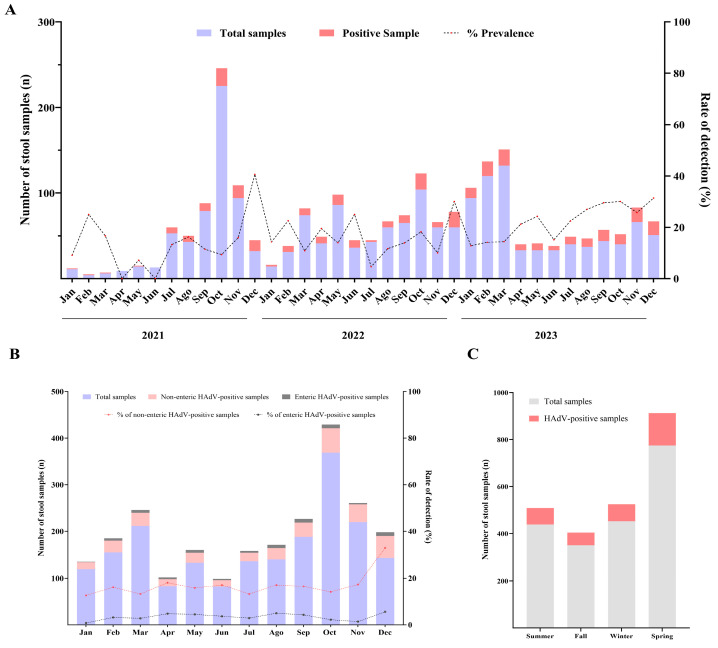
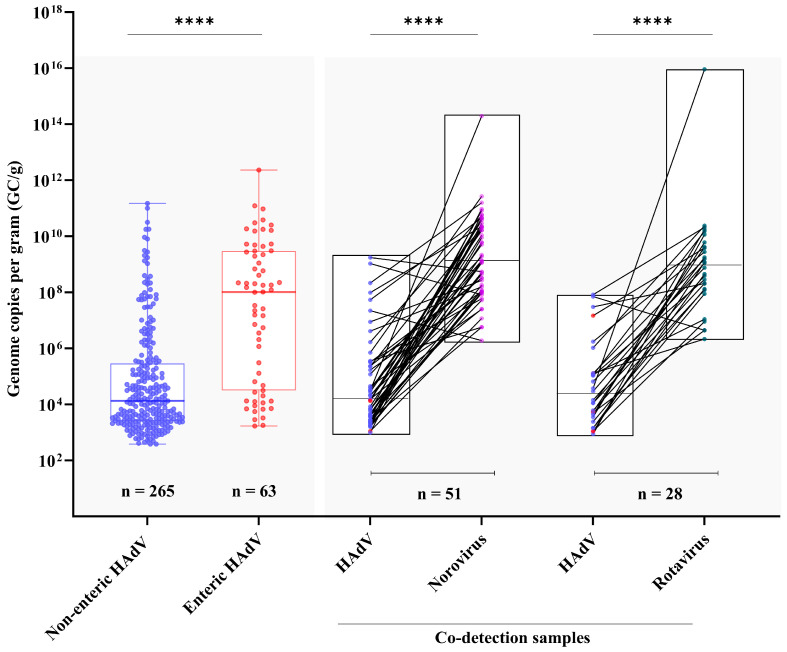
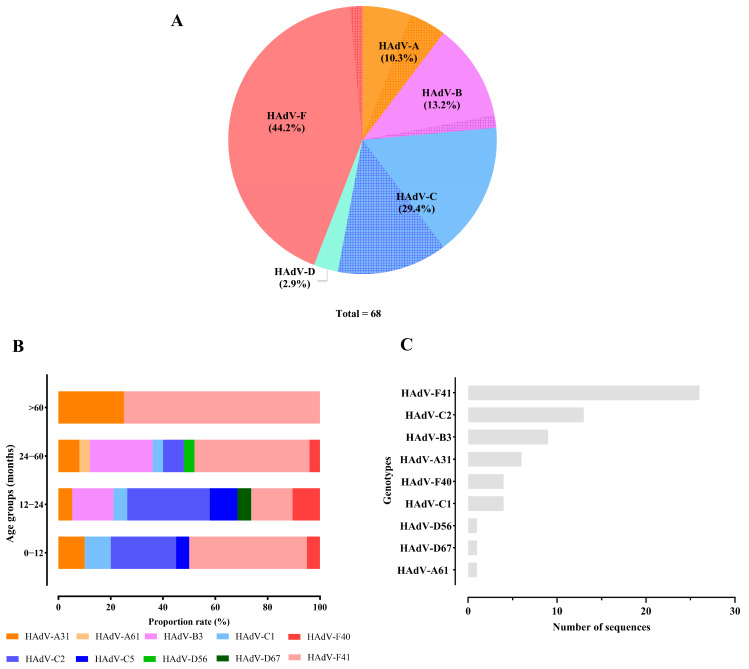
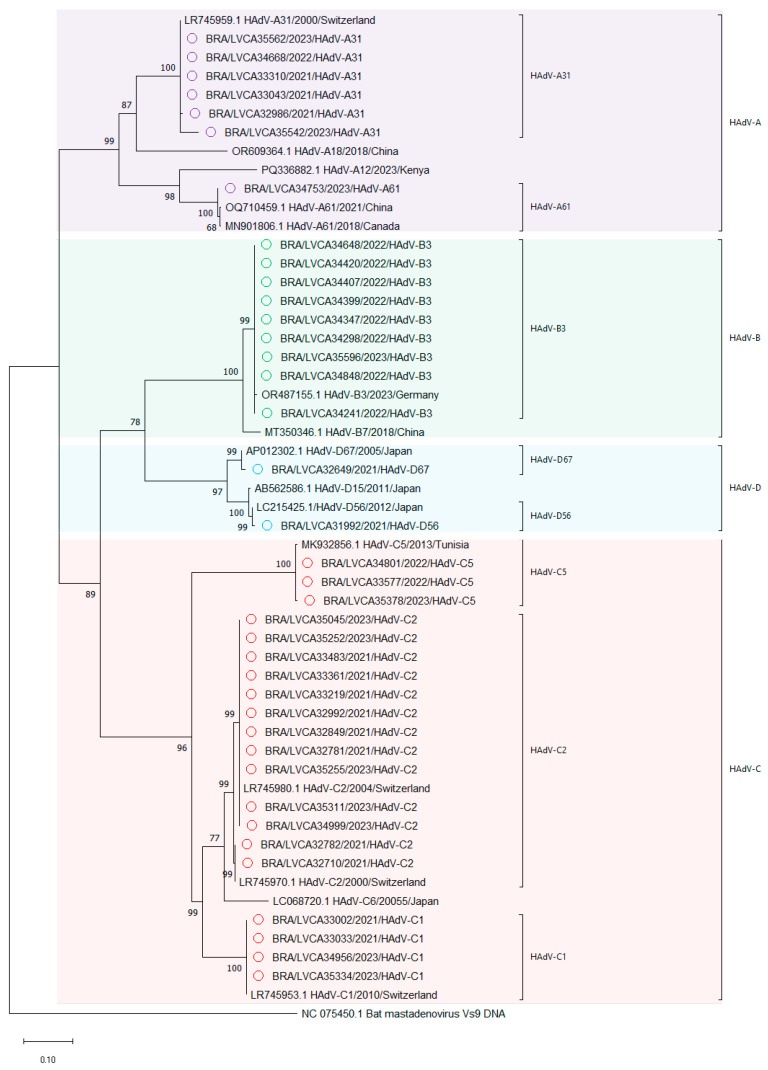
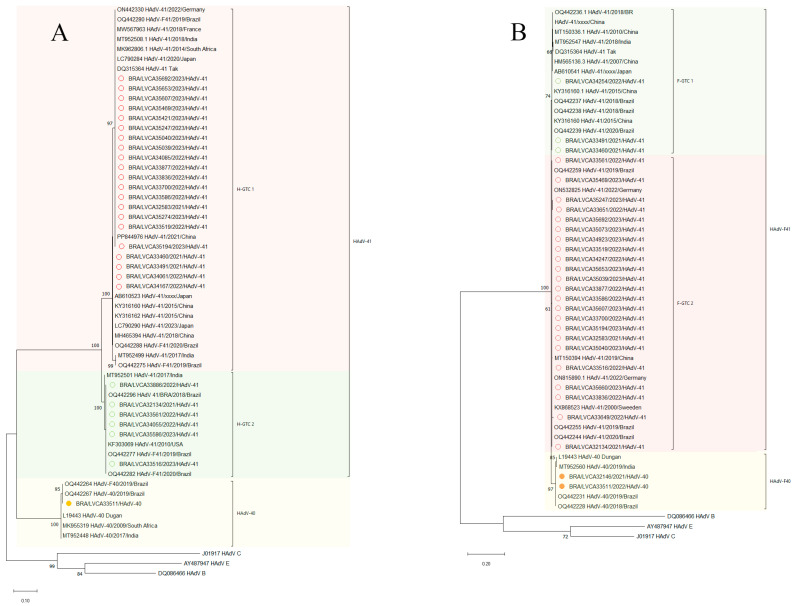
Human enteric adenoviruses (HAdV-F40/41) play a crucial role as causative agents of acute gastroenteritis (AGE), particularly affecting children in low-and middle-income countries. This study investigated the prevalence, genetic diversity, and molecular characteristics of HAdV-F40/41 in AGE cases reported in Brazil from 2021 to 2023, a period after the COVID-19 pandemic. A total of 1980 stool samples collected from medically attended AGE patients from nine states were analyzed by TaqMan-based qPCR. Overall, HAdV was detected in 16.6% (n = 328/1980) of cases, with the highest prevalence observed in children under five years of age. The positive HAdV samples were genotyped through partial sequencing of the hexon and/or fiber genes followed by phylogenetic analysis. Enteric HAdVs (HAdV-F40/41) were detected in 3.2% (n = 63/1980) of samples, with HAdV-F41 (44.1%) being the most common genotype. Among the non-enteric types, HAdV-C (29.4%) was the most prevalent, followed by HAdV-B (13.2%), HAdV-A (10.3%), and HAdV-D (2.9%). Phylogenetic analysis of the hexon (HVR1-HVR6) and fiber (Shaft) gene regions identified two major clusters, H-GTC1 and F-GTC2, showing close genetic relationships with global strains. HAdV-F40/41 demonstrated significantly higher viral loads compared to non-enteric HAdVs. These findings highlight the importance of continued surveillance of HAdV-F to better understand its role in AGE cases and support public health strategies, including potential vaccine development.
Keywords: HAdV-F40/41; acute gastroenteritis (AGE); human adenovirus (HAdV); molecular epidemiology.
Conflict of interest statement
The authors declare no conflicts of interest.
Figures
References
-
- Kotloff K.L., Nataro J.P., Blackwelder W.C., Nasrin D., Farag T.H., Panchalingam S., Wu Y., Sow S.O., Sur D., Breiman R.F., et al. Burden and Aetiology of Diarrhoeal Disease in Infants and Young Children in Developing Countries (the Global Enteric Multicenter Study, GEMS): A Prospective, Case-Control Study. Lancet. 2013;382:209–222. doi: 10.1016/S0140-6736(13)60844-2. - DOI - PubMed
-
- The Top 10 Causes of Death. [(accessed on 30 December 2023)]. Available online: https://www.who.int/news-room/fact-sheets/detail/the-top-10-causes-of-death.
-
- Number of Under-Five Deaths—By Cause. [(accessed on 25 March 2024)]. Available online: https://platform.who.int/data/maternal-newborn-child-adolescent-ageing/i....
-
- World Health Organization Diarrhoeal Disease. [(accessed on 22 March 2024)]. Available online: https://www.who.int/news-room/fact-sheets/detail/diarrhoeal-disease.
-
- Akdag A.I., Gupta S., Khan N., Upadhayay A., Ray P. Epidemiology and Clinical Features of Rotavirus, Adenovirus, and Astrovirus Infections and Coinfections in Children with Acute Gastroenteritis Prior to Rotavirus Vaccine Introduction in Meerut, North India. J. Med. Virol. 2020;92:1102–1109. doi: 10.1002/jmv.25645. - DOI - PubMed
Publication types
MeSH terms
Associated data
- Actions
- Actions
Grants and funding
LinkOut - more resources
Full Text Sources
Medical
