


Effects of selective serotonin reuptake inhibitor (SSRI) use on cardiometabolic health and risk in young healthy individuals: A preliminary matched pairs study
- PMID: 40285449
- PMCID: PMC12032445
- DOI: 10.14814/phy2.70285
Effects of selective serotonin reuptake inhibitor (SSRI) use on cardiometabolic health and risk in young healthy individuals: A preliminary matched pairs study
Abstract
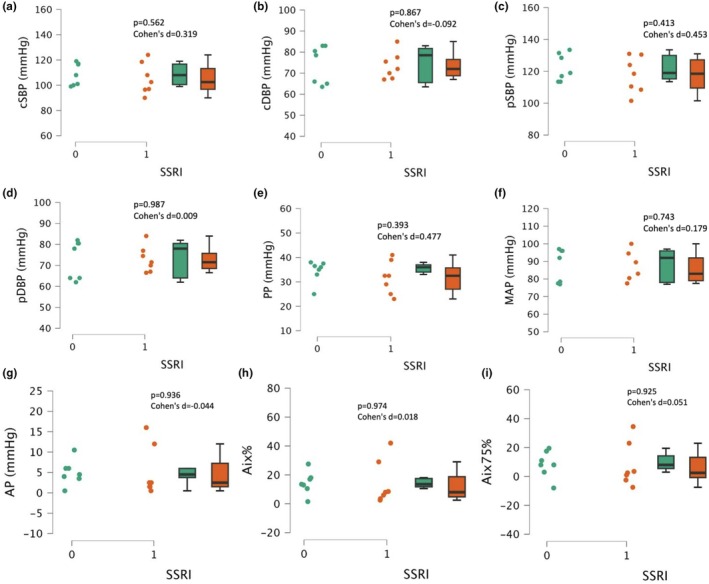
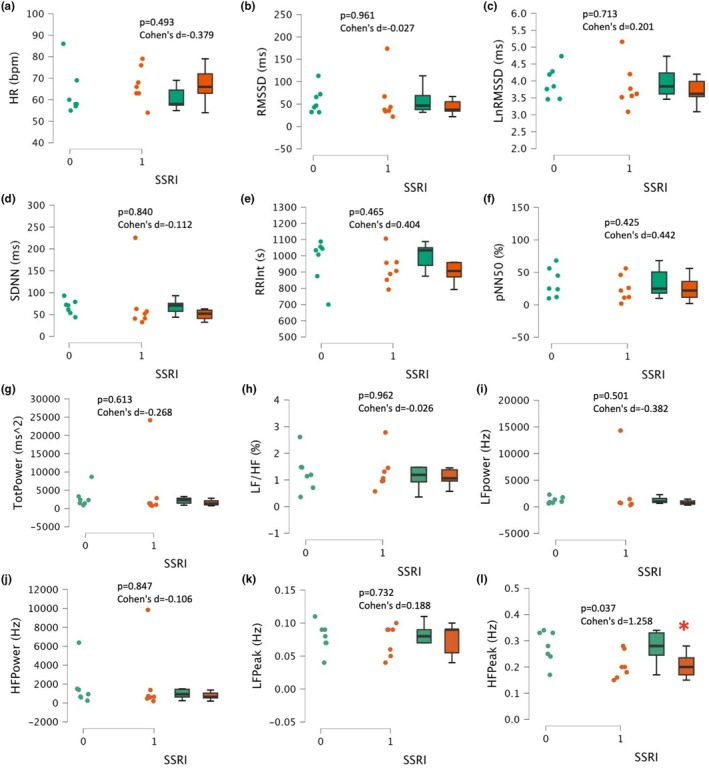
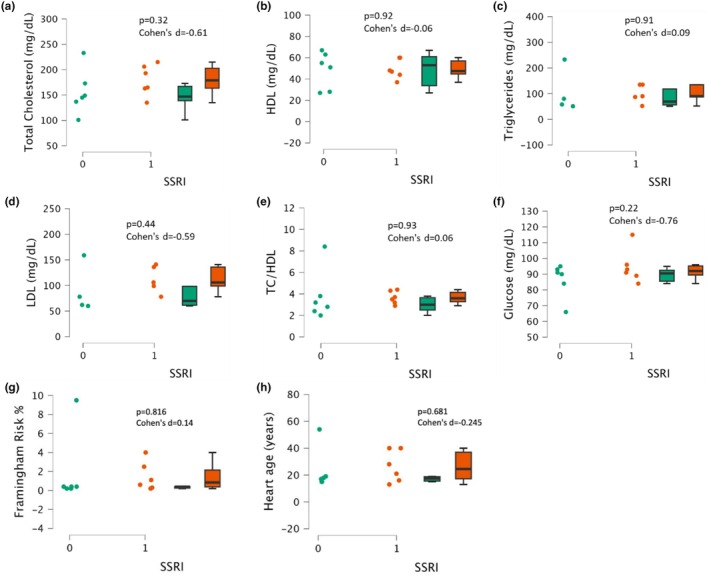
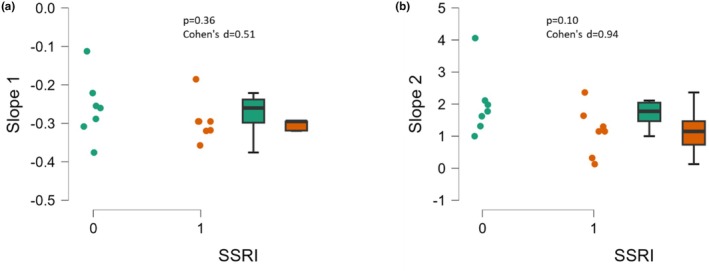
Selective serotonin reuptake inhibitors (SSRIs) are a class of drugs that are frequently used to treat psychological disorders, but the comprehensive effects on cardiometabolic health in young healthy populations are not well described. Healthy men and women using SSRIs and sex-, age-, height-, and weight-matched controls were assessed. Anthropometrics, blood pressure (BP), arterial stiffness (AS), heart rate variability (HRV), near-infrared vascular occlusion test (NIRS-VOT), and blood lipid profile were assessed, with subsequent Framingham CVD risk score calculation. There were no significant differences in central or peripheral BP or AS due to SSRI use (all, p > 0.39, Cohen's d < 0.48). HRV was not different between groups (all, p > 0.43, Cohen's d < 0.44), except for HFpeak, which was lower in SSRI users (0.20 ± 0.05 vs. 0.28 ± 0.06 Hz, p = 0.04, Cohen's d = 1.26). There were no significant differences in blood lipids (all, p > 0.22, Cohen's d < 0.09) or Framingham risk scores (both, p > 0.68, Cohen's d < 0.14) between groups. There were no significant differences in microvascular reactivity between groups, however, reperfusion slope was lower in SSRI users (1.2 ± 0.9 vs. 2.0 ± 1.1%/s, p = 0.10, Cohen's d = 0.93). SSRIs do not appear to have any significant effects on blood pressure, heart rate variability, arterial stiffness, or lipid profile in young healthy individuals but may influence microvascular function.
Keywords: arterial stiffness; body composition; cardiac autonomic nervous system activity; central blood pressure; mental health; microvascular function.
© 2025 The Author(s). Physiological Reports published by Wiley Periodicals LLC on behalf of The Physiological Society and the American Physiological Society.
Conflict of interest statement
The authors have no conflicts of interest to disclose.
Figures
References
-
- Arnett, D. K. , Blumenthal, R. S. , Albert, M. A. , Buroker, A. B. , Goldberger, Z. D. , Hahn, E. J. , Himmelfarb, C. D. , Khera, A. , Lloyd‐Jones, D. , Mcevoy, J. W. , Michos, E. D. , Miedema, M. D. , Muñoz, D. , Smith, S. C. , Virani, S. S. , Williams, K. A. , Yeboah, J. , & Ziaeian, B. (2019). 2019 ACC/AHA Guideline on the Primary Prevention of Cardiovascular Disease: Executive Summary: A Report of the American College of Cardiology/American Heart Association Task Force on Clinical Practice Guidelines. Circulation, 11, e563–e595. 10.1161/cir.0000000000000677 - DOI - PMC - PubMed
-
- Carey, M. , Markham, C. , Gaffney, P. , Boran, G. , & Maher, V. (2006). Validation of a point of care lipid analyser using a hospital based reference laboratory. Irish Journal of Medical Science, 4, 30–35. - PubMed
MeSH terms
Substances
Grants and funding
LinkOut - more resources
Full Text Sources
Research Materials
