


Spinopelvic parameters in the lateral decubitus are different from standing and sitting positions
- PMID: 40287527
- PMCID: PMC12033292
- DOI: 10.1038/s41598-025-98819-x
Spinopelvic parameters in the lateral decubitus are different from standing and sitting positions
Abstract
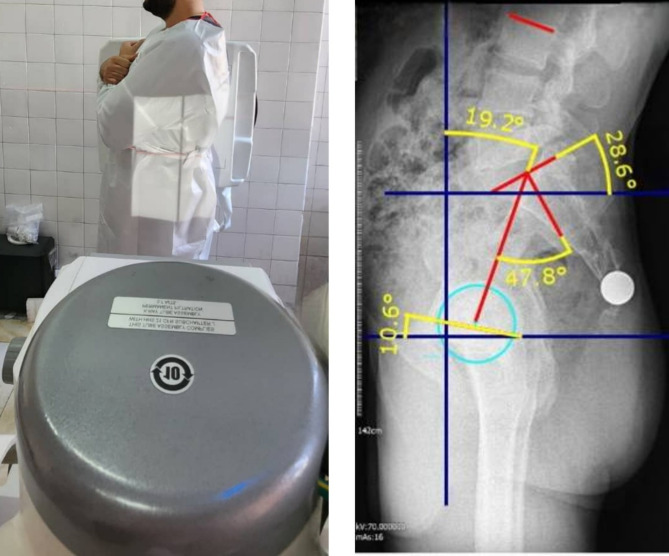
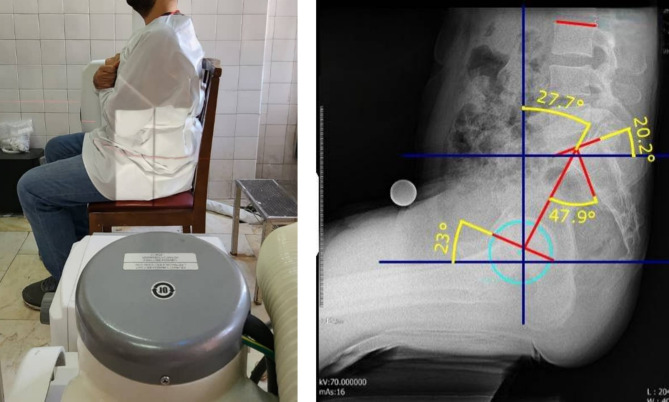
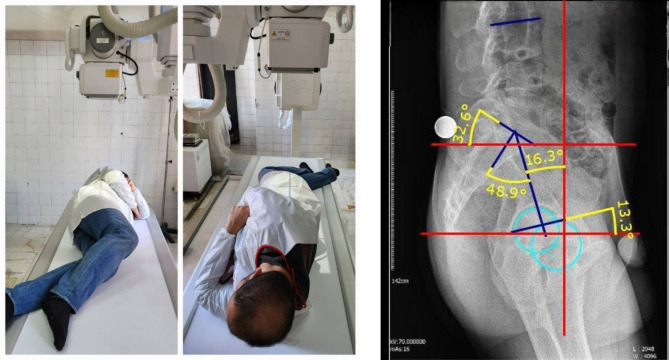
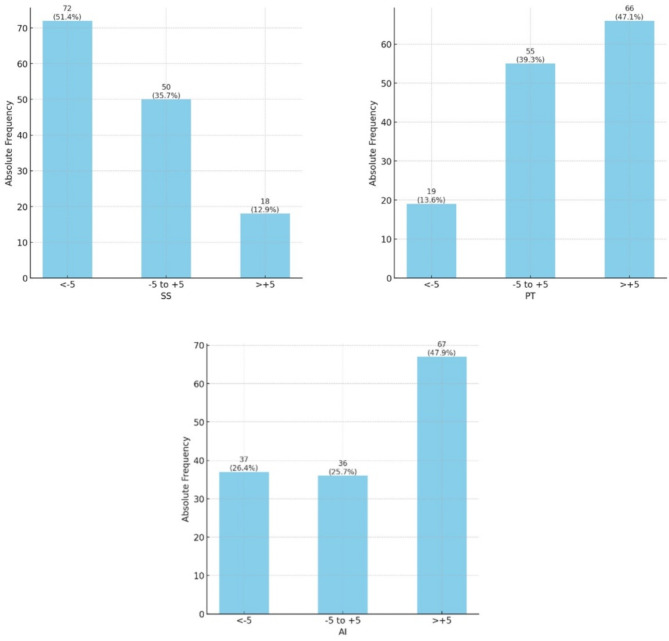
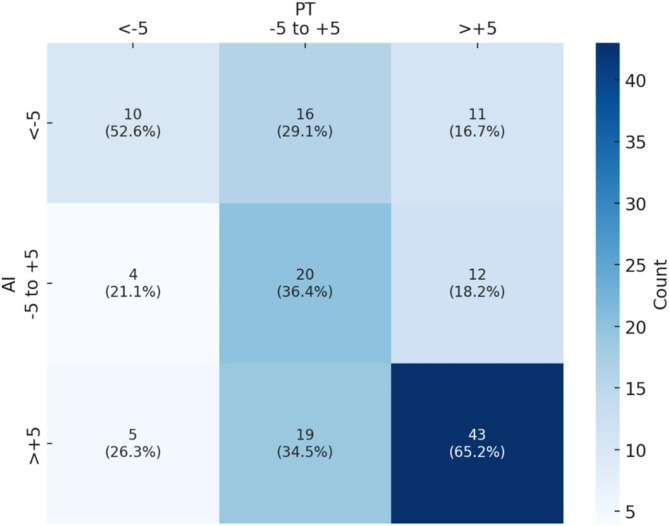
To investigate how spinopelvic parameters change when transitioning between standing, sitting, and lateral decubitus (LD) positions, providing insights for optimizing acetabular cup placement in total hip arthroplasty (THA). A retrospective study was performed on 140 patients undergoing primary THA from 2023 to 2024. Lateral spinopelvic radiographs were taken in standing, sitting, and LD positions, measuring SS, PT, pelvic incidence (PI), and ante-inclination (AI). Measurements were performed by two independent reviewers using mediCAD® software, with inter-rater reliability assessed (ICC range: 0.83-0.91). Paired t-tests were used to compare spinopelvic parameters (SPP) values across positions, and associations with demographic factors, spinopelvic mobility, and other clinical variables were analyzed using Chi-square, ANOVA, and Kruskal-Wallis tests. We included 90 men (mean age 44.93 ± 13.28 years) and 50 women (mean age 43.10 ± 12.17 years). Mean BMI was 26.4 ± 3.1 kg/m². SS, PT, and AI showed significant differences across positions (P < 0.001). From standing to LD, SS decreased (<-5°) in 51.4% of patients, remained consistent (-5 to + 5°) in 35.7%, and increased ( > + 5°) in 12.9%. AI decreased in 26.4% of patients, remained consistent in 25.7%, and increased in 47.9%. Changes in AI correlated with SS (P = 0.02) and PT (P = 0.001). No significant associations were found between SPP changes and age, gender, BMI, or spinopelvic mobility. Our study showed that pelvic position and, consequently, acetabular orientation may change in LD, indicating that SPPs in LD cannot be assumed to be the same as in standing. It has implications for surgeons performing THA in LD, as intraoperative pelvic shifts may influence implant positioning and potentially impact postoperative stability and functional outcomes.
Keywords: Lateral decubitus; Pelvic Tilt; Pelvic incidence; Sacral slope; Spinopelvic; Total hip arthroplasty.
© 2025. The Author(s).
Conflict of interest statement
Declarations. Competing interests: The authors declare no competing interests.
Figures
References
-
- Haynes, J. A. et al. Contemporary surgical indications and referral trends in revision total hip arthroplasty: A 10-Year review. J. Arthroplasty. 31(3), 622 (2016). - PubMed
-
- Jamshidi, M. M. M., Moharrami, A. & Mortazavi, S. M. J. How to avoid instability after total hip arthroplasty, narrative review. Iran. J. Orthop. Surg.18(4), 163 (2020).
-
- Hermansen, L. L., Viberg, B., Hansen, L. & Overgaard, S. True cumulative incidence of and risk factors for hip dislocation within 2 years after primary total hip arthroplasty due to osteoarthritis: A nationwide population-based study from the Danish hip arthroplasty register. J. Bone Joint Surg. Am.103(4), 295 (2021). - PubMed
-
- Leichtle, U. G., Leichtle, C. I., Taslaci, F., Reize, P. & Wünschel, M. Dislocation after total hip arthroplasty: risk factors and treatment options. Acta Orthop. Traumatol. Turc.47(2), 96 (2013). - PubMed
-
- Masonis, J. L. & Bourne, R. B. Surgical approach, abductor function, and total hip arthroplasty dislocation. Clin. Orthop. Relat. Res.405, 46 (2002). - PubMed
MeSH terms
LinkOut - more resources
Full Text Sources
Medical
Research Materials
Miscellaneous
