


Dynamics of tertiary lymphoid structures and immune cross talk in early versus advanced colorectal cancer: potential implications for immunotherapy
- PMID: 40287532
- PMCID: PMC12033131
- DOI: 10.1007/s00262-025-04027-x
Dynamics of tertiary lymphoid structures and immune cross talk in early versus advanced colorectal cancer: potential implications for immunotherapy
Abstract
Background: Irrespective of microsatellite status, immune checkpoint inhibitor therapy shows superior efficacy in early-stage colorectal cancer (CRC) compared to advanced cases. The distinctions of the tumor microenvironment (TME) and tertiary lymphoid structure (TLS) between early- and advanced-stage CRC may represent a critical factor, yet remain incompletely elucidated.
Methods: We comprehensively analyzed single-cell RNA sequencing data, bulk RNA transcription data and pathological tissue data to investigate the dynamic changes in the TME. The features of TLS in early- and advanced-stage tumors and their potential impact on immunotherapy were explored using three in-house cohorts.
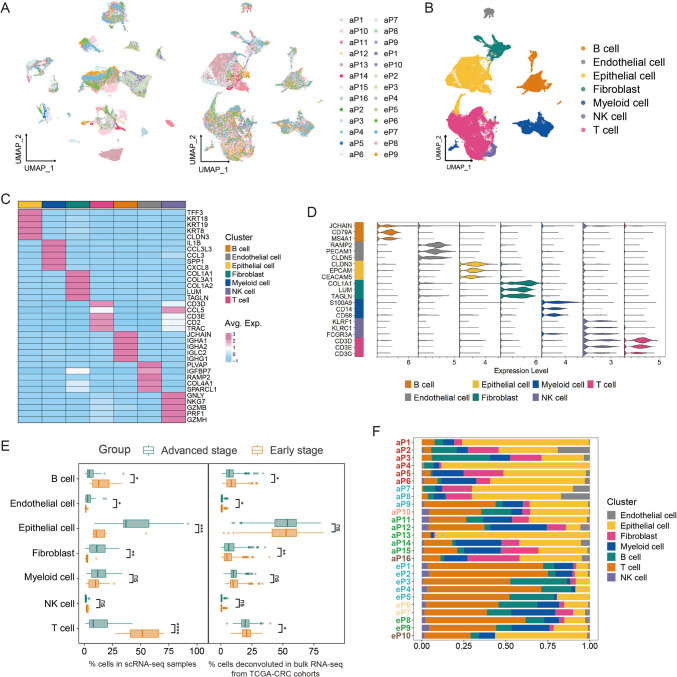
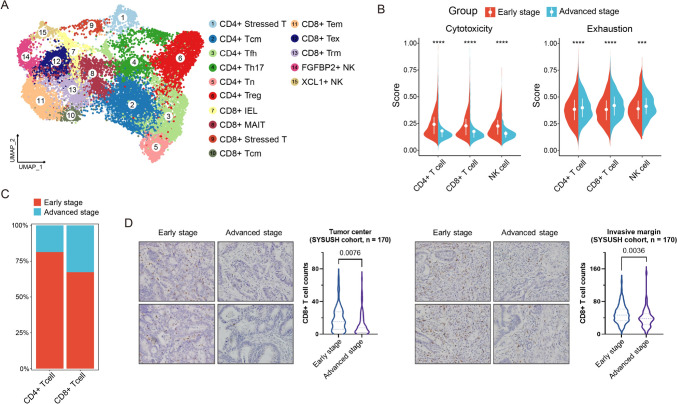
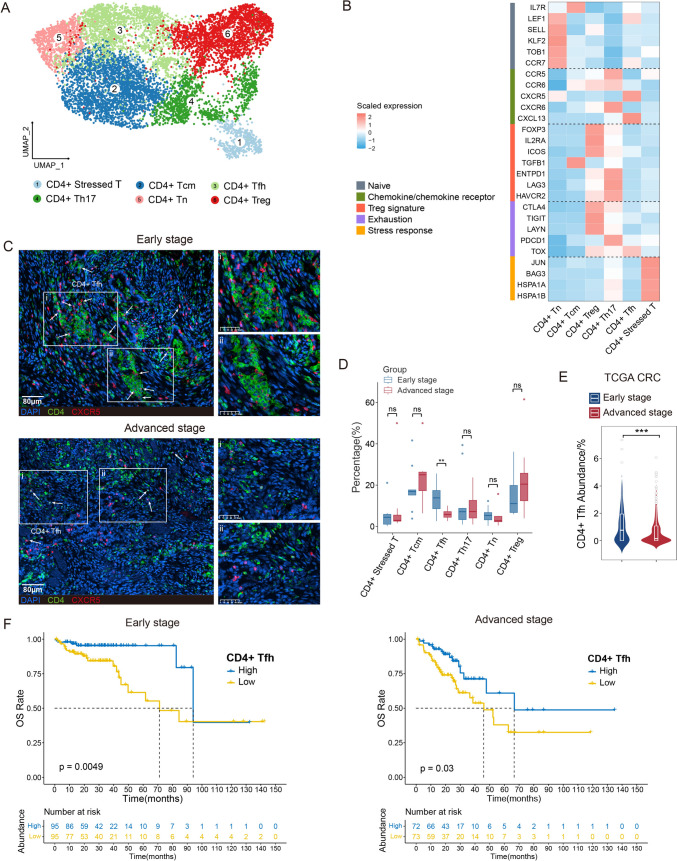
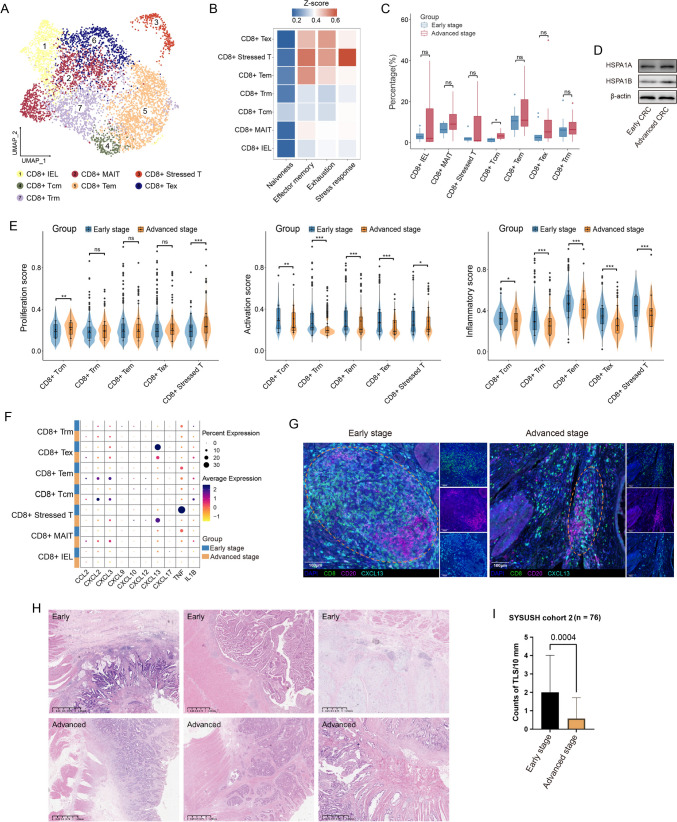
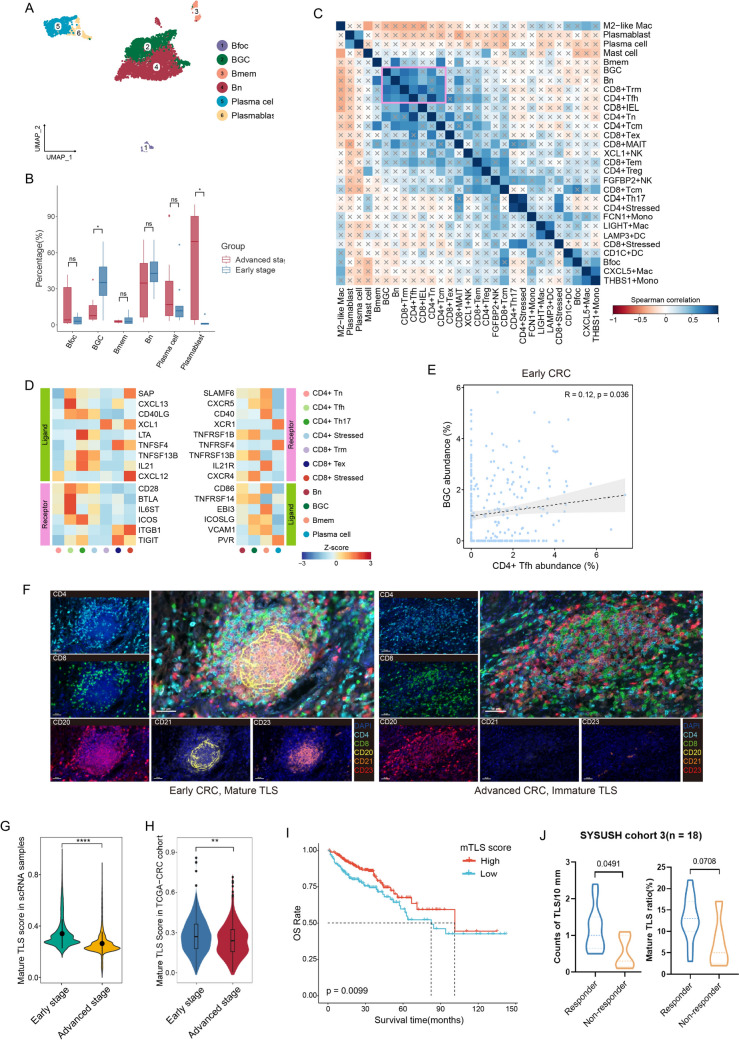
Results: We provided single-cell fine maps of the immune landscape in early and advanced CRC. Significant functional differences were identified in CD4 + Tfh and BGC cells between early and advanced CRC. We revealed CXCL13 expression on CD8 + Tex cells, along with CD40-CD40L interactions between CD4 + Tfh and BGC cells, could be key regulators of TLS functionality and subsequently affect the response to immunotherapy.
Conclusions: Our research shed light on the multilayered immune dysfunction in advanced CRC and elucidates the alterations in the TLS during the progression of CRC, providing insights for functional studies and the exploration of potential target in advanced CRC.
Keywords: Colorectal cancer; Immunotherapy; Tertiary lymphoid structure; Tumor microenvironment.
© 2025. The Author(s).
Conflict of interest statement
Declarations. Conflict of interest: The authors have declared that no conflict of interest exists. Ethics approval and consent to participate: This study was approved by the Ethics Committee of the Sixth Affiliated Hospital of Sun Yat-sen University (2022ZSLYEC-143). The procedures for human sample collection were approved by the Ethics Committee of the Sixth Affiliated Hospital of Sun Yat-sen University. Consent for publication: All the authors have signed the form of consent to publication.
Figures
References
-
- Chalabi M, Fanchi LF, Dijkstra KK, Van den Berg JG, Aalbers AG, Sikorska K, Lopez-Yurda M, Grootscholten C, Beets GL, Snaebjornsson P, Maas M, Mertz M, Veninga V, Bounova G, Broeks A, Beets-Tan RG, de Wijkerslooth TR, van Lent AU, Marsman HA, Nuijten E, Kok NF, Kuiper M, Verbeek WH, Kok M, Van Leerdam ME, Schumacher TN, Voest EE, Haanen JB (2020) Neoadjuvant immunotherapy leads to pathological responses in MMR-proficient and MMR-deficient early-stage colon cancers. Nat Med 26(4):566–576 - DOI - PubMed
-
- Yang X, Yin R, Xu L (2018) Neoadjuvant PD-1 blockade in resectable lung cancer. N Engl J Med 379(9):e14 - PubMed
-
- Huang AC, Orlowski RJ, Xu X, Mick R, George SM, Yan PK, Manne S, Kraya AA, Wubbenhorst B, Dorfman L, D’Andrea K, Wenz BM, Liu S, Chilukuri L, Kozlov A, Carberry M, Giles L, Kier MW, Quagliarello F, McGettigan S, Kreider K, Annamalai L, Zhao Q, Mogg R, Xu W, Blumenschein WM, Yearley JH, Linette GP, Amaravadi RK, Schuchter LM, Herati RS, Bengsch B, Nathanson KL, Farwell MD, Karakousis GC, Wherry EJ, Mitchell TC (2019) A single dose of neoadjuvant PD-1 blockade predicts clinical outcomes in resectable melanoma. Nat Med 25(3):454–461 - DOI - PMC - PubMed
-
- Li J, Wu C, Hu H, Qin G, Wu X, Bai F, Zhang J, Cai Y, Huang Y, Wang C, Yang J, Luan Y, Jiang Z, Ling J, Wu Z, Chen Y, Xie Z, Deng Y (2023) Remodeling of the immune and stromal cell compartment by PD-1 blockade in mismatch repair-deficient colorectal cancer. Cancer Cell 41(6):1152–69.e7 - DOI - PubMed
MeSH terms
Grants and funding
LinkOut - more resources
Full Text Sources
Medical
Research Materials
