


A cross-sectional analysis of factors associated with cervical cancer screening in a large midwest primary care setting
- PMID: 40287672
- PMCID: PMC12034193
- DOI: 10.1186/s12905-025-03741-z
A cross-sectional analysis of factors associated with cervical cancer screening in a large midwest primary care setting
Abstract
Background: Lower cervical cancer screening (CCS) rates have been reported among non-White populations, older women, rural populations, and populations with low socioeconomic status (SES). We evaluate associations between CCS status and individual, healthcare, and SES variables in a large primary care setting in southeast Minnesota.
Methods: We identified participants assigned female sex at birth, aged 21-65 years, without hysterectomy, and eligible for CCS via cross-sectional analysis of the electronic health record. Subjects were categorized as having up-to-date CCS or not. Logistic regression was used to model CCS status, with odds ratios (OR) and respective confidence intervals (95% CI) calculated for single predictor models for demographic factors, co-morbidities, and healthcare utilization.
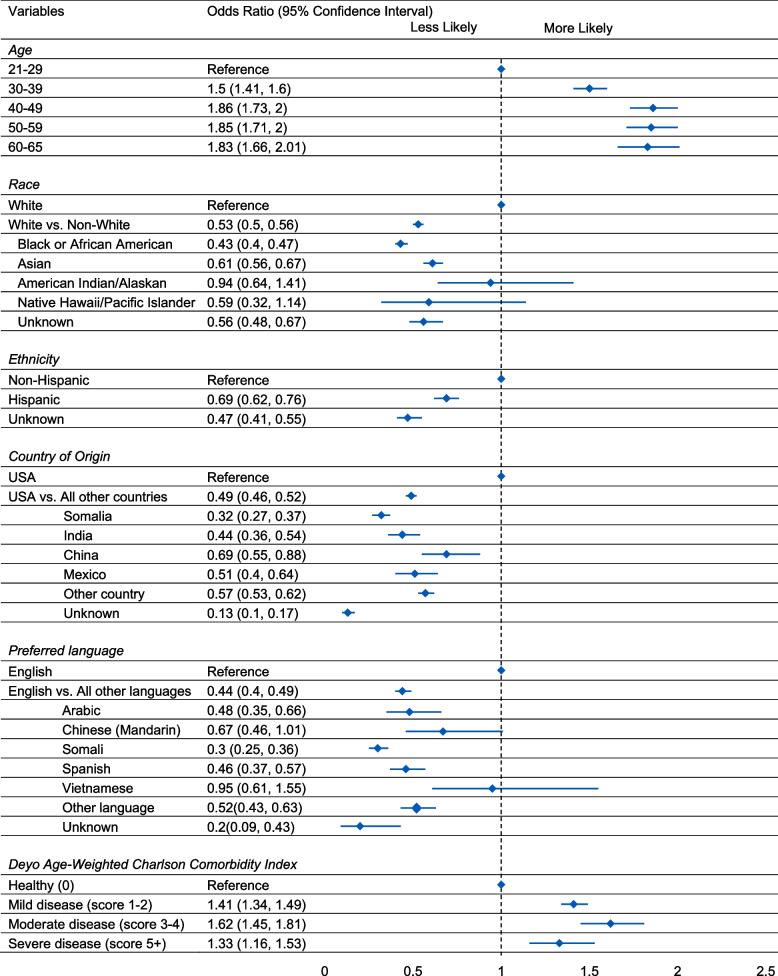
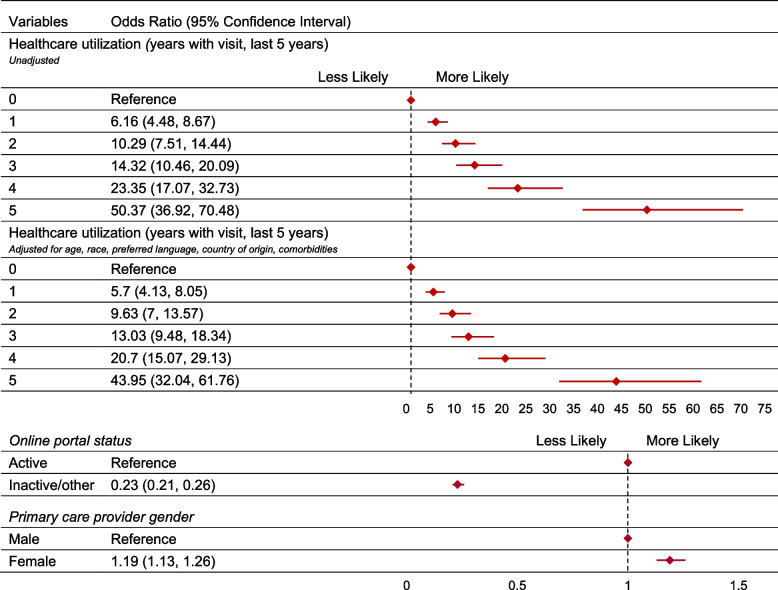
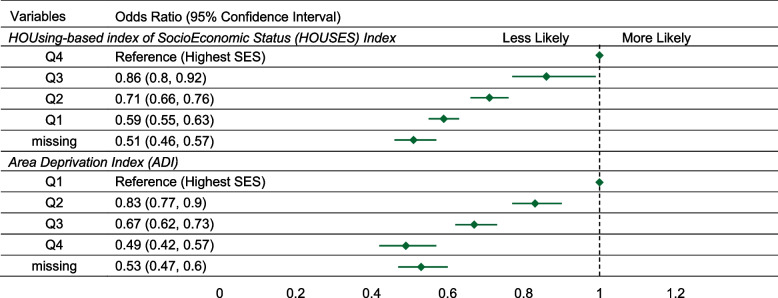
Results: Approximately 78% (30,670 subjects) were current with CCS (total N = 39,433). Individuals who were Hispanic [OR (95% CI): 0.69 (0.62, 0.76)], non-White [0.53 (0.5, 0.56)], foreign-born [0.49 (0.46, 0.52)], and/or had limited English proficiency [0.44 (0.40, 0.49)] had lower odds of up-to-date CCS compared to Non-Hispanic, White, US-born, and/or English-speaking individuals. Older age, higher comorbidity burden, greater healthcare utilization, and having a female primary care provider were associated with higher odds of up-to-date CCS, while an inactive online patient portal account had lower odds of up-to-date CCS. Individuals with lower SES had lower odds of up-to-date CCS compared to those with higher SES.
Conclusions: In our sample, disparities in CCS status were associated with specific individual, healthcare, and SES factors/characteristics. Our results identify populations that may benefit from targeted interventions to address CCS uptake.
Keywords: Cervical cancer prevention; Cervical cancer screening barriers; Immigrant women; Limited English Proficiency; Population with health disparities; Women’s health.
© 2025. The Author(s).
Conflict of interest statement
Declarations. Ethics approval and consent to participate: This study was reviewed and approved by the Mayo Clinic Institutional Review Board, and participant consent was waived for this study (reference ID: 23–004802). Electronic health record data analysis performed in this study was done in accordance with the Minnesota Research Authorization process as outlined by the State of Minnesota Legislature: https://www.revisor.mn.gov/statutes/cite/144.295 . Consent for publication: Not applicable. Competing interests: The authors declare no competing interests.
Figures
References
-
- Cancer Facts & Figures. Atlanta. GA: American Cancer Society; 2023. p. 2023.
-
- Cancer Facts & Figures, 2025. Atlanta, Georgia; 2025.
-
- SEER Cancer Stat Facts: Cervical Cancer Bethesda, MD: National Cancer Institute; 2022 [Available from: https://seer.cancer.gov/statfacts/html/cervix.html.
