


Epidemiological trends of diarrheal viruses in central and western Kenya before and after Rotavirus vaccine introduction
- PMID: 40287779
- PMCID: PMC12034208
- DOI: 10.1186/s41182-025-00716-6
Epidemiological trends of diarrheal viruses in central and western Kenya before and after Rotavirus vaccine introduction
Abstract
Background: Rotavirus, norovirus, adenovirus (type 40/41) and astrovirus are the most significant viral etiological agents of acute gastroenteritis in young children globally. Kenya introduced the rotavirus vaccine into her National Immunization Program in July 2014, which has led to a significant decline in the prevalence of rotavirus. We sought to assess the impact of rotavirus vaccination on the epidemiological trends of other diarrhea-associated enteric viruses across different regions in Kenya.
Methodology: Using conventional and multiplex RT-PCR, we analyzed a total of 716 fecal samples for adenovirus, astrovirus and norovirus from children aged below 5 years presenting with acute gastroenteritis but tested negative for rotavirus at Mbita Sub-County Referral Hospital in Western Kenya and Kiambu County Referral Hospital in Central Kenya before (2011-2013) and after (2019-2020) rotavirus vaccine introduction.
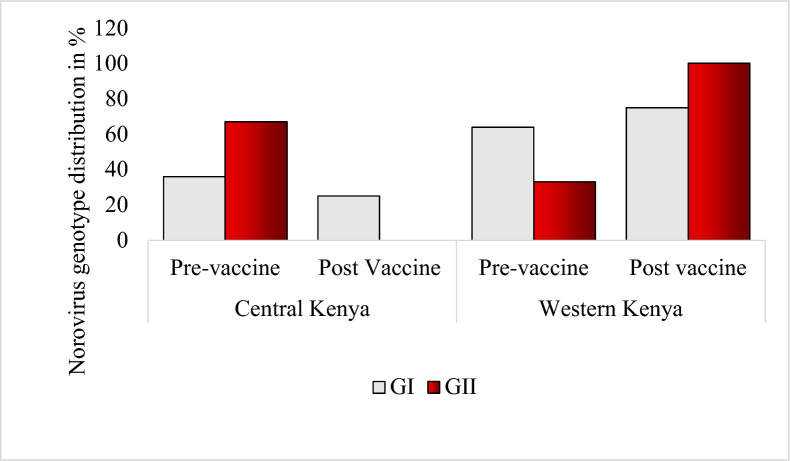
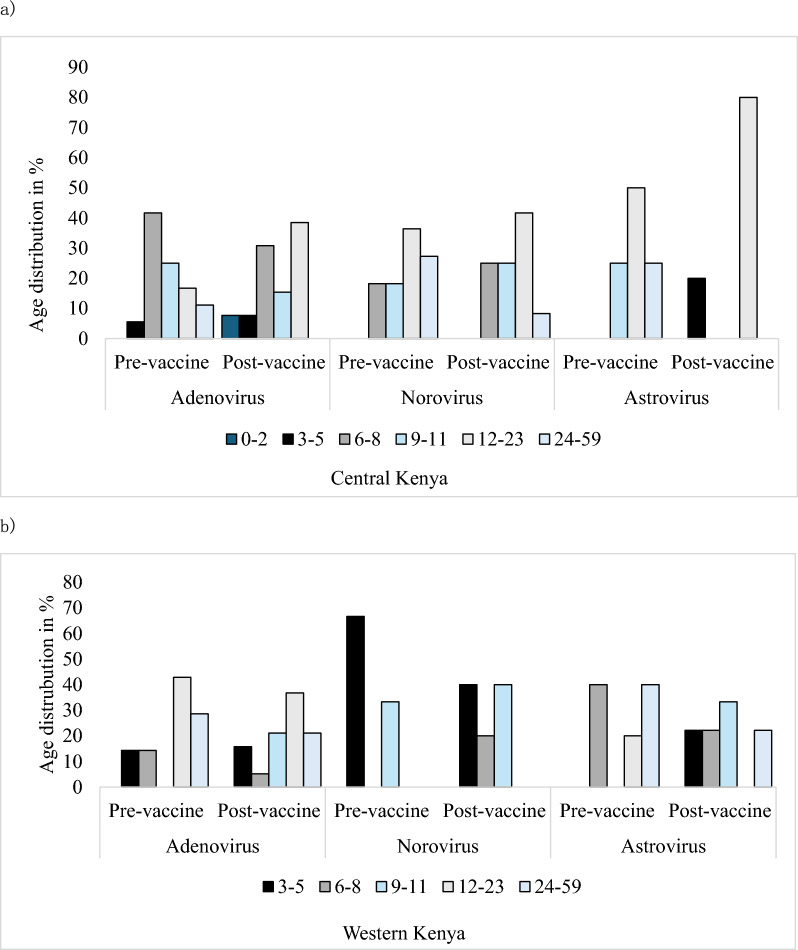
Results: Following the rotavirus vaccine introduction, there was no significant difference in norovirus and astrovirus prevalence post-vaccine introduction in both Central (norovirus- 5.4% vs 5.9%; astrovirus- 2% vs 2.4%) and Western Kenya (norovirus- 2% vs 3%; astrovirus 3.3% vs 5.9%). Although the prevalence of adenovirus increased substantially in Western Kenya (9% vs 12.4%), there was a significant decrease in adenovirus in Central Kenya (17%, vs 6%, p = 0.007). Before the introduction of the rotavirus vaccine, a large proportion of adenovirus cases occurred at 6-8 months in Central Kenya and 12-23 months in Western Kenya, while norovirus prevalence was highest at 12-23 months in Central and 3-5 months in Western Kenya. Astrovirus infections in Central Kenya were predominantly among children aged 12-23 months, both before and after the vaccine. Following vaccine introduction, a large proportion of adenovirus cases occurred among children aged 12-23 months in both regions. Norovirus peaked at 12-23 months in Central Kenya and showed dual peaks at 3-5 and 9-11 months in Western Kenya. Astrovirus infections in Western Kenya shifted from peaks at 6-8 and 24-59 months pre-vaccine to 9-11 months post-vaccine.
Conclusion: Our data demonstrate the burden and changing epidemiology of enteric viruses in Western and Central Kenya and underscores the need for continued monitoring to guide the design and implementation of appropriate public health interventions.
Keywords: Adenovirus; Astrovirus; Kenya; Norovirus; Rotavirus-vaccine.
© 2025. The Author(s).
Conflict of interest statement
Declarations. Ethics approval and consent to participate: This study was approved by the Kenya Medical Research Institute (KEMRI) Scientific and Ethical Review Unit (SERU), 2007-SSC No. 1323. Informed consent was sought from the caregivers of the participants. Consent for publication: All participants were informed that their information would be published, and consent to publish was granted. Competing interests: The authors declare no competing interests.
Figures
References
-
- Mwenda JM, Ntoto KM, Abebe A, Enweronu-Laryea C, Amina I, Mchomvu J, et al. Burden and epidemiology of Rotavirus diarrhea in selected African countries: preliminary results from the African rotavirus surveillance network. J Infect Dis. 2010;202(SUPPL. 1):5–11. - PubMed
Grants and funding
- 2023B17/Research Center for Global and Local Infectious Diseases, Oita University
- 2023B17/Research Center for Global and Local Infectious Diseases, Oita University
- 15H05286/Grant-in-Aid for Scientific Research, Japan
- 15H05286/Grant-in-Aid for Scientific Research, Japan
- 15H05286/Grant-in-Aid for Scientific Research, Japan
LinkOut - more resources
Full Text Sources