


Can the geriatric nutritional risk index predict the risk of osteoporosis in the elderly? A systematic review and meta-analysis
- PMID: 40290237
- PMCID: PMC12022571
- DOI: 10.12669/pjms.41.4.11539
Can the geriatric nutritional risk index predict the risk of osteoporosis in the elderly? A systematic review and meta-analysis
Abstract
Objective: The elderly are at a high risk of malnutrition as well as osteoporosis. In this review, we examined if the geriatric nutritional risk index (GNRI) can predict the risk of osteoporosis in the elderly.
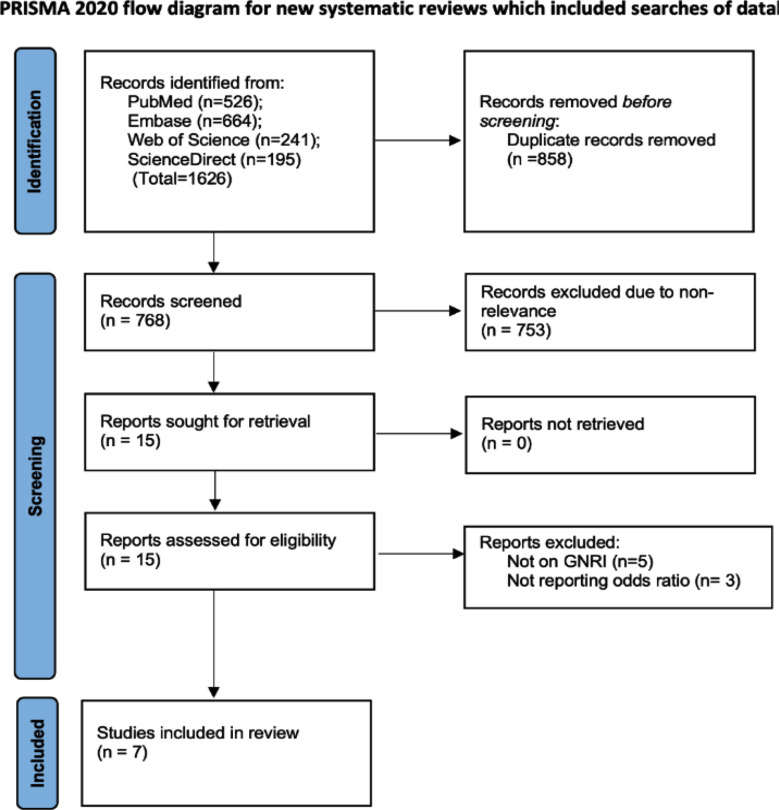
Methods: In this PRISMA compliant systematic review we searched the electronic databases of PubMed, Embase, ScienceDirect, and Web of Science. The search included studies from inception of databases to December 29, 2023. All studies examining the association between GNRI and osteoporosis were included.
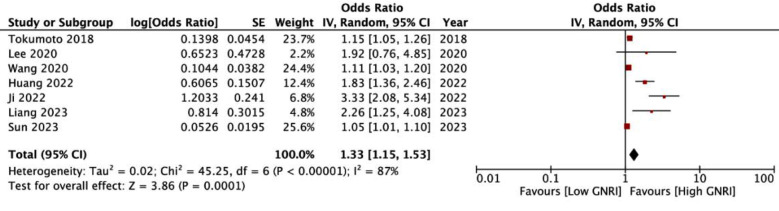
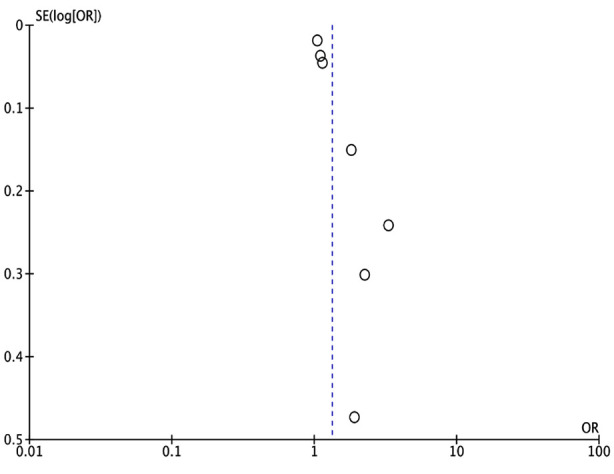
Results: Seven studies were selected. All studies were cross-sectional in design. Meta-analysis of all seven studies showed that low GNRI was significantly associated with the risk of osteoporosis in elderly patients (OR: 1.33 95% CI: 1.15, 1.53). The interstudy heterogeneity was high as the I2 value was 87%. Results did not change on sensitivity analysis. Subgroup analysis based on study location, presence of diabetes, sample size, GNRI cut-off, method to determine cut-off, and diagnostic criteria for osteoporosis showed mixed results.
Conclusion: Low GNRI can be a simple marker for predicting osteoporosis in the elderly. Current evidence is from a few studies with a high risk of bias.
Keywords: Elderly; Malnutrition; Nutritional status; Osteoporosis.
Copyright: © Pakistan Journal of Medical Sciences.
Figures
References
Publication types
LinkOut - more resources
Full Text Sources