


Microvascular angiotensin II type 2 receptor function is enhanced in young females and declines in a model of murine aging
- PMID: 40290368
- PMCID: PMC12030185
- DOI: 10.20517/jca.2024.09
Microvascular angiotensin II type 2 receptor function is enhanced in young females and declines in a model of murine aging
Abstract
Introduction: Angiotensin II (AngII) affects cardiovascular health, mediating impacts through AngII type 1 (AT1R) and type 2 (AT2R) receptors. The present study investigated sex and aging-related differences in microvascular AngII receptor function in mice and humans.
Methods: Mesenteric resistance arteries (MRA) were isolated from 3-, 12-, and 18-month-old female and male C57/Bl6 mice. Wire myography was used to measure vasoconstriction to AngII and vasodilation to an AT2R agonist (compound 21, C21). Seven healthy adults (3 premenopausal women and 4 age-matched men) were recruited to participate in a study measuring cutaneous microvascular vasoconstriction to AngII in the presence and absence of 10 μM PD123319, an AT2R antagonist.
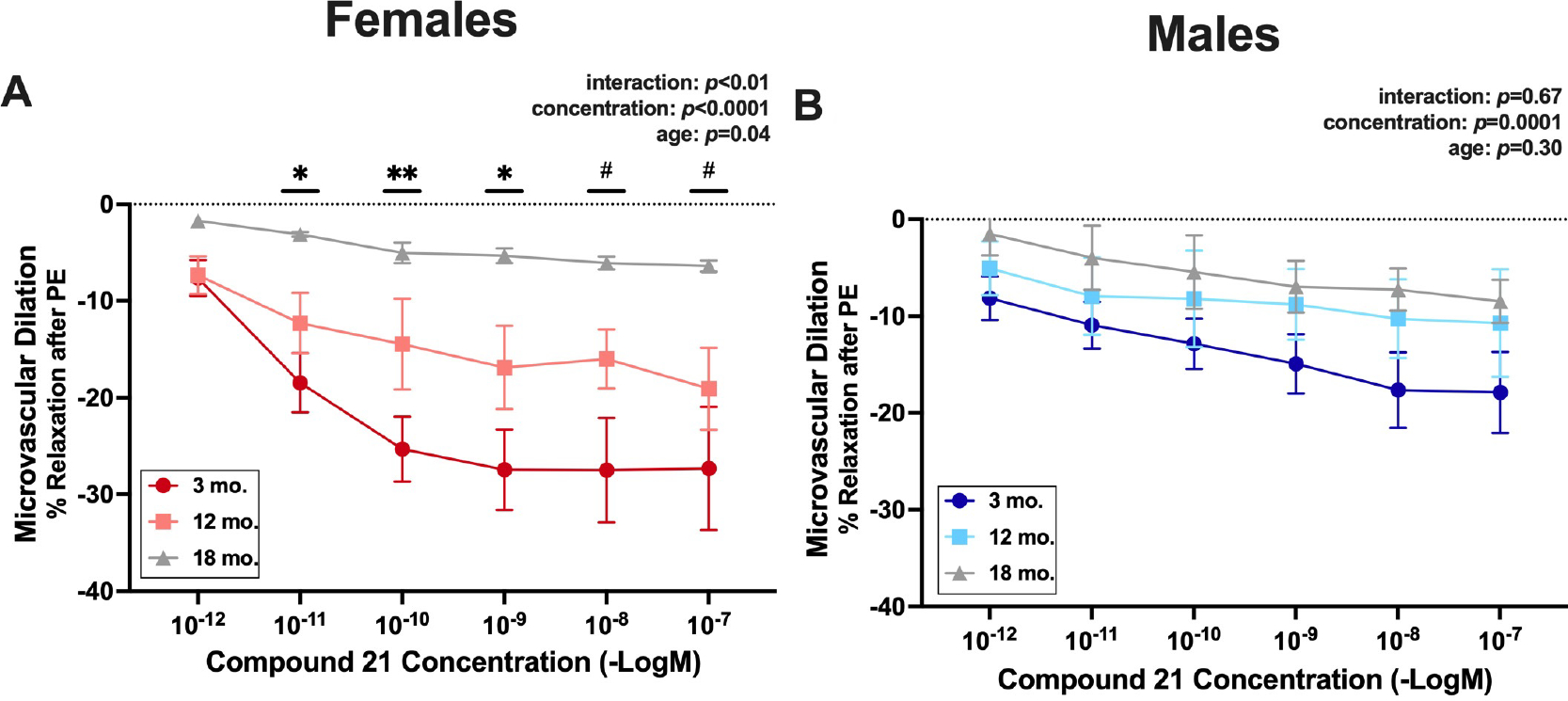
Results: In murine MRA, AngII-induced constriction increases by 18 months in females and by 12 months in males. AT2R-mediated vasodilation was reduced with age in females only, which corresponds with a female-specific decrease in mesenteric AT2R mRNA expression. AT2R inhibition enhances AngII-induced constriction in young female, but not male, mice. Clinical data support that premenopausal women have attenuated AngII constriction vs. men, which is abrogated by AT2R inhibition. AT2R expression is greater in primary aortic smooth muscle cells, but not endothelial cells, from young women compared with men.
Conclusions: These data demonstrate enhanced microvascular AT2R function in young female mice and young women. There is a female-specific loss of AT2R function with age in mice, concomitant with declining AT2R expression. These findings implicate AT2R as a sex-specific target for microvascular dysfunction and aging-associated cardiovascular disease.
Keywords: Microvascular function; aging; angiotensin II type 2 receptor; cutaneous; sex differences; skin blood flow.
Conflict of interest statement
Conflicts of interest All authors declared that there are no conflicts of interest.
Figures



References
-
- DeFilippis EM, Van Spall HGC. Is it time for sex-specific guidelines for cardiovascular disease? J Am Coll Cardiol 2021;78:189–92. - PubMed
Grants and funding
LinkOut - more resources
Full Text Sources