Decoding biomaterial-associated molecular patterns (BAMPs): influential players in bone graft-related foreign body reactions
- PMID: 40292103
- PMCID: PMC12024449
- DOI: 10.7717/peerj.19299
Decoding biomaterial-associated molecular patterns (BAMPs): influential players in bone graft-related foreign body reactions
Abstract
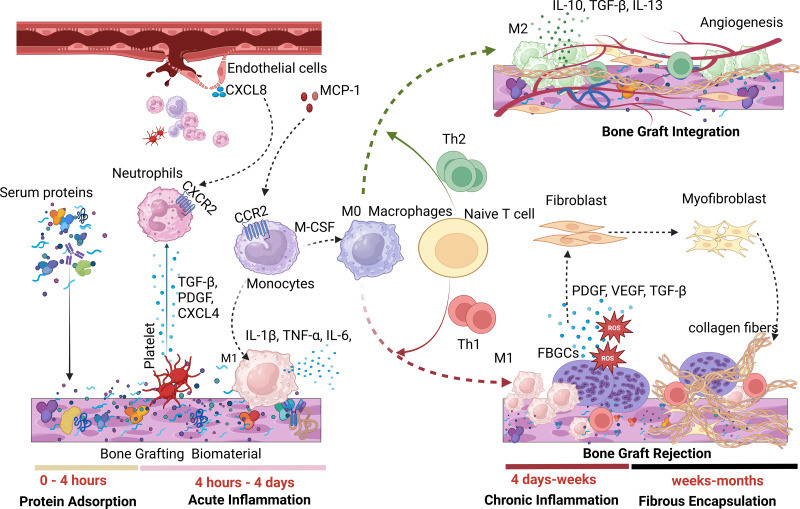
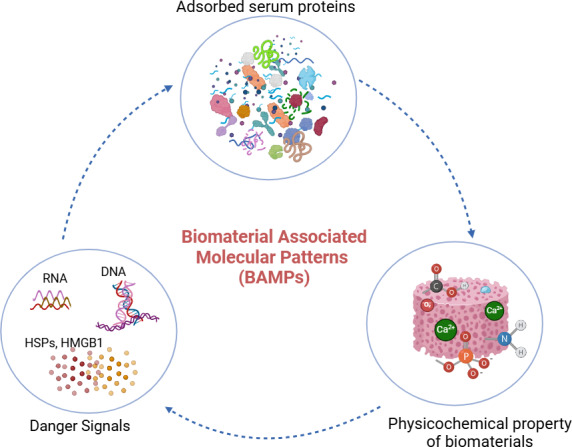
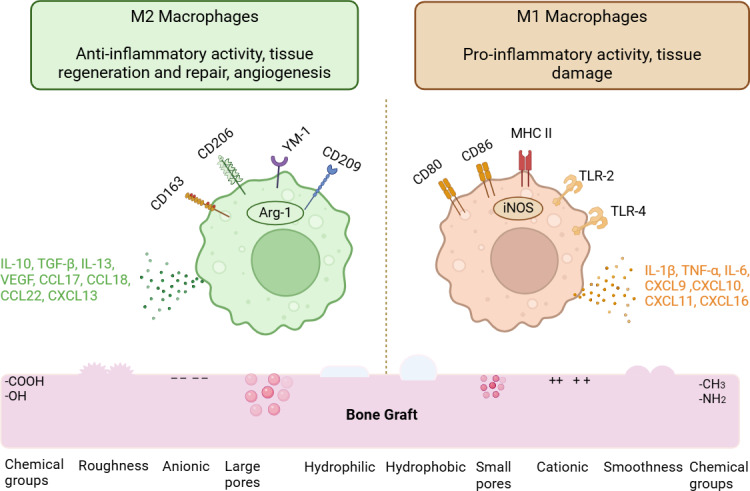
Bone grafts frequently induce immune-mediated foreign body reactions (FBR), which hinder their clinical performance and result in failure. Understanding biomaterial-associated molecular patterns (BAMPs), including physicochemical properties of biomaterial, adsorbed serum proteins, and danger signals, is crucial for improving bone graft outcomes. Recent studies have investigated the role of BAMPs in the induction and maintenance of FBR, thereby advancing the understanding of FBR kinetics, triggers, stages, and key contributors. This review outlines the stages of FBR, the components of BAMPs, and their roles in immune activation. It also discusses various bone grafting biomaterials, their physicochemical properties influencing protein adsorption and macrophage modulation, and the key mechanisms of protein adsorption on biomaterial surfaces. Recent advancements in surface modifications and immunomodulatory strategies to mitigate FBR are also discussed. Furthermore, the authors look forward to future studies that will focus on a comprehensive proteomic analysis of adsorbed serum proteins, a crucial component of BAMPs, to identify proteins that promote or limit inflammation. This understanding could facilitate the design of biomaterials that selectively adsorb beneficial proteins, thereby reducing the risk of FBR and enhancing bone regeneration.
Keywords: BAMPs; Bone grafts; FBR; Macrophages; Protein adsorption.
©2025 Brigi et al.
Conflict of interest statement
The authors declare there are no competing interests.
Figures
References
Further Reading
Publication types
MeSH terms
Substances
LinkOut - more resources
Full Text Sources
Medical